Will lab-grown diamonds replace mined stones in high jewelry?
🚀 Key Takeaways
- Concept key : Lab-grown diamonds offer an ethical and often cheaper alternative to mined stones, but they raise questions of rarity and resale.
- Practical advice : Ask for certification (GIA, IGI), inquire about energy source for synthesis, and decide if provenance or price matters more to you.
- Did you know : The closure of Rio Tinto's Argyle mine in 2020 reduced the supply of pink natural diamonds, reinforcing the cultural value of natural rarity.
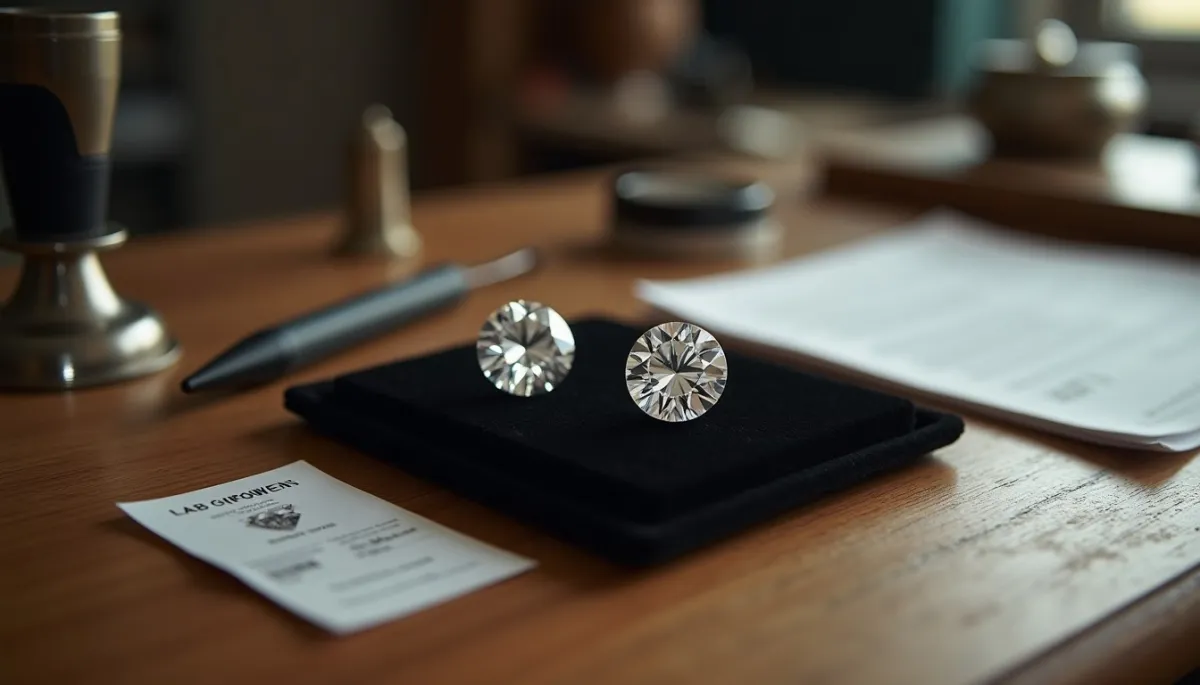
Sparks of light, and a new conversation in the salon. Imagine a private viewing in a Parisian atelier where a client compares two identical brilliants under magnification.
One stone comes from centuries-old alluvial deposits, the other from a reactor in a Californian lab. The jeweler narrates provenance, carbon footprint, resale prospects, and the client listens, measuring not only clarity but also meaning.
Sparkling shift
Lab-grown diamonds are created by two main methods: chemical vapor deposition (CVD) and high pressure high temperature (HPHT). Both reproduce the crystal structure of natural diamonds, atom for atom, producing gem-quality stones suitable for fine jewelry.
Since De Beers launched Lightbox in 2018 and players like Diamond Foundry, VRAI, and Brilliant Earth scaled production, lab-grown supply rose and prices fell. In many retail segments, lab-grown diamonds now account for a visible share by unit, especially for smaller sizes used in everyday jewelry.
Market figures vary, but recent estimates show lab-grown diamonds represent a modest share by value and a larger share by volume for lower-price ranges. The trend is clear: greater availability and normalisation across online retailers and some contemporary maisons.
Roots and reasons
Why this momentum? Consumers under 40 increasingly factor ethics, sustainability and cost into luxury purchases. Lab-grown stones promise conflict-free supply and comparatively lower environmental impacts, particularly when producers use renewable energy.
Historic events shaped the debate. The Kimberley Process (established in 2003) reduced trade in conflict diamonds, but it did not solve all social and environmental issues tied to mining. At the same time, high-profile closures like the Argyle mine in Australia (2020) amplified the romance of natural rarity, and governments in Botswana, Canada and Russia remained economically linked to diamond mining.
Technological advances made lab-grown diamonds more affordable and better quality. Traceability tools, such as blockchain initiatives, and improved certification for lab-grown gems (laboratory reports from GIA or IGI) helped reassure buyers about authenticity and characteristics.
Tension and trade-offs
Still, the picture contains contradictions. Haute joaillerie trades not only in carats and cut, but in story and scarcity. Natural fancy-colour diamonds (pink, blue) still command extraordinary prices at Christie’s and Sotheby’s. Collectors prize geological time as a narrative; a 100-million-year formation carries cultural cachet lab stones cannot replicate.
There are also economic and social trade-offs. Mining supports local economies and jobs in countries like Botswana, Namibia and Canada. A rapid shift to lab-grown on a global scale would disrupt livelihoods unless the industry invests in transition and community development.
Environmental claims deserve scrutiny. Life cycle analyses show lab-grown diamonds can have a lower carbon footprint, but results depend on the electricity mix used during synthesis. Labs powered by coal-fired grids negate much of the climate advantage, whereas factories using renewable energy deliver stronger credentials.
Design and demand
In practice, many maisons are pragmatic. Some high jewelry brands emphasize natural stones for their exceptional rarities, while others introduce lab-grown lines for modern, ethically minded customers. Custom ateliers and independent designers often lead, offering bespoke pieces with either type of diamond.
For buyers, the choice can be tactical. If you prioritise price, immediate ethical clarity, and a lower-carbon product (when verified), lab-grown is attractive. If you seek investment potential, historic provenance, or the unique allure of a rare natural colour, mined diamonds remain unrivalled.
To navigate the market, request independent grading reports, ask how the lab source powers its production, and consider after-sale value. Understand that resale for lab-grown diamonds is currently lower than for comparable natural stones, which affects long-term financial calculus.
Ultimately, haute joaillerie will likely evolve into a plural landscape. Mined diamonds will retain their ceremonial and collectible status, while lab-grown stones will expand the palette of accessible, ethically framed luxury. The two will coexist, each offering different promises: one of deep time and rarity, the other of innovation and transparency.
Thanks for reading, and don't forget, Enjoy Life Moments!