The culture of prestige tea: when a Pu-erh cru costs more than champagne
🚀 Key Takeaways
- Core concept : Aged Pu-erh is a collectible commodity that blends terroir, time and cultural value.
- Practical tip : Buy from reputable houses, check provenance and storage history.
- Did you know : Some 20th century Pu-erh cakes have reached prices comparable to fine Champagne at Asian auctions.
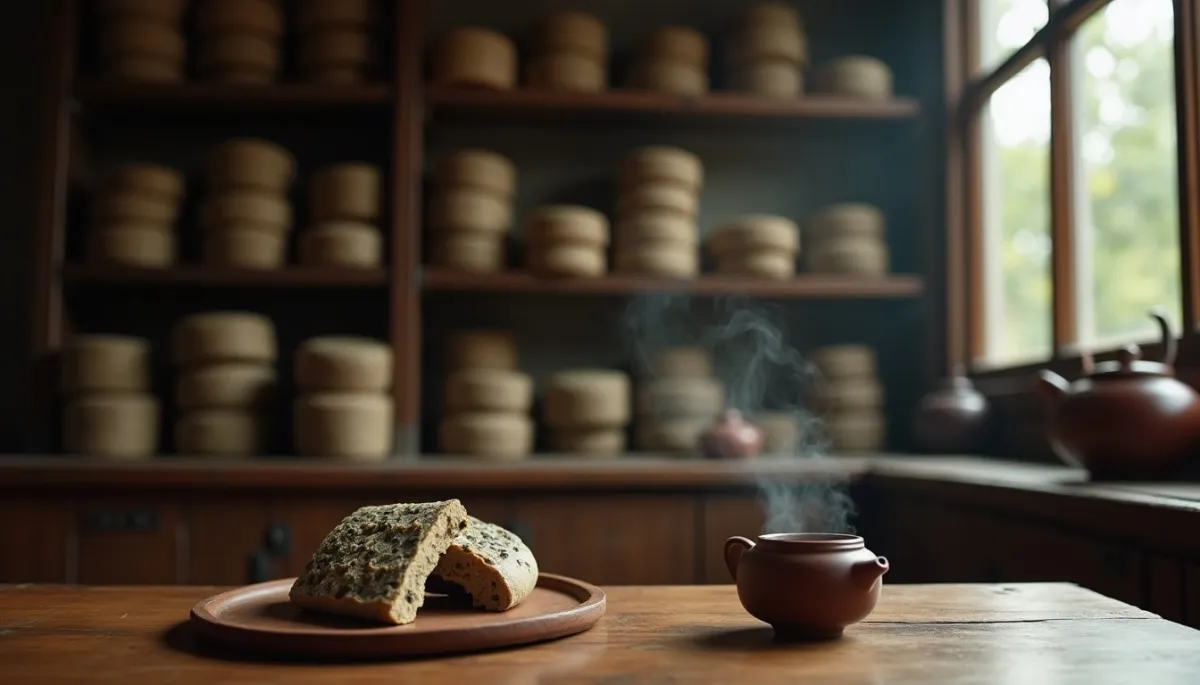
It smells like damp wood and rain. Imagine a dim tea shop in old Kunming, shelves lined with compressed cakes wrapped in faded paper, a vendor breaking a piece for a curious visitor.
Thé de collection
The international appetite for luxury has quietly embraced tea. In auction rooms in Hong Kong and Beijing, and on specialist platforms, vintage Pu-erh cakes from Yunnan, pressed decades ago, achieve striking prices. Collectors compare vintages, regions and brands the way oenophiles compare vintages and cuvées.
Several lots sold for sums that surprise Western readers, sometimes eclipsing bottles of prestige champagne. Houses such as China Guardian and Poly Auction regularly include Pu-erh in their fine tea sessions, while private dealers in Guangzhou and Shanghai manage specialised clientele who buy for taste and investment.
Names matter. Cakes from Menghai (Dayi/TAETEA), old productions from Yiwu, Lincang and Xishuangbanna, or leaves sourced from ancient arbor trees (gu shu) carry premiums. The scarcity of authenticated, well-stored older cakes is a major driver of value.
Racines et fermentation
The story of Pu-erh is half agronomy, half microbe. Unlike most teas, Pu-erh can be intentionally fermented and aged. Raw sheng Pu-erh slowly evolves over years, softening and developing complexity. Ripe shou Pu-erh undergoes an accelerated pile-fermentation process, creating earthy, humic notes.
Terroir is central. Yunnan's high-elevation forests, their soil and native varietals, plus the practice of hand-plucking, produce leaves that react differently to ageing. Tea from ancient trees can show aromatic depth and structural tannins that reward decades of maturation.
Storage conditions are crucial. Humidity, air circulation and absence of contaminants shape the aging trajectory. Collectors pay for provenance and documented storage, because a poorly stored cake can acquire off-odours or mold, destroying value instead of creating it.
Marchés et anecdotes
Over the last two decades, the Chinese middle and upper classes rediscovered tea as status and heritage. Auction records show appetite for rare cakes, and the secondary market has grown, with specialist shops in Beijing, Shanghai and Hong Kong, and online platforms catering to global buyers.
There are colorful stories: a family finding wrapped Pu-erh cakes in an attic, a Hong Kong dealer reboxing decades-old cakes for collectors, or a British tea enthusiast traveling to a remote Yunnan village to buy from small producers. These narratives amplify the romantic value of the leaves.
Quantitative data is emerging: tea market analyses estimate premium tea segments growing faster than bulk commodity tea. Yet, unlike champagne, where brand provenance and vintage systems are institutionalised, the tea market remains fragmented and opaque in places.
Pourquoi l'engouement
Collectibility follows scarcity and narrative. Old cakes, especially from pre-1970 or early 20th century production, are limited. Stories about origin, the hands that processed the tea, and the years of storage make each cake unique. For many buyers, the cup is as much history as flavor.
Cultural revival plays a role. In China, tea ceremonies, heritage marketing and urban nostalgia converge. Younger consumers see Pu-erh as a connection to roots and as an alternative luxury that feels authentic, less ostentatious than large bottles of champagne.
Investment logic also fuels demand. Some buyers purchase for portfolio diversification, expecting prices to rise as older, well-preserved cakes become rarer. This speculative layer increases market pressure and publicity.
Les limites visibles
High prices attract counterfeiters. Fakes, rewraps and dubious storage claims are common pitfalls. Authentication requires expertise: leaf analysis, packaging scrutiny and provenance documents, sometimes even lab testing for isotopes.
Environmental and social questions arise. The rush on ancient trees can drive unsustainable harvesting, and small producers may be marginalized as brands and speculators extract value. Traceability and fair practices are challenges the industry must address.
For newcomers, my advice: taste before buying, prefer reputable sellers, focus on documented provenance, and treat Pu-erh as pleasure first, asset second. Learn to recognize good storage and ask questions about origin and handling.
Thanks for reading, and don't forget, Enjoy Life Moments!