Russian villas of Cap d'Antibes: splendour and exile on the billionaires' peninsula
🚀 Key Takeaways
- Key concept : The "Russian villas" are both historical legacies of White émigrés and contemporary indicators of global wealth flows.
- Practical tip : Walk the Sentier littoral from Garoupe to discover public views of private estates, best at sunrise or late afternoon.
- Did you know : The Russian community helped fund the Saint-Nicolas Cathedral in Nice (consecrated in 1912), a sign of Ottoman-era and imperial ties to the Côte d'Azur.
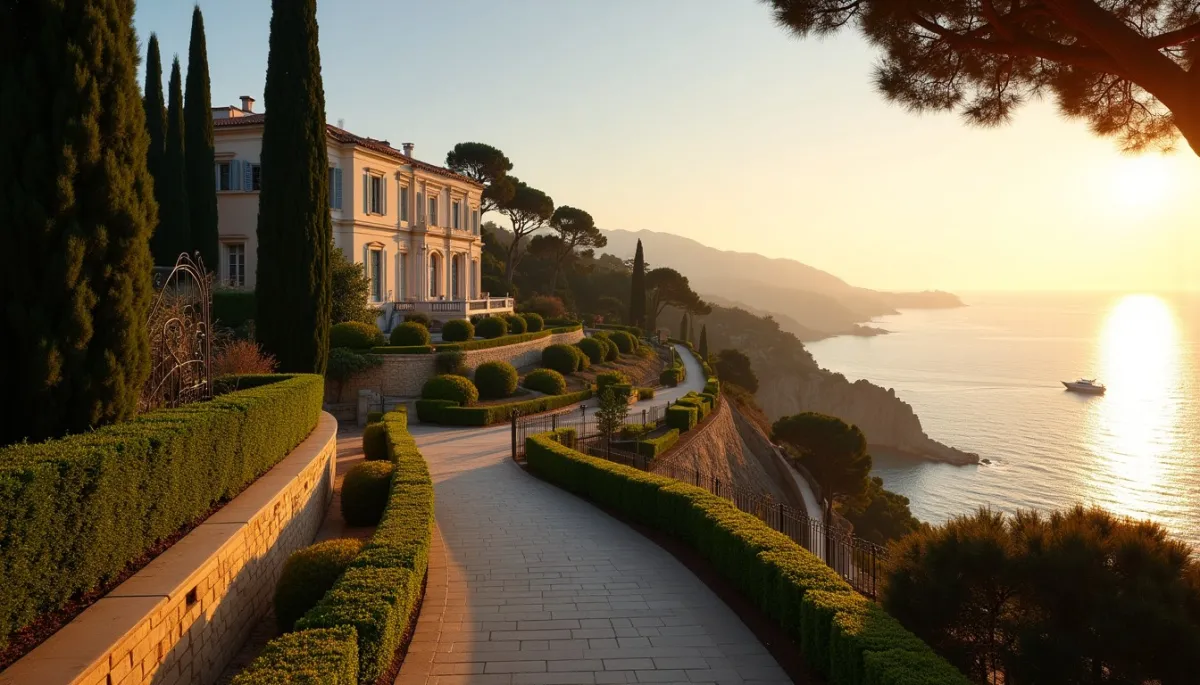
Light softens the cypress, and a stone balustrade frames the blue beyond.
On the chemin that skirts the Cap, a wrought-iron gate hides terraced gardens, statues and a hand-painted mailbox. From the path you glimpse tiled roofs, columns and trimmed hedges, the kind of luxury that feels private and theatrical at once. Yachts slide like punctuation marks across the bay. The scene is timeless and oddly intimate, as if the peninsula were staging its own catalogue of exile and splendour.
Éclat visible
The Cap d'Antibes is a gallery of villas rather than a single museum. Many houses date from the late 19th and early 20th centuries, when English and Russian aristocrats competed with Mediterranean light and mild winters. The gardens of Villa Eilenroc, open to visitors, give a clear idea of that Belle Époque ambition, with panoramic terraces and exotic plantings.
Historically, the term "villas russes" désigne d'abord les demeures occupées ou financées par des aristocrates et des artistes russes exilés après 1917, but it also covers later purchases by post-Soviet wealthy buyers. The presence is visible in architecture, occasional private chapels and in local institutions created or supported by the Russian community.
Landmarks beyond Cap d'Antibes testify to the deeper link between Russia and the Côte d'Azur: the magnificent Saint-Nicolas Cathedral in Nice, consecrated in 1912, was built to serve an already established Russian presence. Nearby, the Ballets Russes, led by Serge Diaghilev in the first decades of the 20th century, brought dancers and composers who frequented the Riviera and contributed to its cosmopolitan cachet.
Racines de l'exode
The first major migration of Russians to the Riviera followed the 1917 Revolution. Nobles, intellectuals and artists sought safety and climate, and many settled in villas along the coast. This exodus, known as the "White émigré" movement, lasted into the 1920s and 1930s, shaping local social life through salons, patronage and religious life.
Architects and craftsmen were hired to create eclectic estates, mixing Neoclassical, Moorish and Art Deco influences. Owners valued privacy, gardens and a seaside address. Cap d'Antibes offered both proximity to Nice and Cannes, and the relative seclusion of a narrow peninsula with walking paths and private coves.
From the 1990s, a new wave arrived: post-Soviet fortunes bought, restored or enlarged properties. This second chapter changed the silhouette of ownership without always altering the built fabric. Contemporary buyers introduced 21st-century services, tight security and strong preferences for privacy that influence how the villas are perceived today.
Splendeur et tensions
There is an inherent contradiction in these estates: they are part heritage, part private fortress. On the one hand, villas are testimony to cultural exchanges, patronage and artistic life. On the other hand, gated entrances, private security and occasional legal disputes underline inequalities and contested spaces in a public landscape.
Recent geopolitics made that tension visible. Following the 2022 invasion of Ukraine, European sanctions and asset freezes targeted some Russian-linked individuals. French authorities froze assets and increased scrutiny, a development that raised questions about transparency in property ownership on the Riviera and about local economies that rely on wealthy foreign buyers.
For visitors, the advice is simple and respectful: enjoy the public paths, the gardens open to visitors like Eilenroc, the viewpoint near the Phare de la Garoupe, and the beaches but respect private property. Guided walks with local historians reveal anecdotes and archival photographs that connect façades to names, salons and performances of the past.
Thanks for reading, and don't forget, Enjoy Life Moments!