Queen of the deep: how Sylvia Earle dedicated her life to the ocean's mysteries
🚀 Key Takeaways
- Concept key : Sylvia Earle fused exploration and advocacy to create Mission Blue and the Hope Spots initiative.
- Practical advice : Visit marine reserves responsibly, reduce single-use plastics and support local marine science groups.
- Did you know : Earle logged thousands of hours underwater and served as NOAA chief scientist from 1990 to 1992.
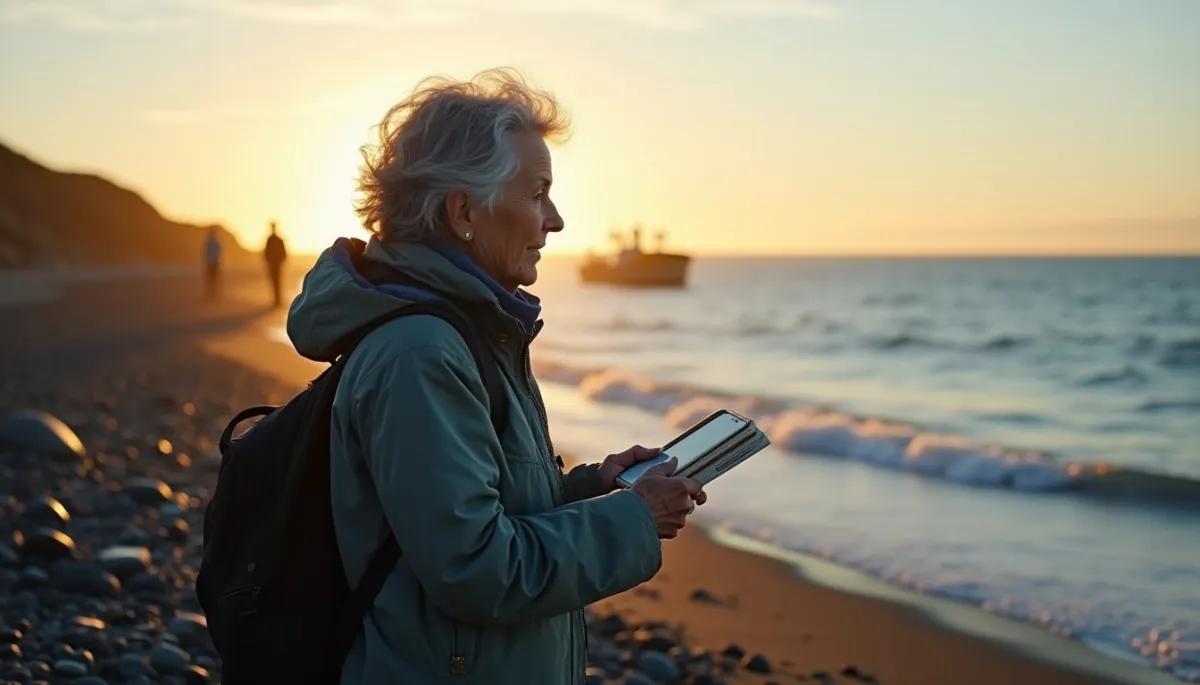
She looks out at the horizon and remembers the first tide pools. Imagine a gray morning on the New Jersey shore, a young Sylvia bending over rocks, counting creatures with a notebook in hand, already listening to the language of the sea.
Une trajectoire d'exception
Sylvia Alice Earle was born on August 30, 1935, in Gibbstown, New Jersey. She trained as a marine biologist and earned her Ph.D. from Duke University in 1966, at a time when few women reached the highest levels of ocean science.
She logged more than 7,000 hours underwater, led over a hundred expeditions and used both diving suits and submersibles to study coral reefs, hydrothermal vents and deep-sea life. In 1990 she became the first woman named chief scientist of the U.S. National Oceanic and Atmospheric Administration, a role she occupied until 1992.
Her work earned international recognition. In 1998 National Geographic named her Explorer-in-Residence, and in 2009 she received the TED Prize, a platform she used to amplify the need for ocean protection.
Racines d'une vocation
The road to those titles began with curiosity and persistence. As a child Sylvia learned to read the coast, collecting seaweeds and shells, and later she translated that fascination into formal study of marine ecosystems.
Her scientific career unfolded in the 1960s and 1970s, decades of technical innovation in diving. She experimented with hard suits and submersibles, spending long hours at depth to observe animals in their own environment rather than from nets or lab tanks. These experiences shaped her conviction that hands-on exploration produces the most persuasive evidence for conservation.
Several episodes amplified her public influence. Extensive fieldwork in places such as the Gulf of Mexico and the Galápagos, and daring dives in experimental gear, turned her into a spokesperson able to report what the ocean was gaining and losing in plain terms.
La voix des océans
In the 2000s Sylvia shifted from explorer-scientist to global advocate. In 2009 she launched Mission Blue, an organization designed to inspire protection of the ocean through science, policy and public engagement.
Mission Blue created the concept of 'Hope Spots', special places critical to ocean health that deserve protection. A Hope Spot can be a coral reef, a seasonal feeding ground or a migratory corridor. The idea is to combine rigorous science with storytelling, to make conservation tangible.
Her approach mixes awe with urgency. She often reminds audiences that marine protected areas (MPAs) are zones where human activities are managed to allow ecosystems to recover, and that expanding MPAs is one of the clearest actions we can take to rebuild fish stocks and biodiversity.
Tensions et défis
Despite her successes, Sylvia's path contains contradictions and stubborn obstacles. Exploration reveals beauty, but it also reveals damage: coral bleaching linked to warming, plastic debris, overfishing, and acidification driven by rising CO2 levels.
Policy change is slow. Even with compelling science and high-profile campaigns, negotiating protected areas involves nations, industries and local communities, each with competing needs. Earle learned to couple scientific evidence with coalition-building and storytelling to move policy.
Her message remains pragmatic. She acknowledges technological limits and economic realities, but insists that incremental gains matter, for example restoring seagrasses, banning destructive fishing methods in a bay, or creating a new marine reserve near a town that depends on tourism.
Que pouvons-nous faire?
Her legacy is also practical. Here are concrete actions inspired by her work. First, support and visit marine protected areas responsibly, favoring operators that follow low-impact guidelines. Second, reduce single-use plastics and opt for reusable alternatives. Third, choose sustainable seafood certified by reliable labels, and prefer local catches to long supply chains.
For anyone curious about deeper involvement, citizen science projects allow beach cleanups, species monitoring and data collection to be useful to researchers. Donating to organizations like Mission Blue or local marine labs funds both research and community programs.
Sylvia Earle's life is a reminder that exploration can become advocacy, that curiosity can build movements. She turned her notebooks and dives into an architecture for change, inviting each of us to become a steward of the water that surrounds our planet.
Thanks for reading, and don't forget, Enjoy Life Moments!