Nelson Mandela: 27 years in prison, the triumph of forgiveness and an unshakable love of freedom
🚀 Key Takeaways
- Core concept : Forgiveness can be a political and personal strategy for rebuilding a nation.
- Practical tip : Visit Robben Island or read Mandela's "Long Walk to Freedom" to understand resilience.
- Did you know : His prison number was 466/64, meaning he was the 466th prisoner in 1964.
Freedom won, but not without scars.
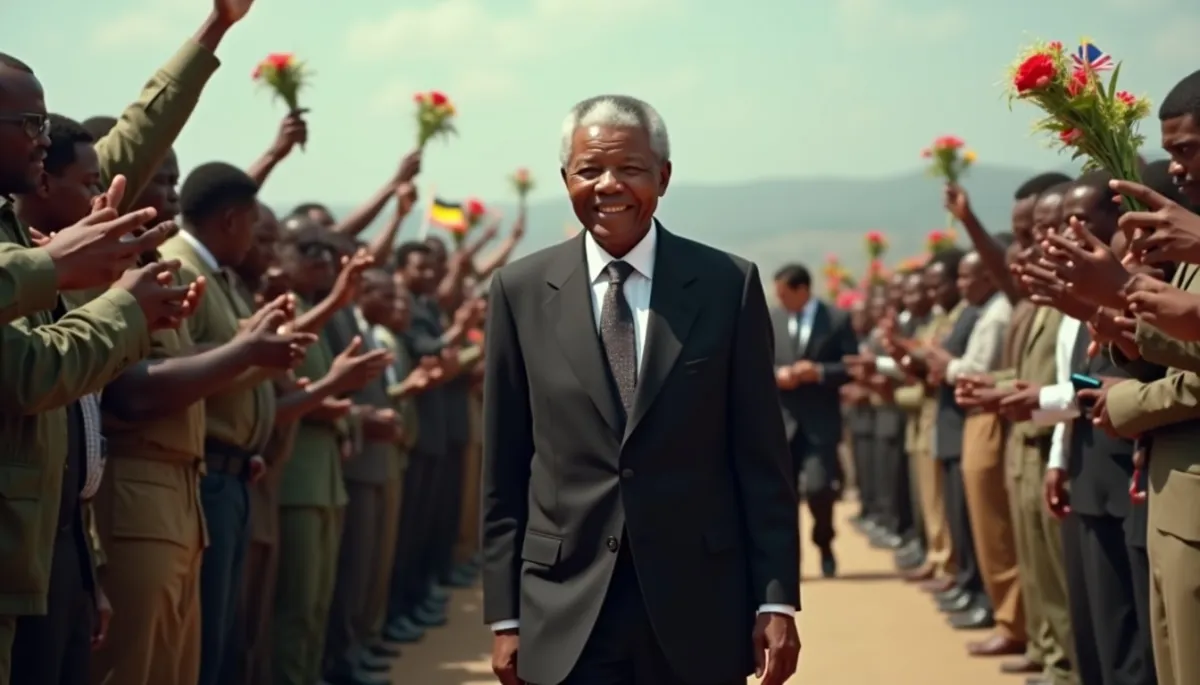
Imagine a grey morning at Victor Verster prison on February 11, 1990, crowds pressing cameras and flowers, while an unassuming man in a dark suit walks out with measured steps. That exit from a small gate near Paarl, South Africa, felt like the opening of a new chapter for a country and for the world. The air carried relief, the hum of radio transmissions, and a sense that history was witnessing a rare reconciliation.
The man and legacy
Nelson Rolihlahla Mandela was born on July 18, 1918, in Mvezo, in the Eastern Cape. Trained as a lawyer, he became a leader of the African National Congress (ANC), advocating first for nonviolent protest, then for armed resistance when freedoms were systematically denied.
He is internationally recognized for his moral authority and political leadership. After the Rivonia Trial (1963-1964), Mandela received a life sentence for sabotage and conspiracy to overthrow the state. His steadfastness, articulate letters, and refusal to renounce the struggle made him a symbol of resistance worldwide.
Mandela's presidency from May 1994 to June 1999 culminated decades of struggle. He helped steer the country from apartheid to a constitutional democracy, promoting reconciliation and launching initiatives in education, health, and nation-building.
Chains and causes
The immediate cause of Mandela's imprisonment was his arrest in August 1962, followed by the Rivonia arrests of key ANC leaders in 1963. The apartheid regime perceived the ANC's shift toward sabotage as an existential threat, and used broad charges to neutralize its leadership.
Robben Island became the emblem of his incarceration. Mandela spent 18 of his 27 years there, doing hard labor in a lime quarry, communicating through furtive notes, and mentoring younger inmates. He wrote about the daily humiliations and the discipline that shaped his patience and strategy.
Prison life produced unexpected anecdotes: guards who respected his dignity, secret legal readings, and a disciplined routine that preserved his intellect. His prison number, 466/64, became a quiet brand of defiance, repeated on banners and badges during global campaigns for his freedom.
Forgiveness as power
Released on February 11, 1990, Mandela surprised many by choosing reconciliation over revenge. He met with his former jailers, negotiated with President F.W. de Klerk, and emphasized unity in public speeches. In 1993, he shared the Nobel Peace Prize with de Klerk, recognizing a political transition built through dialogue.
His approach included symbolic acts, such as supporting South Africa's rugby team during the 1995 World Cup, a move that helped bridge racial divides. Mandela understood symbolism; he used it to show that the new South Africa belonged to all its citizens.
However, forgiveness did not mean ignoring injustice. Mandela insisted on truth and accountability, while advocating for policies to address inequality. His model shows that forgiveness can be an instrument of practical politics, not merely a moral posture.
Contradictions and lessons
Mandela's life contains tensions. He was praised as a moral leader, yet he negotiated compromises with political adversaries. Some critics argue he conceded too much on economic reform, leaving inequality entrenched. Others note controversies around personal and political choices, including the troubled years with Winnie Mandela and later family disputes.
Understanding Mandela requires nuance: he was both saint and politician, hero and strategist. His famous line, "I learned that courage was not the absence of fear, but the triumph over it," captures a personal ethic forged in hardship and in the art of compromise.
For readers today, practical takeaways include the power of patience, the role of symbolic acts in healing, and the importance of civic engagement. Visit Robben Island in Cape Town, read primary sources like his autobiography "Long Walk to Freedom" (1994), and engage locally to apply small acts of reconciliation.
Nelson Mandela's 27 years in prison did not break his love of freedom. They refined it into a practice of inclusive politics, where forgiveness became a tool to rebuild a nation, imperfectly but with unwavering intent.
Thanks for reading, and don't forget, Enjoy Life Moments!