Bob Marley and Rita: love, Rastafari faith and a message of universal peace
🚀 Key Takeaways
- Concept key : A couple whose partnership fused art and faith to advocate peace.
- Practical tip : Visit 56 Hope Road in Kingston, and Nine Mile in Saint Ann to feel the legacy.
- Did you know : Many lyrics draw directly on Rastafari language and Haile Selassie speeches.
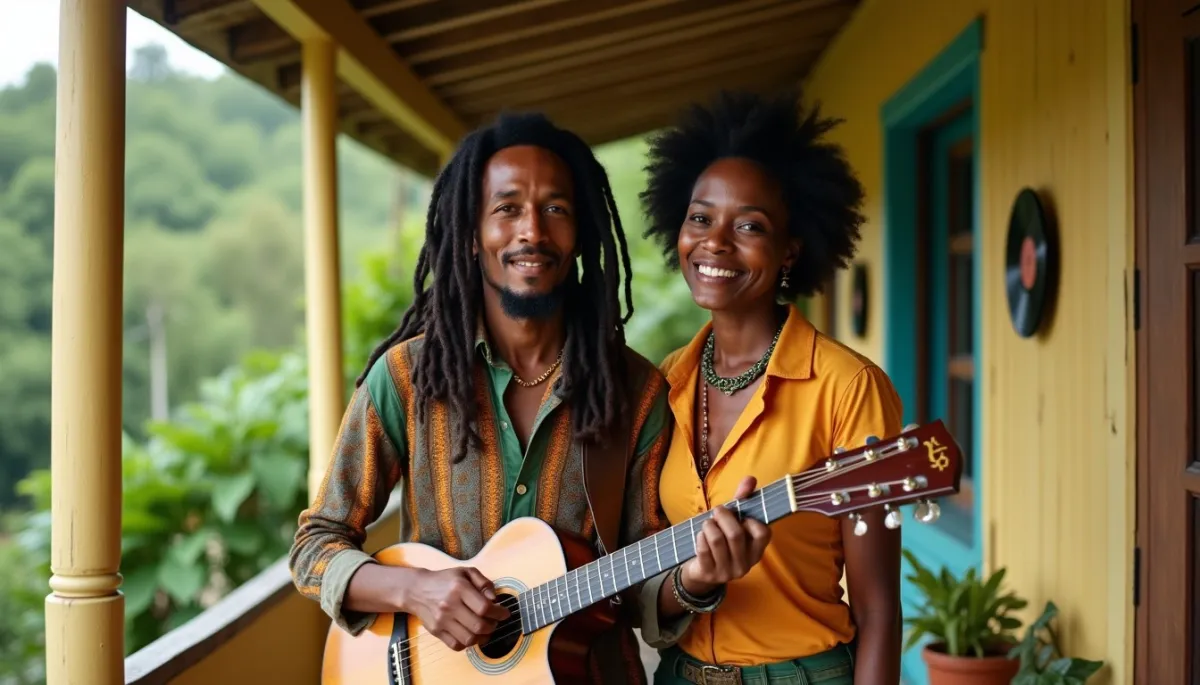
Love that sounded like a chorus. Imagine a cramped Kingston living room in 1973, vinyl spinning, smoke curling in the warm air, Rita sitting close while Bob tunes his guitar, and the family listening as the first chords of a song meant for the world take shape.
voices that mattered
Bob Marley, born February 6, 1945 in Nine Mile, Saint Ann, rose from poverty to become the most recognized voice of reggae. His albums Catch a Fire and Burnin' (both 1973), Natty Dread (1974), Rastaman Vibration (1976) and Exodus (1977) contain songs that crossed cultural borders.
Rita Marley, born Alpharita Anderson on July 25, 1946, was more than a spouse. She sang with the I-Three, the backing trio formed in 1974 with Marcia Griffiths and Judy Mowatt, and brought a human, maternal presence to the band and the family home.
Together they raised a musical dynasty. Children like Ziggy Marley (born October 17, 1968) and Stephen Marley (born April 20, 1972) continued the musical line. The couple also protected a legacy that now welcomes visitors at the Bob Marley Museum, opened in 1986 at 56 Hope Road, Kingston.
roots and turning points
The Marleys met in the 1960s and married in 1966, at a time when Jamaica was young and turbulent. Bob's encounter with Rastafari thought in the mid 1960s, influenced by figures like Mortimer Planno, reshaped his worldview and his music.
In December 1976, real danger arrived at their door. On December 3, 1976, gunmen attacked Marley at his home, days before the Smile Jamaica concert. Bob was wounded, Rita was hurt, and yet Bob performed two days later on December 5, a choice that turned a violent episode into a statement: music as a form of resistance and reconciliation.
Exile followed. After the shooting, the family spent time in London, where Exodus was recorded in 1976 and released in 1977. The album's songs, like "One Love", "Jamming" and "Waiting in Vain", mixed spiritual conviction and universal appeal, and Exodus was voted album of the century by Time in 1999.
paradox and power
The Marleys' life held contradictions. Rastafari teachings prize humility, yet fame thrust Bob into stadiums and onto international stages. The couple balanced private family life with enormous public expectation.
Politically, Bob's neutrality was complex. He refused to be a simple partisan, yet he used music to call for peace. The One Love Peace Concert in Kingston on April 22, 1978 is emblematic. Bob invited Jamaica's political leaders on stage, and for a fleeting moment he held two rivals' hands together, a powerful image of musical diplomacy.
Rita has been central in preserving the message and managing the estate since Bob's death on May 11, 1981 in Miami. She founded charitable projects and sustained the foundation that funds health and education work in Jamaica and beyond, translating spiritual values into social action.
understanding rastafari
To grasp their message, a few terms help. Rastafari is a spiritual movement that venerates Haile Selassie I of Ethiopia, sees Africa as a symbol of return, and uses 'I-and-I' to emphasize unity between people and the divine.
Babylon is not a single person, but a concept, meaning oppressive systems, colonial structures and economic injustice. Livity refers to a righteous, natural lifestyle, often expressed through diet (ital) and dreadlocks, which symbolize covenant and identity.
The sacramental use of cannabis in some Rastafari gatherings is intended for meditation and communal prayer, not recreational use. These elements fed directly into Bob's lyrics, which mix spiritual teachings with calls for dignity and equality.
how to connect today
For travelers and music lovers, the most immediate experiences are tangible. Visit the Bob Marley Museum at 56 Hope Road in Kingston to see Bob's studio, personal artifacts and to feel the home's atmosphere. Then go to Nine Mile in Saint Ann Parish, where Bob was born and now rests.
Listen closely to key records. Start with Exodus (1977) for its political poetry, the live 1975 recordings for the raw concert energy, and the 1984 compilation Legend to understand how the songs became global anthems.
A practical tip: attend local reggae events like Reggae Sumfest in Montego Bay, and read interviews and archival footage to hear Rita speak on family, faith and stewardship. Her perspective completes the picture of a partnership that kept music and message inseparable.
Thanks for reading, and don't forget, Enjoy Life Moments!