10 golden rules to protect coral while snorkeling
🚀 Key Takeaways
- Key concept : Coral are living animals that build reefs, fragile and slow to recover.
- Practical tip : Use reef-safe sunscreen, keep buoyancy, and follow local guide instructions.
- Did you know : The Mesoamerican Barrier Reef is the second largest reef system in the world and faces warming and local pressures.
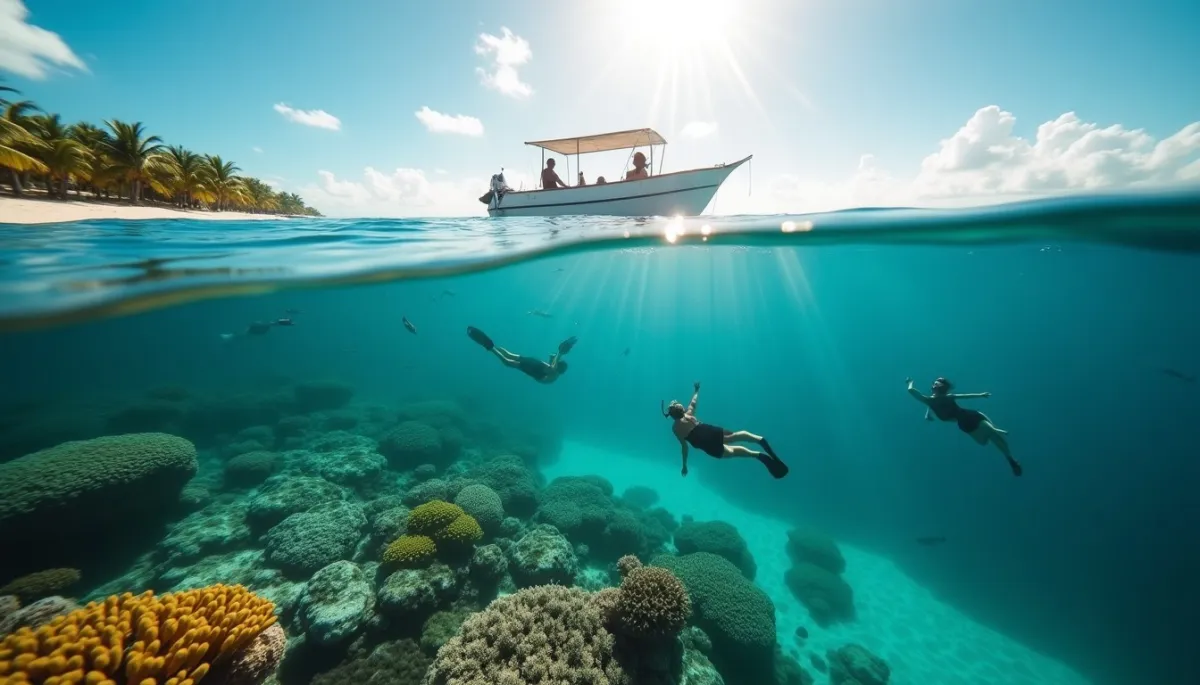
Take a breath. The surface ripples, sunbeams scatter, and a parrotfish chisels coral below.
The turquoise water off Playa del Carmen or Cozumel invites millions of snorkelers each year. Close to the shore, coral gardens teem with parrotfish, nurse sharks and schooling jacks, yet those same reefs face chronic stress. Global warming, pollution and direct contact from visitors accelerate damage. Scientific assessments, including the IPCC Special Report on the Ocean (2019), warn that most reefs will suffer greatly if warming continues. In the Caribbean, studies estimate a strong decline of living coral cover since the 1970s, with mass bleaching events recorded in 2005, 2010 and the global bleaching episodes of 2016 and 2017.
Bleu fragile
Reefs are not rocks. They are colonies of tiny animals (coral polyps) that secrete limestone as they grow, building habitats over decades and centuries. When water temperature rises, corals expel the algae (zooxanthellae) that give them color and energy, a process known as bleaching. Bleached corals are weakened and more vulnerable to disease.
In the Riviera Maya, the Mesoamerican Barrier Reef System stretches roughly 1,000 kilometers from the Yucatán to Honduras. It supports fisheries, protects the coastline and drives tourism. Yet local surveys and park reports show repeated declines in coral cover and changes in species composition since the early 2000s.
Damage can be sudden and visible: broken branches of Acropora, scars from boat anchors, or the pale ghosts of bleached colonies. Less visible is the long recovery time. A branching coral damaged today may take decades to regain its original structure, while some massive corals can live for centuries.
Sous la surface
Why are reefs declining? The answer is cumulative. Global warming raises sea temperatures and intensifies bleaching. Ocean acidification alters calcification, making it harder for corals to build skeletons. Locally, sediment runoff from coastal development, sewage, and nutrient pollution feed algal blooms that smother young corals.
Tourism growth intensifies local pressures. Quintana Roo welcomed more than 20 million visitors in 2019 according to Mexican tourism statistics, concentrating boat traffic, snorkeling tours and coastal construction. In some sites, inexperienced snorkelers inadvertently step on or touch coral, while boat anchors crush colonies.
Chemicals matter too. Laboratory studies and field observations have shown that certain sunscreen ingredients (for example oxybenzone and octinoxate) can harm coral larvae and increase bleaching sensitivity. For that reason, places such as Hawaii and Palau have enacted restrictions on some sunscreen chemicals, and many resorts around the Caribbean now promote reef-safe products.
Gestes qui comptent
Small behaviors add up. On a sunny morning near Isla Mujeres, a local guide named Jorge told me that most damage he sees comes from lack of buoyancy control. Tourists float feet-down, inadvertently kicking gardens of brain coral and elkhorn. Education and basic rules change the game.
Here are ten golden rules to protect coral while snorkeling. Each one is practical and easy to adopt, and together they reduce direct harm and support reef resilience.
- Keep distance : Stay at least 1.5 meters from coral. Admire without touching.
- Control your buoyancy : Learn to float horizontally and use a flotation vest if needed to avoid kicking.
- No touching : Coral are living animals. Touching transfers oils and can break delicate tissue.
- Watch your fins : Point fins outward and practice gentle strokes to avoid stirring sediment.
- Use reef-safe sunscreen : Choose mineral sunscreens (zinc oxide, titanium dioxide) or wear a long-sleeve rash guard.
- Follow the guide : Local guides know the fragile spots and the best approach routes, so listen and respect their instructions.
- Avoid standing up : If you need to rest, move to sand patches away from coral, or return to the boat.
- Do not feed wildlife : Feeding fish alters their behavior and the ecological balance around reefs.
- Secure your gear : Tie off cameras and equipment; a dropped camera can crush colonies.
- Support restoration : Choose operators that fund reef restoration or marine protected areas.
Beyond these rules, engage with local conservation. In Puerto Morelos National Park and Cozumel, restoration projects transplant nursery-grown corals and monitor recovery. Volunteer programs and guided eco-tours help fund science and protection. If you snorkel responsibly, you become part of the solution.
Finally, learn simple concepts. Bleaching is the loss of symbiotic algae; it does not always mean immediate death, but it is a severe stress signal. Resilience depends on local water quality, genetic diversity of corals and reduction of acute physical harm.
Enjoying a reef is a privilege. By observing these ten rules, you help preserve a living landscape that feeds communities, buffers the shore and amazes each new generation.
Thanks for reading, and don't forget, Enjoy Life Moments!