Posidonia meadows: the Mediterranean's green lung that must be saved
🚀 Key Takeaways
- Core concept : Posidonia oceanica is an endemic seagrass that stores blue carbon and protects coasts.
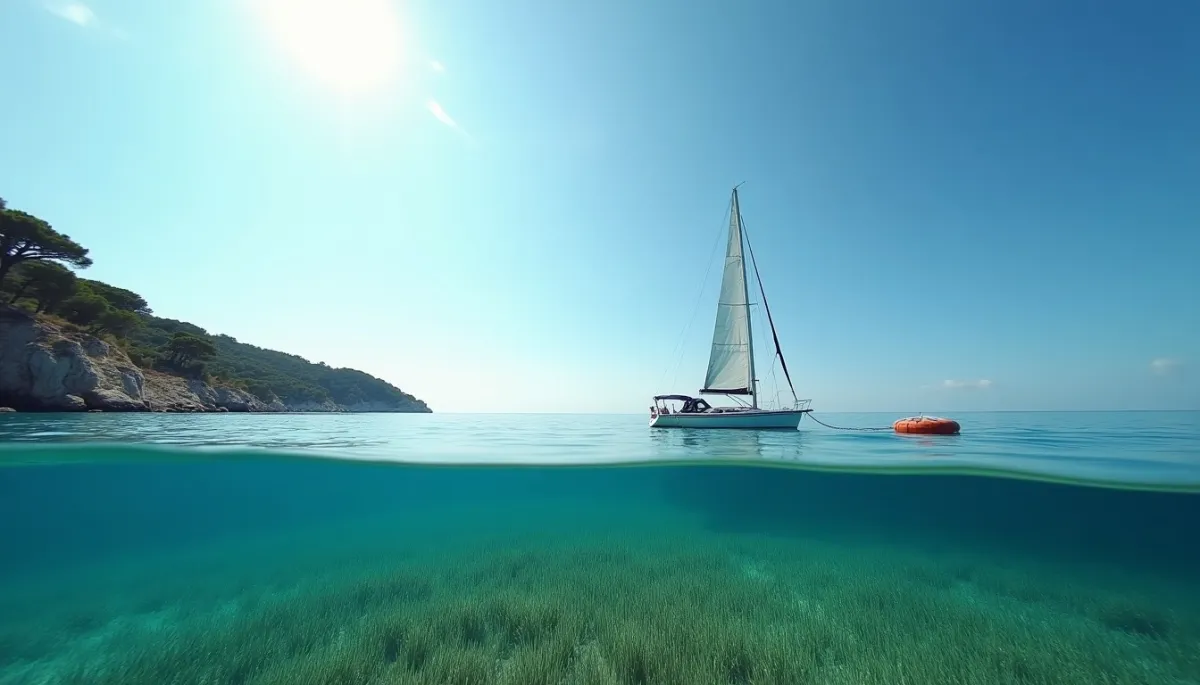
- Practical tip : Use official mooring buoys and avoid anchoring on meadows while sailing near the French Riviera.
- Did you know : Some meadows are centuries old and their detritus shapes coastal dunes and beaches.
It feels like stepping into a green cathedral beneath the waves. Close your eyes and imagine snorkeling in the Bay of Villefranche, sunlight splaying through water, ribbons of Posidonia swaying like cathedral curtains.
the living carpet
Posidonia oceanica forms dense meadows from the surface down to about 40 metres, along much of the Mediterranean coastline. These prairies host fish nurseries, shellfish, seahorses and countless invertebrates. In the French Riviera, notable meadows fringe areas from the Lérins Islands to Cap Ferrat and the Rade de Villefranche.
Beyond biodiversity, Posidonia acts as a powerful carbon sink. Scientists use the term "blue carbon" to describe carbon stored in coastal ecosystems. Sediments beneath Posidonia can trap carbon for centuries, contributing to climate mitigation.
These meadows also stabilize sediments and reduce coastal erosion. Their rhizome networks bind the seabed, and piled up dead leaves—known locally as "banquette"—help form and protect dunes and beaches along the Côte d'Azur.
pressures on the meadow
Human activities have intensified threats in recent decades. Anchoring by recreational boats is one of the most visible causes of damage, tearing rhizomes and creating barren scars. Coastal urbanisation and tourist infrastructure reduce water quality and light available to the plants.
Climate change amplifies the situation. Warming seas stress Posidonia beds, making them more vulnerable to disease and invasive species. The spread of invasive algae, such as Caulerpa taxifolia observed since the 1980s, has altered local ecosystems in some areas.
Despite protection frameworks like the European Habitats Directive (1992) and France's marine protected areas, enforcement is uneven. Some Natura 2000 sites and national parks, including Port-Cros (established in 1963), are strongholds, yet many coastal stretches remain exposed.
what can be done
Solutions exist and are already deployed along the Riviera. Installing eco-moorings keeps boats off the seabed. Local municipalities and park authorities increasingly restrict anchoring in sensitive zones, and mooring bouées are expanding in marinas and anchorages.
Scientific monitoring and citizen science help map meadow health. Divers, university research teams and local NGOs collect data, record scarring, and monitor recovery. Community restoration projects, including replanting and protection initiatives, have shown promising local results.
As a visitor or resident, you can act: avoid anchoring in seagrass areas, favour moorings, support marine protected areas, and join beach clean-ups to reduce pollution. For sailors, consult local charts and the Parc national de Port-Cros or municipal guidance before dropping anchor.
Saving Posidonia is both a coastal and a climate action. These meadows are living archives and natural infrastructure; protecting them preserves biodiversity, shorelines and carbon stores. On the French Riviera, where tourism meets fragile marine habitats, small daily choices have large cumulative impact.
Thanks for reading, and don't forget, Enjoy Life Moments!