The Mayan ballgame (Pok-Ta-Pok): the first team sport in history?
🚀 Key Takeaways
- Key concept : Pok-Ta-Pok was a ritualized team ballgame with deep social and political roles.
- Practical tip : Visit the Great Ball Court at Chichén Itzá at sunrise to feel the scale and echoes of the game.
- Did you know : The ball was made of natural rubber, a Mesoamerican innovation dating back over 3,000 years.
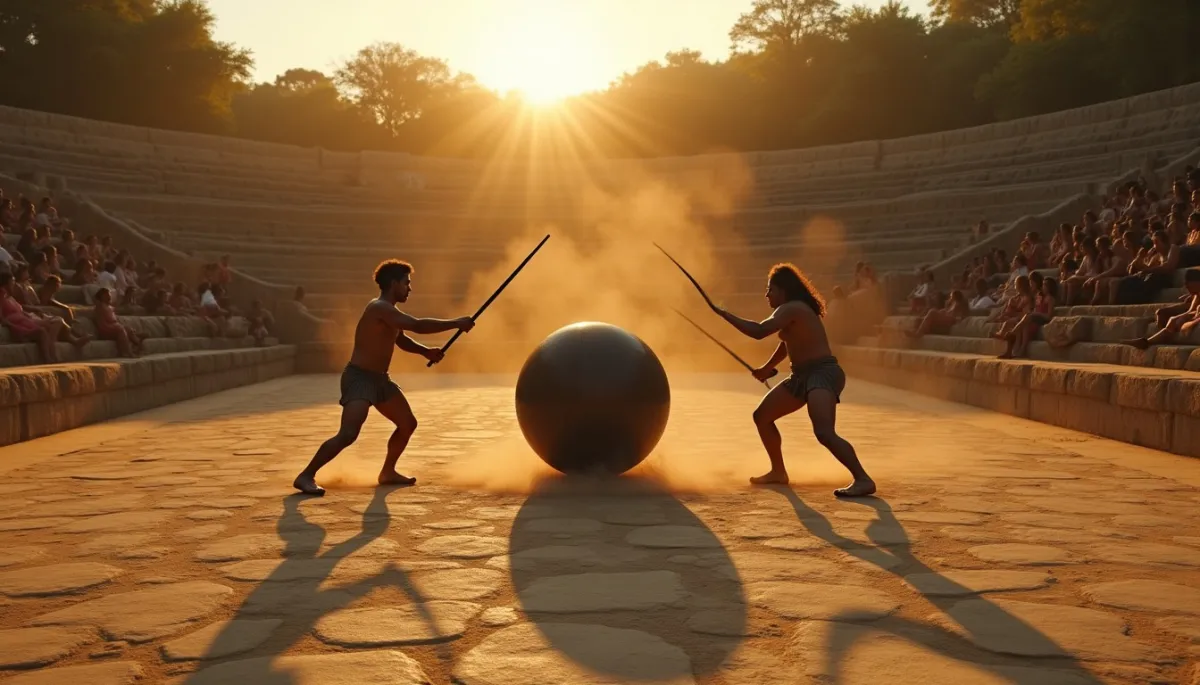
Hear the hollow bounce of a heavy rubber ball, and you can almost hear the past. Picture a wide sun-bleached courtyard, stone benches packed with spectators, and players striking a dense black ball with hips and forearms, their bodies protected by thick belts and hip pads.
Echoes on stone
Archaeological evidence places the Mesoamerican ballgame among the longest-lived sports in human history. Sites with dedicated ballcourts appear from the Formative period, and by the Classic era (roughly 250 to 900 CE) courts and carved reliefs are common across Maya cities such as Copán, Uxmal and the famous Chichén Itzá.
One of the earliest ballcourts is at Paso de la Amada (southern Chiapas), dated by archaeologists to the second millennium BCE, indicating that organized play and specially built courts existed long before the Classic Maya florescence. The Olmecs and later cultures left rubber objects and depictions of players, showing the game’s antiquity.
In Maya iconography, ballplayers appear on stelae, murals and portable objects, sometimes wearing elaborate headdresses or carrying symbolic blades. These images confirm that the game was public, visually striking and woven into elite display.
Myth and meaning
To the Maya, the game was far more than sport. The K'iche' Maya narrative contained in the Popol Vuh, compiled in the 16th century, tells the story of the Hero Twins, who are summoned to the underworld to play ball against the lords of Xibalba. The myth links the game to cosmology, death and rebirth, celestial movement and the seasonal cycle.
Spanish chroniclers of the 16th century recorded the Yucatec name pok-ta-pok, which evokes the sound of the ball. Diego de Landa and others described matches staged at important civic and religious moments, suggesting the sport served as ritual theatre, diplomacy and social negotiation.
Beyond myth, epigraphers such as David Stuart and other Maya scholars have read inscriptions that associate ballgame scenes with dates, rulers and political events, showing that scores and matches could mark victory, legitimacy or tribute between elites.
Rules and players
Modern reconstructions emphasize teamwork. Teams used hips, thighs and sometimes forearms to propel a solid rubber ball, often weighing several kilograms. Head and hand strikes were generally avoided to protect life and ritual order.
Some courts, notably at Chichén Itzá, include high stone rings mounted on walls. Scholars debate whether passing the ball through such rings was a common scoring method or a later ceremonial addition. The lack of a complete rule book means much is inferred from art and architecture.
On the question of sacrifice, sources vary. Some reliefs appear to show ritual decapitation or tribute, but whether winners or losers suffered this fate depended on time and place. Scholars now stress nuance: the game could symbolize cosmic struggle without implying a single, universal penalty.
Living echoes
The ballgame’s legacy survives in modern Mexico. In western states, ulama, a descendant game, is still played with a heavy ball and hip strikes. In Yucatán, cultural groups stage pok-ta-pok demonstrations to revive ancestral gestures. These practices offer a visceral connection to ancient rhythms.
For travelers, ballcourts are among the most evocative ruins. The Great Ball Court of Chichén Itzá remains unmatched for its scale and carved narrative panels. Smaller courts in Copán and Uxmal allow closer inspection of players’ reliefs and inscriptions.
Practical advice: hire a local guide who can place what you see into historical context, avoid climbing on fragile monuments, and, if you watch a reenactment, treat it as both sport and ritual—pay attention to costume, music and ritual objects.
Pok-Ta-Pok challenges our modern categories. It was a team game, a civic spectacle and a cosmological act. Whether it is the first team sport depends on definitions, but its antiquity, longevity and social reach make it a powerful candidate for the title of earliest organized team contest.
Thanks for reading, and don't forget, Enjoy Life Moments!