Peilz Island: the fascinating story of the only natural island in eastern Lake Geneva
🚀 Key Takeaways
- Key concept : A tiny, natural islet born of glacial action.
- Practical tip : Best seen from Villeneuve or on a CGN cruise; check local rules before landing.
- Did you know : The island inspired 19th century painters and remains a beloved landmark for locals.
Silent and stubborn.
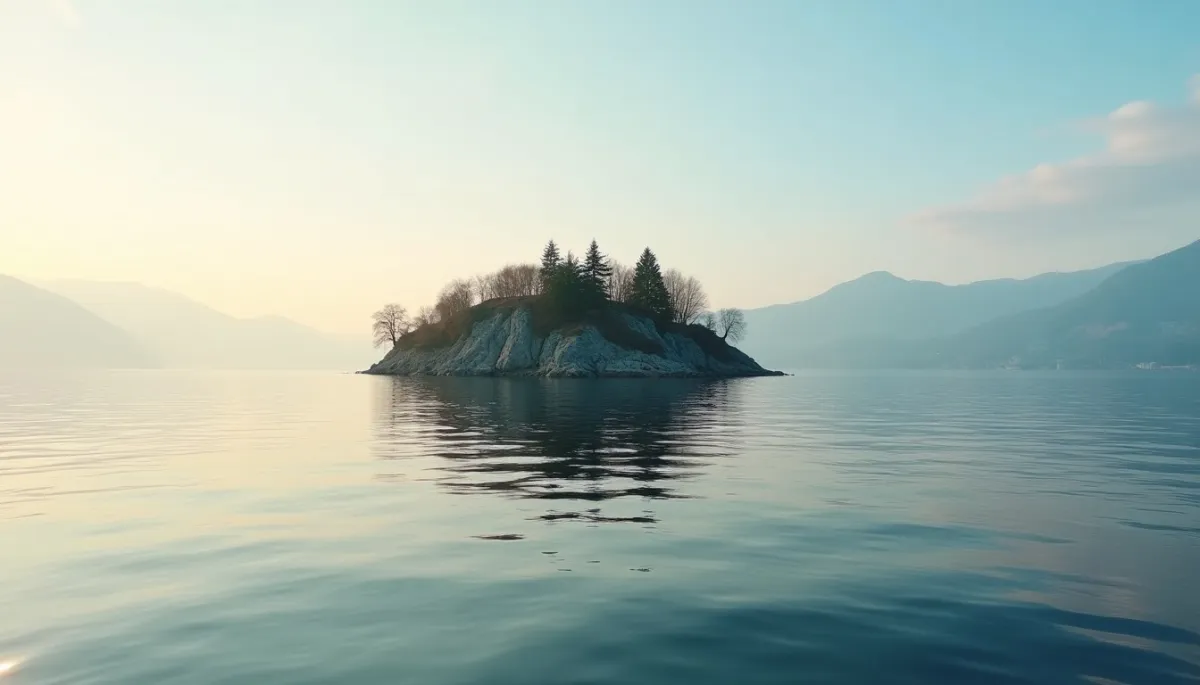
Stand on the quay at Villeneuve on a clear morning, and there it is: a low, rocky knob crowned with trees, reflecting like a jewel on the lake. Boats slide by, the Alps loom to the east, and the island, barely larger than a garden, keeps its secrets.
Une île minuscule
Peilz Island is striking because of its scale. From the shore it looks intimate, almost accessible, yet its modest footprint makes it unique among the larger islands of Lac Léman.
For sailors and passersby, it works as a natural waypoint. Captains of classic CGN boats (the Compagnie Générale de Navigation sur le lac Léman) will point it out on cruises that ply the Montreux–Villeneuve corridor, and photographers love its simple silhouette at golden hour.
The island’s visibility has made it a local emblem. Residents of Villeneuve and nearby Montreux recognize it like a village landmark. Children dare one another to swim close, fishermen cast lines offshore, and painters have framed it for generations.
Des origines glaciaires
The island’s existence is a story written by ice. At the end of the last Ice Age, roughly 12 000 to 15 000 years ago, the Rhône glacier sculpted the basin of Lake Geneva. As glaciers retreated they left behind resistant bedrock and moraine deposits. Islands such as Peilz are the geological residues of that process, small prominences spared by erosion.
Geology explains more than shape. The island’s rocky base resists wave erosion better than surrounding sediments, which is why it survives as a green dot in a long freshwater bay. Around Lake Geneva, other islets or shoals share similar origins, but in the eastern basin Peilz remains the sole natural island.
This glacial heritage ties the island to a continental timeline. When you look at Peilz, you are seeing a landscape shaped over millennia, a quiet witness to climate change long before human records.
Des récits et des regards
The human stories around Peilz are modest and charming. In the 19th century, with the rise of Romantic travel, the shores of the lake drew painters, poets and early tourists. While famous names such as Lord Byron and other Romantics are associated with the Lake Geneva region, local artists also fixed the island in oils and on early photographic plates.
Locally, the isle features in folklore. Elders recall tales of lovers who sought its shade or fishermen who used it as a marker on misty mornings. Such anecdotes, even if small, build the island’s cultural value for communities along the eastern shore.
Administratively, Peilz has sometimes been the subject of questions about ownership and stewardship, as happens with distinctive natural features. For visitors, the practical rule of thumb is simple: appreciate the view, and check with the municipal office of Villeneuve or the canton of Vaud before attempting to land.
Un futur partagé
Conservation and tourism must be balanced. The island’s small ecosystem (trees, nesting birds, shoreline plants) is fragile. Even modest human pressure, like landing or leaving waste, can have outsized impacts.
Local associations and municipalities increasingly promote respectful visitation. Simple measures make a difference: observe from the shore, use authorized boat operators such as CGN, and avoid bringing pets ashore without permission. These practices help keep Peilz intact for future generations.
If you plan a visit, combine it with other Riviera experiences: a stroll along Montreux’s lakeside, a detour to Château de Chillon, or a hike in Lavaux vineyards. Seeing Peilz within this broader landscape gives perspective on why Lake Geneva has fascinated travelers for centuries.
Thanks for reading, and don't forget, Enjoy Life Moments!