Peak Walk: suspended-bridge architecture and adrenaline at 3,000 m
🚀 Key Takeaways
- Core concept: A unique suspension bridge linking two summits at roughly 3,000 meters.
- Practical tip: Take the first cable car, wear sturdy shoes, and check the weather for best visibility.
- Did you know: The span was designed to resist harsh alpine winds and thermal shifts, with steel cables anchored into bedrock.
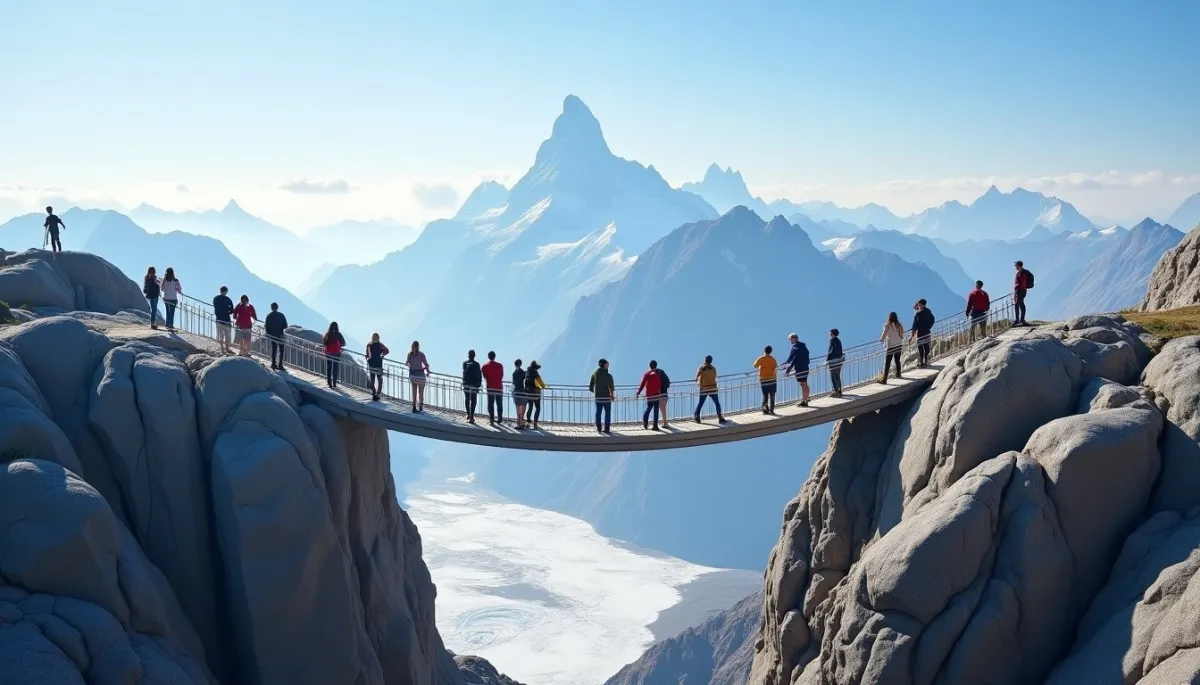
Feel the altitude. Imagine the thin air, the sun slanting on glacial blue, and below you a narrow walkway suspended between two peaks.
You arrive at Glacier 3000 by cable car from Col du Pillon, step out onto a ridge, and the Peak Walk appears: a slender, deliberate line of metal and wood connecting rock to rock. Around you, the Alps open in a near-cinematic panorama. The Matterhorn and Mont Blanc hover on the horizon, clouds drift through saddles, and your heartbeat measures each step of the crossing.
a new mountain gesture
Since its inauguration in 2014, Peak Walk has become emblematic of how modern engineering can merge with alpine tourism. It is often described as the first suspension bridge to connect two mountain peaks above 3,000 meters, a remarkable statement in both design and ambition.
Architecturally, the project answers a dual brief: create a safe, stable walkway that feels airy and dramatic, and preserve the fragile high-mountain environment. The result is a minimal visual footprint. The bridge relies on high-strength steel cables and a lightweight deck whose elements are bolted into anchors set in the rock.
The experience itself is the product. Visitors come for the view, but they also come to feel the structure's subtle motion. When many people cross, the bridge can sway gently. That movement, engineered and tested, is part of the attraction, translating human presence into a shared physical memory.
why engineers dared
Designing a bridge at altitude means confronting wind, ice, temperature swings, and logistics. Materials expand and contract with sun and cold; storm gusts can be sudden and violent. To withstand this, engineers used flexible connections, redundant cables, and anchors drilled deep into the bedrock.
Building on a glacier required meticulous planning. Components are prefabricated at lower altitude, then helicoptered to the site or transported by specialized mountain crews during stable weather windows. The Alpine construction calendar is short, often limited to a few months each summer when snow and ice retreat enough to allow safe work.
Beyond technical constraints, the bridge responds to a cultural shift in mountain tourism. Travelers seek experiences that combine authenticity, design and a manageable dose of risk. Peak Walk offers a controlled encounter with exposure, crafted to be accessible to non-climbers while preserving the sense of wildness that draws visitors to the high Alps.
beauty and tensions
Yet the project raises questions. How to reconcile increased footfall with fragile environments? Glacier 3000 balances access with protection: pathways are delimited, visitor numbers are managed at peak times, and educational panels explain glacial retreat and local ecology.
There are also subjective tensions. For purists, engineered viewpoints risk turning wild places into theme-park backdrops. For others, responsible infrastructure is the only way to connect new audiences to mountain landscapes and to build conservation awareness.
Looking ahead, engineers and managers continue to innovate. Sensors monitor cable tension and weather conditions in real time. Maintenance plans anticipate changes in permafrost and rock stability. The story of Peak Walk is therefore ongoing: it is both an architectural achievement and a living experiment in how we visit high places.
Practical tips: arrive early to avoid crowds and afternoon winds, bring layers and sunglasses, and allow time to enjoy the surrounding walks at Glacier 3000, including short glacier viewpoints and guided tours. Local guides at Les Diablerets and Col du Pillon provide context and stories that deepen the visit.
Thanks for reading, and don't forget, Enjoy Life Moments!