N'Golo Kanté: praise for kindness and minimalism in a multimillion industry
🚀 Key Takeaways
- Core concept : Humility and minimalism can coexist with world-class success.
- Practical tip : Adopt a capsule routine, limit social noise, and prioritize daily small acts of kindness.
- Did you know : Born in Paris in 1991, Kanté won both the Premier League and the FIFA World Cup within three years.
He looks like any neighbour, and that is the point.
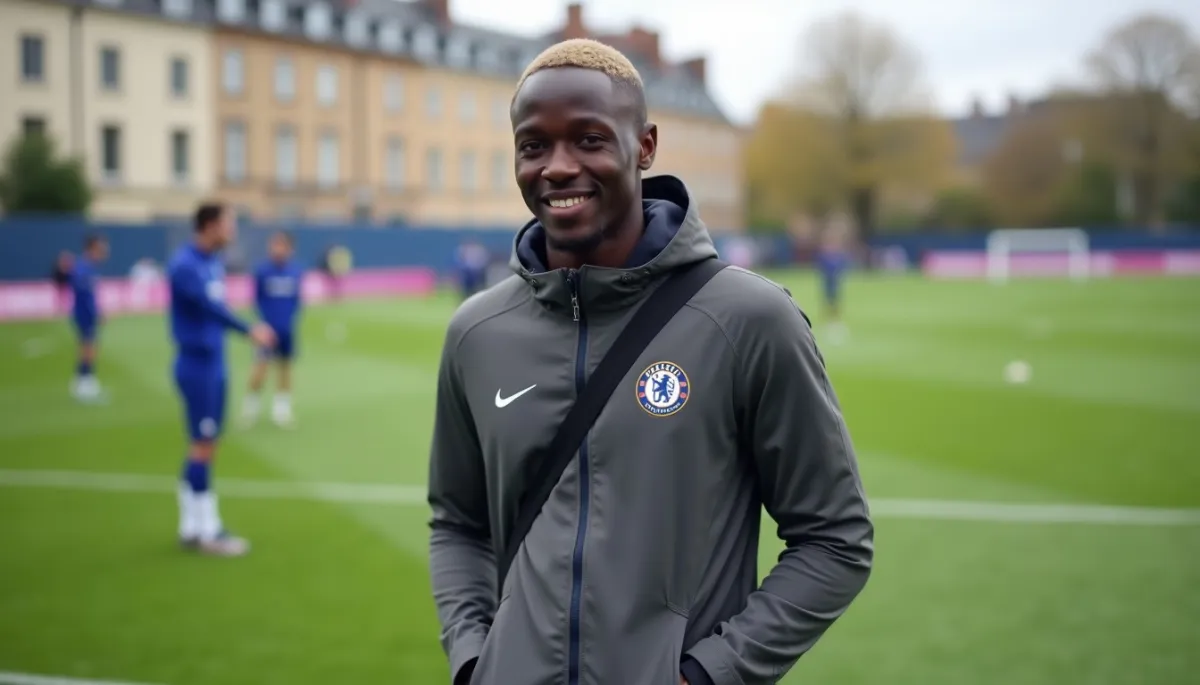
Imagine a late summer afternoon in London, by a training ground gate. Players arrive in branded vans. In the corner, one man walks calmly, in plain trainers and a simple jacket, carrying a small bag. He greets the security with a smile, chats briefly with a kitman, and disappears among the team. That man is N'Golo Kanté. The scene repeats, quietly, week after week, regardless of trophies or headlines.
Minimalisme assumé
N'Golo Kanté was born on 29 March 1991 in Paris, to Malian parents, and grew up in a modest environment in the Paris region. He began his senior career at US Boulogne (2011), moved to SM Caen (2012-2015), then to Leicester City in July 2015. One year later he joined Chelsea FC, before signing for Al-Ittihad in Saudi Arabia in 2023. His CV includes the Premier League title with Leicester in 2015-2016, a second Premier League with Chelsea in 2016-2017, the UEFA Champions League in 2021, and the FIFA World Cup with France in 2018.
On and off the pitch, Kanté's lifestyle reads like a deliberate counterpoint to celebrity. He avoids flashy cars, ostentatious mansions and constant social media display. Photographs that might be staged for many stars are rare. His wardrobe is compact, his public appearances measured. For fans and journalists this minimalism became as notable as his tackles and coverages.
This simplicity is not indifference. It is a choice that structures his days, conserves energy for performance, and sends a message: success does not require theatricality. In an industry where image can eclipse craft, Kanté makes craft the message.
Gestes et réputation
Kanté's gentleness is passed along in small, concrete gestures. Teammates and opponents frequently recount his availability, his quick jokes in the dressing room, and his habit of lifting others' spirits after difficult matches. Journalists and staff often highlight his respectful, punctual behaviour.
Beyond anecdote, his career offers dated milestones that anchor the story. On 2 May 2016 Leicester City clinched a historic Premier League title, an achievement in which Kanté's engine-like presence was decisive. On 15 May 2017 Chelsea secured the league under Antonio Conte, with Kanté again central. On 15 July 2018 France won the World Cup in Moscow, and Kanté returned home with the nation. These moments made him one of the rare players to carry club and country triumphs while keeping a low profile.
Media outlets often use the word 'shy' to describe him. That term captures part of the truth, but it misses agency. Kanté decides what to expose and what to keep for himself. In doing so, he redefines publicness for elite athletes.
Contradictions visibles
Still, the contrast between Kanté's values and the football business generates questions. Football is now an industry of broadcast rights, sponsorships, and transfer fees that can exceed tens of millions of euros. How does a low-key player navigate that ecosystem? The answer is practical and paradoxical: by excelling. Excellence creates options, and Kanté used the freedom those options produced to remain modest.
At the same time, his minimalism is performative for some critics, who see it as another form of branding. When a player consistently refuses the limelight, that refusal itself becomes noteworthy, and can be commodified by stories and endorsements. Kanté has occasionally accepted campaigns and appearances, but always on his terms.
Finally, his moves—first to the English game, later to the Middle East in 2023—show how personal values and market realities meet. The choice to continue playing at high level while preserving a quiet life is not an escape from commercial pressures. It is a negotiation.
Leçons à emporter
What can readers borrow from Kanté's approach? First, minimalism as focus. Reduce choices that drain attention, and use the saved energy for what matters. Practically, build a simple daily routine, choose a reliable capsule wardrobe, and limit compulsive phone checks.
Second, practice gentle leadership. Small acts—praising a colleague, offering help, turning up on time—compound. Kanté's influence is not shouted. It is felt, in training rooms and team morale.
Finally, accept complexity. In a world of millions, kindness and modest living are experiments, not guarantees. They require discipline and, at times, trade-offs. Kanté's career suggests that authenticity remains a powerful currency.
Thanks for reading, and don't forget, Enjoy Life Moments!