Dom Pérignon: the science and patience behind an exceptional vintage
🚀 Key Takeaways
- Core concept : A Dom Pérignon millésime is a single-year champagne released only in great years.
- Practical tip : Store bottles horizontally in a cool, dark place and serve at 8-10°C for optimal tasting.
- Did you know : The house uses the idea of "Plénitude" to mark different peaks in a vintage's life.
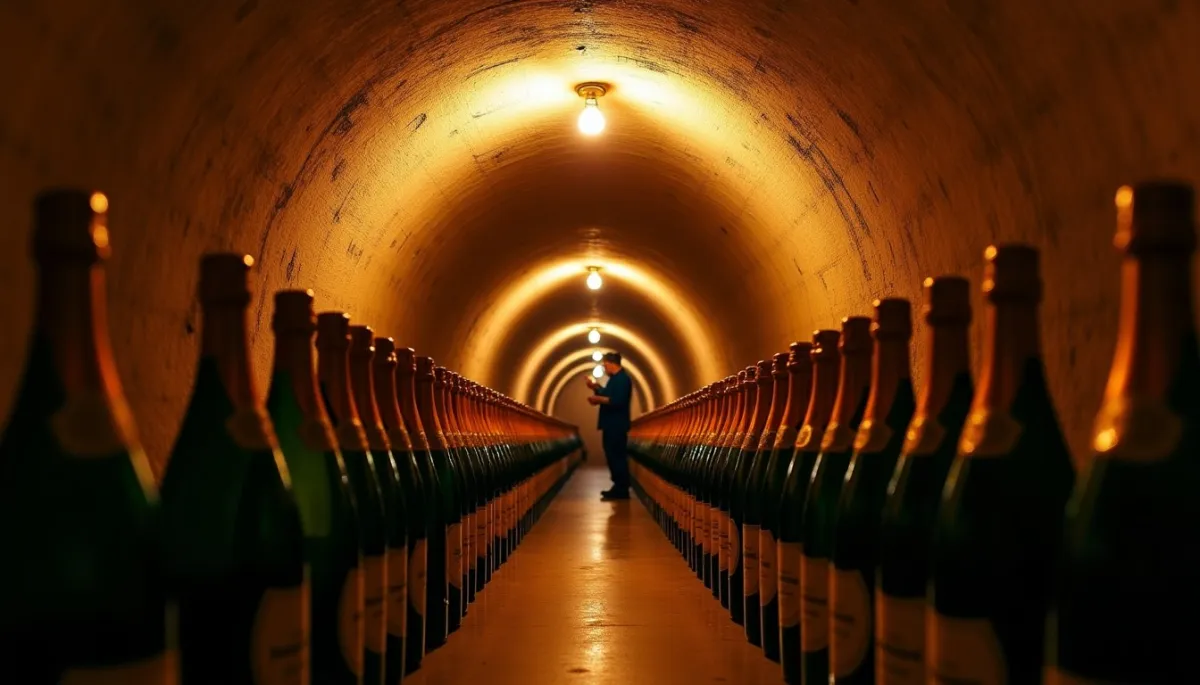
Pure patience. Imagine descending into chalk galleries under Épernay, light thinning, the cool smell of time and lees.
In that silence, bottles rest for years, some waiting a decade or two before the chef de cave decides they are ready. A Dom Pérignon vintage is born of that waiting, of repeated tastings, and of decisions that balance science and intuition.
Vintage as statement
Dom Pérignon is Moët & Chandon's prestige cuvée, and it is only produced as a vintage, that is from a single harvest year. The house declares a vintage only when grapes reach a level of balance and complexity deemed worthy of a long-term expression.
This selectivity means fewer bottles in some years, and intense attention when a year is declared. Famous successful vintages include years widely praised by critics, and each carries its own fingerprint: cooler years bring tension and minerality, warmer years bring ripeness and power.
Producing a vintage is also a commercial and symbolic act. It asserts a house style that must remain recognizable, while allowing each year to show personality. Consumers buying a Dom Pérignon expect both continuity and surprise.
Science in the vines
At the vineyard level, the process begins long before harvest. Champagne's chalk soils, the mix of Pinot Noir and Chardonnay parcels, and meticulous vine work shape the raw material. Precision viticulture, plot selection and early disease control are essential.
Climatic variations have become a central factor. Warmer seasons change sugar and acidity balance, pushing teams to harvest earlier, adjust cellar handling, and sometimes rethink assemblage proportions. The cellar records, analysis of musts and micro-vinification trials guide these choices.
Technically, the winemaking follows strict steps: first fermentation, blending into a house-driven style, bottling with tirage for the second fermentation, and then long ageing on lees. Chemical analysis, controlled temperatures and repeated tastings—both blind and comparative—ensure a precise trajectory toward the desired profile.
Plénitude and time
Dom Pérignon uses the notion of "Plénitude" to describe peak moments in a vintage's life. The first plénitude corresponds to the initial release, after substantial ageing. The second and sometimes third plénitudes mark later peaks, when autolysis of yeast and slow oxygen exchange reveal new layers of aroma and texture.
These stages are monitored by the chef de cave and the tasting team. The decision to hold bottles longer, to release as P2 or P3, is strategic. It can transform a wine from youthful vibrancy to profound complexity, and collectors prize these later releases.
Patience here is a form of luxury. It requires warehouse space, capital tied up in inventory, and the humility to wait until the wine speaks. The payoff is a bottle that offers depth beyond immediate drinking pleasure.
Challenges and future
Climate change and market demand are reshaping the conversation. Warmer vintages may produce riper flavours, requiring refinement in cellar work to preserve freshness. Meanwhile, global demand for rare bottlings and special releases pushes houses to balance scarcity and availability.
Dom Pérignon adapts through vineyard selection, technical innovations and a careful release calendar. The house also explores minimal intervention, and sometimes cellarmanship experiments, to keep the essence of each vintage intact.
For the curious collector, an important practice is provenance. Buy from reputable sources, note disgorgement dates and consider the plénitude stage. Tasting a Dom Pérignon across plénitudes reveals the power of time and the choices behind each bottle.
In the end, a Dom Pérignon vintage is a study in restraint. Science provides tools, but patience writes the final lines.
Thanks for reading, and don't forget, Enjoy Life Moments!