Natural perfumery: when the flowers of Grasse challenge the synthetic industry
🚀 Key Takeaways
- Concept key : Grasse's natural raw materials and artisanal know-how are fueling a revival of natural perfumery.
- Practical tip : Visit Grasse at dawn in June–July to see jasmine harvesting and attend a perfume workshop at Fragonard or Molinard.
- Did you know : Some traditional methods (enfleurage, concrete, absolute) coexist with modern CO2 extraction and biotechnology.
Close your eyes. Imagine a basket heavy with freshly picked jasmine, dew on the petals.
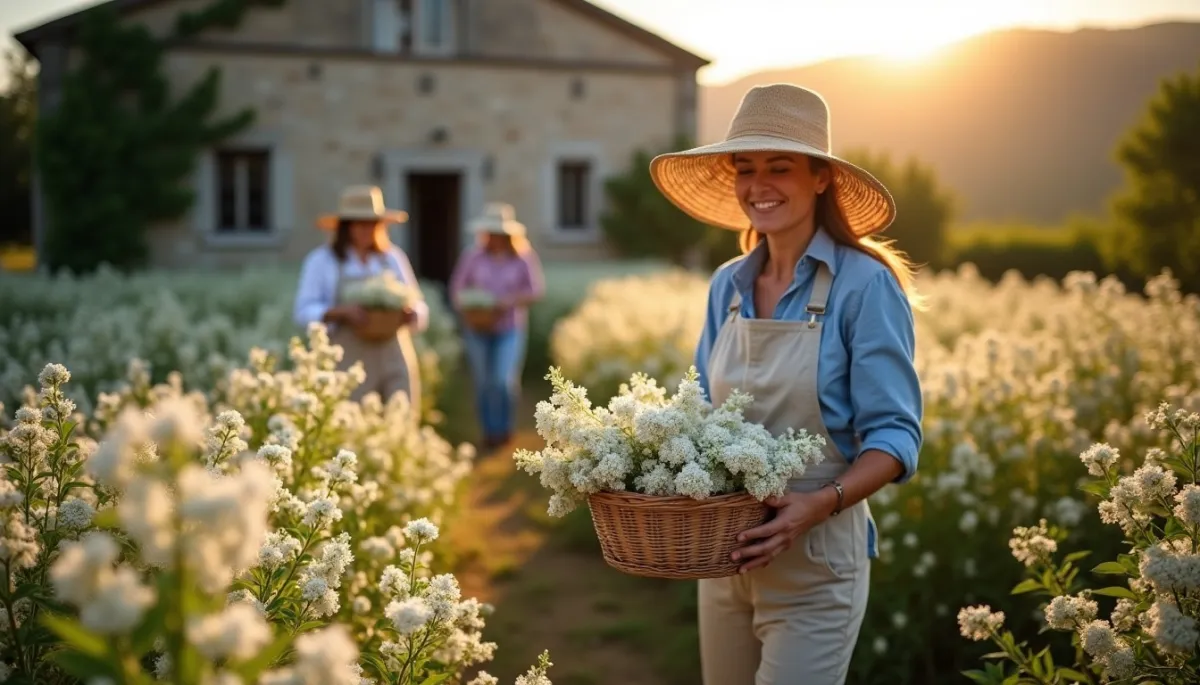
It is 5 a.m. near Plascassier, a cool light softens the rows of low jasmine bushes. Women and men bend over the plants, picking flowers by hand with a rhythm learned in childhood. In the distance, a small distillation pot exhales a hazy plume. The perfume is immediate and intimate; it speaks of place, soil and seasons.
Fragrance renaissance
The revival of natural perfumery is visible across the Côte d'Azur, and Grasse sits at its heart. Historic maisons such as Fragonard (est. 1926), Molinard (est. 1849) and Galimard (claims origins in the 18th century) welcome visitors who want to understand where scent begins. Workshops and tasting sessions (olfactory ateliers) have multiplied, turning raw materia prima into a cultural attraction.
Globally, the fragrance market has long been dominated by synthetic molecules that offered stability and low cost. Yet since the 2010s, consumer demand for transparency, traceability and natural ingredients has pushed niche brands and some maisons to re-evaluate their supplies. Boutiques in Nice, Cannes and Grasse now display perfumes described as "natural" or "composed mainly of naturals," appealing to a clientele that values terroir and craftsmanship.
The economic ripple is concrete. Local growers who lost ground during the 20th century resurgence of synthetics find renewed interest in their jasmine, rose and tuberose. Tourism benefits too. The Musée International de la Parfumerie in Grasse remains a must-see, and hands-on experiences — sniffing raw absolutes, touring a steam distiller — convert curiosity into purchases and long-term engagement.
Roots and reasons
Why this turn back to naturals? Partly it is cultural. A new generation equates authenticity with ingredients they can trace. Environmental concerns matter: customers increasingly ask about pesticide use, water consumption and the carbon footprint of a scent. Regulations from bodies such as IFRA (International Fragrance Association) have also made some synthetic ingredients more restricted, prompting reformulation.
Technically, naturals bring complexity. Some flowers cannot be steam-distilled without losing their scent profile. Tuberose and jasmine traditionally yield "absolutes" (concentrated extracts obtained via solvent extraction), or were once processed by enfleurage (an old fat-extraction technique). Modern CO2 extraction now offers a solvent-free route to rich-concentrate "concretes" and "absolutes," preserving delicate top notes that synthetic molecules often mimic but cannot fully replace.
Then there is terroir. Jasmine harvested at dawn in July in the hills around Grasse carries a scent fingerprint shaped by limestone soils, the maritime climate and micro-farming practices. Perfumers like Jean-Claude Ellena, known for minimalist, ingredient-driven compositions, have helped popularize the idea that less, but better, can be more expressive.
Petals and paradoxes
Natural perfumery is not without contradictions. Pure natural ingredients are variable: the same field yields different intensities from year to year, and absolute yields can be tiny. That variability is prized by artisans but is a logistical headache for mass-market houses that need consistency and shelf-stability.
Sustainability is another knot. Growing high volumes of jasmine or rose requires land and water. Overharvesting and mono-cropping threaten local biodiversity unless farming follows regenerative methods. Certification schemes such as COSMOS and Ecocert (for cosmetics and some fragrance ingredients) aim to guarantee standards, but labels are sometimes used for greenwashing, and rigorous supply-chain audits remain essential.
Innovation attempts to bridge the gap. Biotechnology now produces "biosynthetic" molecules: identical-by-structure to natural odorants but produced via fermentation, offering traceability and lower ecological impact in some cases. The future will likely see mixed palettes where traditional absolutes, responsibly farmed naturals and carefully chosen biosynthetics cohabit, combining soul and scale.
For the traveler and the curious, practical advice: visit Grasse between late May and July for rose and jasmine, book a workshop at Fragonard or Molinard, ask to smell concretes and absolutes side by side with synthetic accords, and learn to spot honest labeling. When you buy, favor producers who can describe origin, extraction method and the people behind the harvest.
Thanks for reading, and don't forget, Enjoy Life Moments!