Morges Tulip Bloom: Switzerland’s largest spring flower festival
🚀 Key Takeaways
- Core concept : The Morges Tulip Festival offers over 120,000 bulbs and hundreds of varieties, a major spring event on the Swiss Riviera.
- Practical tip : Aim for mid-April at dawn for peak color and soft light, take the train from Lausanne (about 15 minutes).
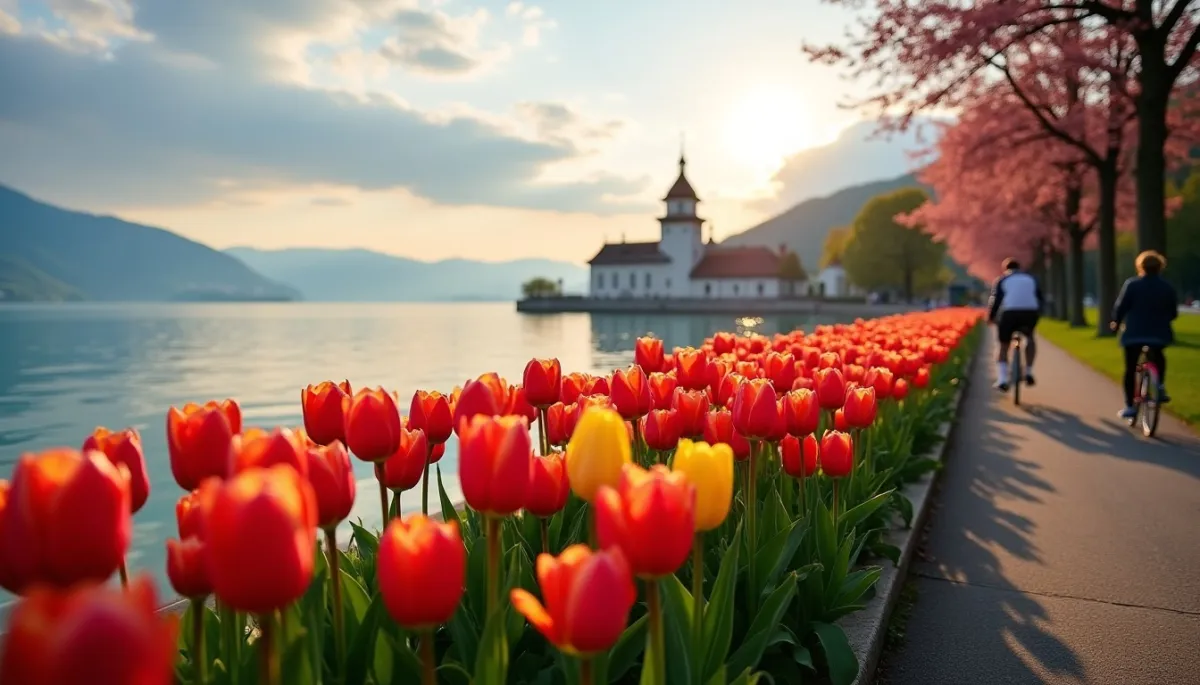
- Did you know : The displays are planted along the lakeside Esplanade, with the 13th-century Château de Morges as a scenic backdrop.
Color everywhere, joy within reach. Imagine stepping onto the Esplanade as a soft breeze carries the scent of tulips, and the lake reflects rows of crimson, yellow, and violet.
un tapis de couleurs
The Morges Tulip Festival (Fête des tulipes de Morges) is the largest spring floral event in Switzerland, held each April. The festival transforms the lakeside promenade into a vast tapestry of bulbs, usually numbering around 120,000, and showcases some 250 to 300 varieties, from classic Darwin hybrids to rare botanical tulips.
Visitors stroll between themed beds, seasonal installations, and informal stages for music and workshops. Children run between paths, local artisans sell bulbs and souvenirs, and photographers position themselves for the perfect shot with the Château de Morges in the background.
Since the mid-20th century the event has grown from a local celebration into a regional magnet. It now draws people from the Vaud canton, neighboring France, and beyond, forming a lively springtime tradition on the Riviera suisse.
pourquoi Morges attire
There are practical reasons for the festival's success. Morges sits on Lake Geneva, halfway between Geneva and Lausanne, easily reachable by frequent regional trains. The lakeside Esplanade offers over a kilometer of continuous planting space, which allows designers to create large-scale color narratives.
Local horticultural knowledge is also central. Municipal gardeners and volunteer associations plan the displays months in advance, selecting varieties for staggered bloom and resilient performance under Swiss spring weather. Many bulbs are imported from specialist growers, then planted by hand in autumn to ensure a spectacular spring display.
Beyond logistics, the festival answers a cultural desire. After long winters, communities look for renewal and public spaces that invite gathering. The tulips act as a seasonal magnet, encouraging slow tourism, café terraces, and cultural programming that benefits local hotels, restaurants, and shops.
histoires et visages
Every festival carries vignettes. I met a retired teacher who returns each year with a class photo taken under the same tree over two decades. A young couple chose the tulip beds as the setting for their engagement photos. Local volunteers, some in their seventies, still plant bulbs each autumn; they say the first warm day in spring is their reward.
The Château de Morges, hosting the Swiss Military Museum and periodic exhibitions, frames many photographs. Organizers also invite designers for special themed beds; past editions featured a tribute to Van Gogh and a botanical display tracing tulip history from Ottoman gardens to European bulb mania.
These human stories turn the festival into more than a horticultural show. They embed it into the civic calendar, and into personal memories that make people return year after year.
regarder vers demain
Climate change and evolving visitor expectations pose questions. Warmer winters can shift bloom times, making peak color earlier or more unpredictable. Organizers respond by diversifying varieties and improving soil and irrigation practices to maintain consistent displays.
Sustainability has become a priority. Recent editions have emphasized local sourcing when possible, recycling planting materials, and offering educational workshops about pollinators and biodiversity. The festival is moving from pure spectacle to a platform for ecological awareness.
If you plan a visit, practical advice helps. Aim for weekday mornings in mid-April to avoid crowds. Use public transport, arrive on foot or by bike, and pair your walk with a visit to Château de Morges or the lakeside boat tours. Bring a picnic blanket and a camera, but also respect planted areas and signage.
Thanks for reading, and don't forget, Enjoy Life Moments!