Les Grangettes: Immersion in the wild reserve at the Rhône mouth
🚀 Key Takeaways
- Core concept : A protected wetland where reedbeds and shallow water host migrating and resident birds.
- Practical tip : Visit at sunrise in spring or autumn, bring binoculars and stay on marked paths.
- Did you know : The mosaic of reed, mud and open water filters lake inputs and buffers floods.
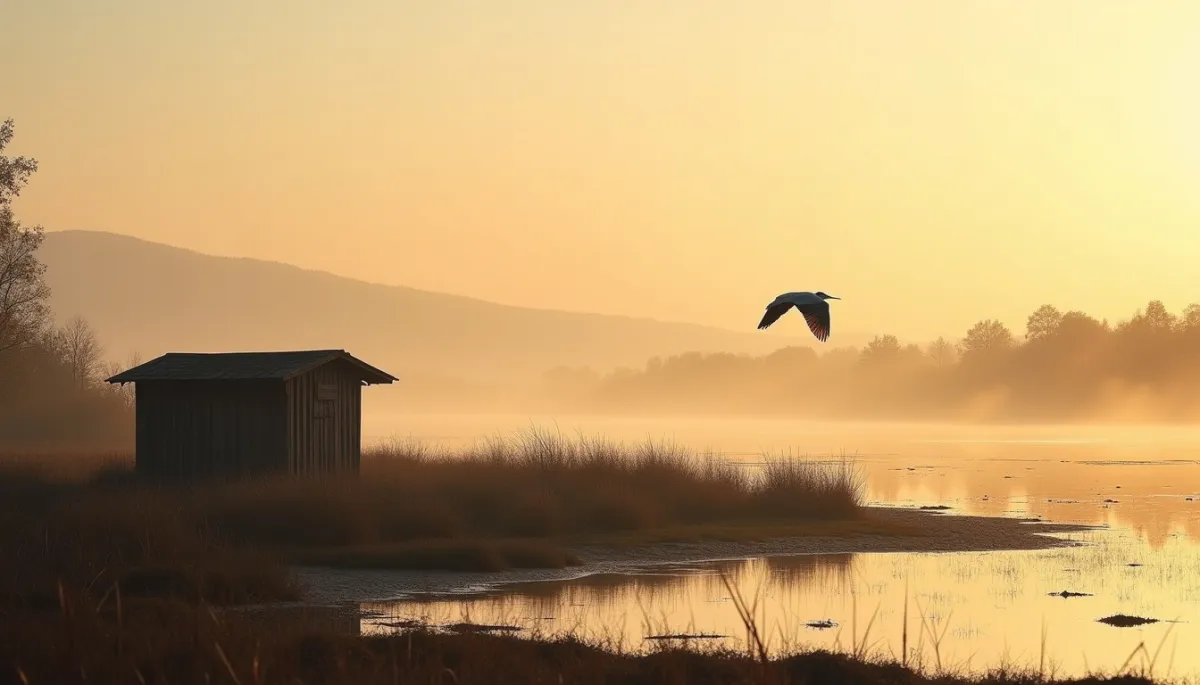
Soft light, reed whispers, a heron unfolding its wings.
Imagine standing on the lakeshore path at dawn, the air cool, the Rhône’s current slowing as it meets Léman. From the hides the reeds form a living wall; occasional splashes mark fish activity, while warblers thread the stems. Boats glide far off, leaving the delta to its rhythms. This is Les Grangettes: a narrow strip of protected marshland where everyday life and deep-time processes meet.
vie d'oiseaux
The reserve is first and foremost a bird place. In spring, from March to May, migrants stop to rest and fatten up: reed warblers (Acrocephalus scirpaceus), little egrets (Egretta garzetta) and common sandpipers are regulars. Winter gathers different species, such as tufted ducks and occasionally raptors scanning the flats.
Observers report concentrations during peak migration. Early mornings in April or late September offer the richest experience, when reed warblers sing, and the reedbeds host nesting bearded reedlings (Panurus biarmicus). Binoculars and a steady step reward patience; many notable sightings occur from the discreet hides along the shore.
These bird communities are not only charming, they are indicators. Changes in species composition over a decade signal shifts in water quality, vegetation structure and climate patterns. For naturalists, Les Grangettes is a small laboratory visible from the lakeside path.
flux et fonctions
Wetlands like Les Grangettes act as ecological filters. The patchwork of reedbeds, shallow water and exposed mud traps sediments carried by the Rhône, improving water clarity in the bay and supporting aquatic plants. This natural filtration is especially visible after spring snowmelt, when the Rhône brings mineral-rich water from the Alps.
Flood buffering is another function. In high-water years, the marsh absorbs peak flows, reducing downstream impacts. Locally this was noted after heavy winters in the 1990s and 2010s, when careful management of the lakeshore helped limit erosion and protect nearby fields and paths.
Finally, the reserve stores carbon in its peat and sediments. While small compared to forests, these wetland sinks contribute to regional efforts to slow greenhouse gas increases. Maintaining the reedbeds and shallow pools is therefore both a biodiversity and climate measure.
visiter et respecter
Access is simple: take the train to Villeneuve or local buses along the Riviera, then follow the lakeside trail toward the Rhône mouth. Paths and hides allow observation without disturbing breeding birds. Dogs should be kept on a leash, and feeding wildlife is prohibited to preserve natural behaviors.
Guided walks are offered by local associations and municipalities in spring; they are excellent for learning to identify species by call and to read the landscape. Bring a field guide, binoculars, and waterproof footwear if you plan to use the hides at low paths near the water.
Practical seasons: spring migration (March–May) and autumn (August–October) are prime. Summer is quieter at dawn and rich at dusk, while winter shows different silhouettes on open water. Respecting seasonal closures around nests makes your visit more rewarding and sustainable.
histoire et enjeux
Historically, the lakeshore around the Rhône mouth supported fishing and reed-cutting communities. Small piers and fish traps shaped the coastline; many local families still tell stories of the nets and reed roofs that sustained them. These human uses coexisted with the marshes for centuries.
Modern pressures have changed the balance. Urbanization along the Riviera vaudoise, recreational boating and water-level management for hydropower influence the reserve. Since the late 20th century, conservation measures and local volunteer programs have aimed to preserve this fragile edge between river and lake.
Future challenges include rising lake levels, invasive plants, and the need to reconcile public access with bird protection. The conversation now is about adaptive management: combining monitoring data, seasonal restrictions and habitat restoration to keep Les Grangettes wild and welcoming.
Thanks for reading, and don't forget, Enjoy Life Moments!