Hanal Pixan: how the Mayas celebrate Day of the Dead beyond clichés
🚀 Key Takeaways
- Core concept : Hanal Pixan means "food for the souls" (Yucatec Maya) and centers on offerings of food and memory.
- Practical tip : Visit small towns like Valladolid or a village cemetery, ask before photographing, and taste mucbipollo.
- Did you know : Día de Muertos was inscribed by UNESCO in 2008, and Hanal Pixan is a distinct Maya expression of the same ancestral practice.
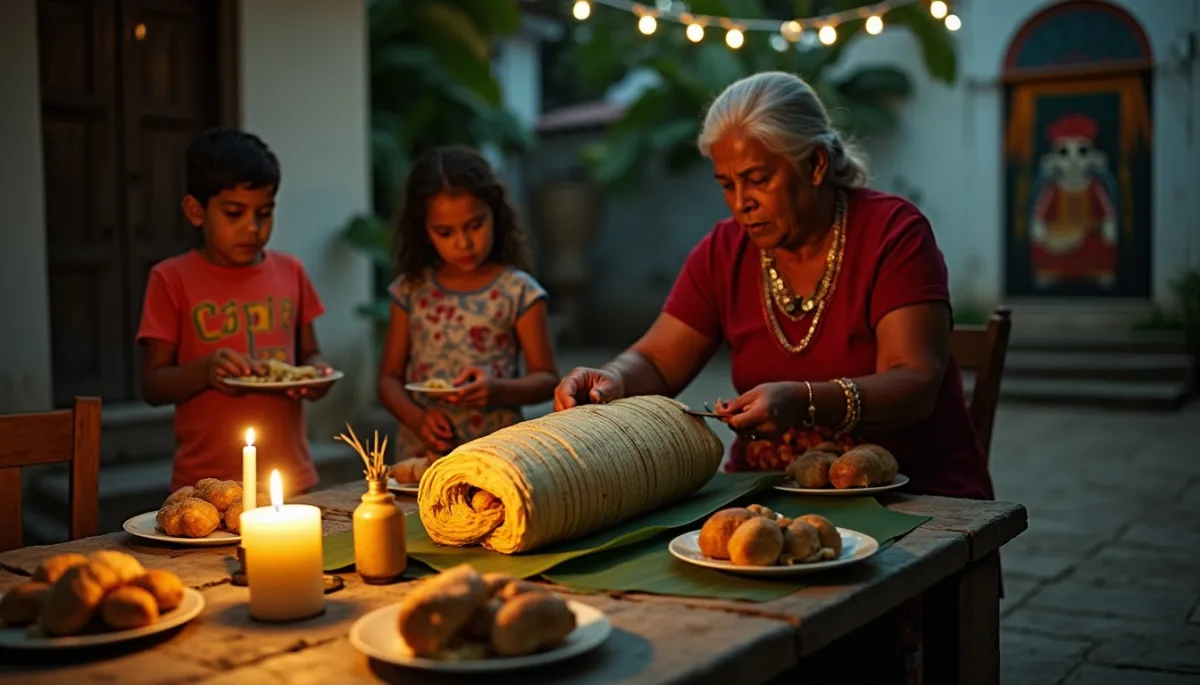
Warm lights, the smell of banana leaves and corn masa. Imagine a courtyard in Valladolid where families set a low table under a ceiba tree and begin to speak aloud the names of those who have gone.
roots at the table
Hanal Pixan is literally ‘‘food for the souls’’ in Yucatec Maya (hanal = food, pixan = soul). The ritual is concentrated around October 31 to November 2, overlapping Catholic All Saints and All Souls days, but its tone is distinctly Maya: intimate, edible, and domestic.
In towns across Yucatán, from Mérida to rural communities, family kitchens become altars. The centerpiece is often mucbipollo, a large spiced tamal baked in the ground or oven, wrapped in banana leaves. There are also sweet breads, atoles, fresh corn, candles and copal incense.
Unlike the theatrical calaveras and public parades popularized by media, Hanal Pixan emphasizes personal memory. Children and elders take turns recounting anecdotes, naming relatives, and sharing a first plate. The ceremony is an act of ongoing relationship, not a single spectacle.
living memory
The consequence of this orientation is that Hanal Pixan resists the tourist gaze that flattens the practice into costumes. When you attend a village celebration you witness a continuous chain of social ties: property owners, godparents, godchildren, neighbors, all reconnecting. The cemetery becomes an extension of the home.
This communal intimacy produces concrete gestures. Graves are cleaned and repainted days before, candles are lit throughout the night, and offerings are arranged in a specific order: food for the body, water for the journey, and personal objects that recall habits or professions.
Photographers and journalists often miss the point by staging images. In the best encounters you are invited, not intruding. That invitation transforms the viewer into a participant, and the story you carry home is about people, not props.
why it endures
Hanal Pixan survives because it answers fundamental human needs: to remember, to feed, to belong. The practice predates the Conquest. Archaeological and ethnohistorical research shows ancestor veneration was central in Maya cosmology, where the dead remain active members of the household network.
The Spanish introduced All Saints and All Souls days in the 16th century, creating a syncretic timeline. Communities adapted Catholic symbols while preserving Maya logics. That syncretism explains why Hanal Pixan happens on the same days as Día de los Muertos, yet retains distinct recipes, songs and chants.
Recent years have seen renewed interest from younger generations. Schools in Yucatán include local history in curricula, and cooks like the late chef Cristina Pacheco (local culinary preserver) documented traditional mucbipollo recipes, making the practice legible to new audiences without diluting it.
tensions and futures
However, commercialization and spectacle pose real risks. Since the early 2000s, tourism offices have sometimes staged ‘‘Day of the Dead’’ events aimed at international visitors, which can compress the ritual into a few hours and strip it of conversational depth.
There are also practical contradictions. Urban migration means some families cannot return to ancestral towns. Digital offerings—photos, messages, virtual altars—have become common since the COVID-19 pandemic of 2020, changing how presence and absence are negotiated.
Yet these changes are also creative adaptations. In Mérida, communal Hanal Pixan dinners organized by cultural centers combine public programming with spaces reserved for families. Anthropologists recommend supporting local initiatives rather than commercial shows, and always asking for permission before photographing or entering private altars.
practical advice
If you plan to experience Hanal Pixan, book accommodation early for late October. Visit markets to taste traditional foods: mucbipollo, pan de muerto local varieties, and atole de masa. Learn a few respectful phrases in Spanish or Yucatec Maya; a simple ‘‘gracias por invitarme’’ opens doors.
Respect rhythms. Evening vigils can last late into the night. Accept that rituals are by nature unpredictable. Join conversations, listen to names being spoken, and avoid turning every moment into a photograph.
Finally, take home stories, not souvenirs. Ask for a recipe, a tale about an ancestor, or the meaning of a flower on an altar. Hanal Pixan rewards curiosity that is gentle and patient.
Thanks for reading, and don't forget, Enjoy Life Moments!