Grey herons: the silent sentinels of the Swiss Riviera's harbours
🚀 Key Takeaways
- Key concept : Grey herons (Ardea cinerea) are regular, mostly sedentary visitors of Lake Geneva's harbours.
- Practical tip : Best sightings at dawn or dusk; observe from a distance, do not feed, keep dogs leashed.
- Did you know : Their presence helps control small fish and invertebrate populations and signals healthy shallow-water habitats.
There is a quiet theatre to the harbour at sunrise, where wooden posts, fishing lines and hulls compose the stage and the heron plays the leading part.
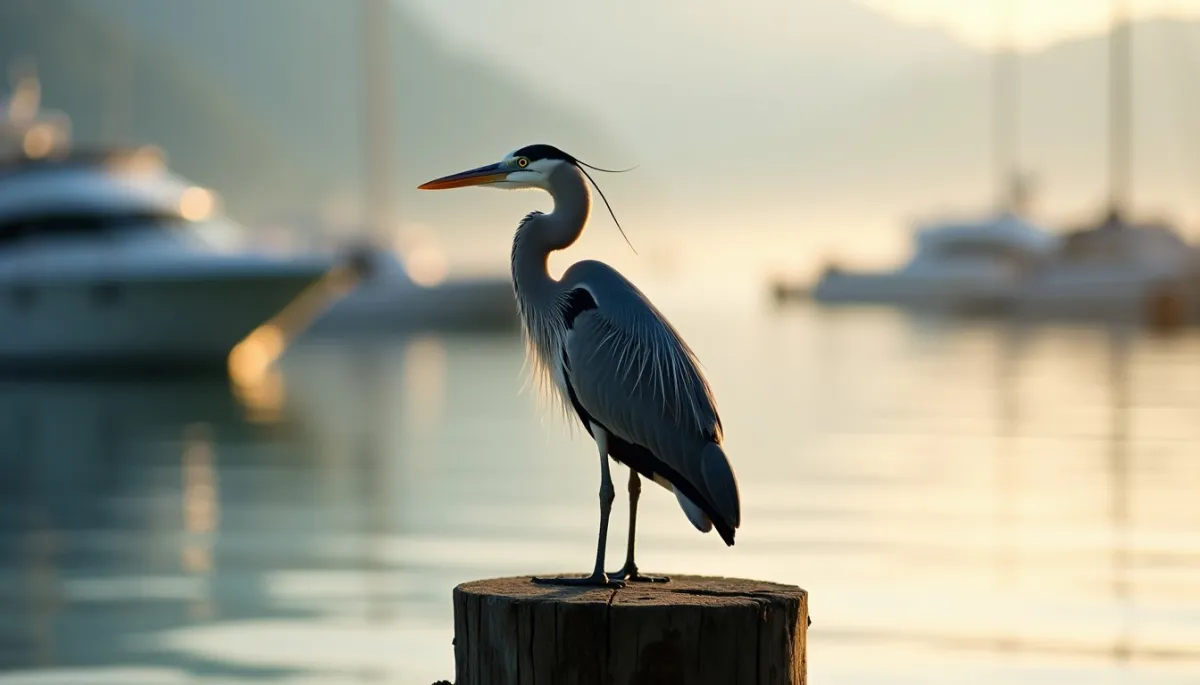
On the quays of Montreux and Vevey, an Ardea cinerea stands motionless on a piling, neck coiled, eyes fixed on the shimmer. Boat engines purr, cyclists pass by, and yet the bird remains unperturbed, a living statue that draws the gaze of morning joggers and photographers. This immediate scene introduces a larger reality: along the Swiss Riviera, grey herons are recurring, visible, and intimately linked to port life.
Gardiennes des quais
Consequence first: the most visible effect of the herons is cultural. Walk along the promenade in Ouchy or the old harbour of Morges and you will see them integrated into postcards, local photographs and even café conversations. They punctuate the landscape, offering spontaneous spectacles for residents and visitors.
There are concrete anecdotes. In Montreux, boat owners report herons perching on their foredecks at dawn, waiting patiently for a careless fish to appear. In Nyon, an angler once shared how a heron stole bait from a moored line, prompting laughter and a well-told fishing tale at the fish market. These small stories show how wildlife and human activity interact daily along the lake.
Beyond charm, the presence of herons affects local practices. Fishermen adapt by covering boxes and keeping bait secured; harbourmasters have learned that a heron is not a nuisance but a sign of a functioning littoral ecosystem. Some tour guides use their sightings to engage visitors in conversations about biodiversity on the Riviera.
Les raisons profondes
Why are herons so prevalent here? The cause lies in a mix of habitat and food. The gentle slopes of Lake Geneva create extensive shallow zones and reed beds around ports such as Rolle and Lutry. These microhabitats concentrate small fish, amphibians and macroinvertebrates, offering rich feeding grounds for wading birds like Ardea cinerea.
Human activity also plays a role. Many harbours provide sheltered waters and calm feeding opportunities, particularly where marinas create gentle eddies. Herons are opportunists; they have adapted to exploit the new feeding niches created by piers and boat wakes, without necessarily being dependent on human presence.
Legislation and conservation awareness matter too. In Switzerland, herons benefit from wildlife protection rules (federal and cantonal), and growing ecological sensitivity among locals reduces harassment. This legal and cultural protection contributes to stable local populations and regular returns to familiar roosts.
Silences, tensions et avenirs
However, contradictions are real. Increased tourism and lakefront development can fragment reed beds and reduce shallow feeding zones. In some places, intensive shoreline modification diminishes the habitat herons rely on, pushing them to seek quieter coves or move seasonally.
There are also interactions that raise questions. Herons compete with recreational fishers for visible prey, and occasional disturbances by dogs or loud events can displace them. Balancing leisure use of the waterfront with the needs of wildlife is an ongoing negotiation for local authorities from Lausanne to Vevey.
Looking ahead, monitoring and small management measures can help. Simple steps, such as preserving reed belts, creating protected shallow zones, and educating harbour users (no feeding, respectful distances), will keep these birds visible. Citizen science projects, like local bird counts around Morges and Nyon, already involve residents and strengthen this balance.
For the visitor who wants to connect: go early, stay silent, bring binoculars, avoid feeding, and respect nesting areas observed in spring. Photographing them is rewarding; a long lens or a smartphone with moderate zoom at dawn will capture their stately poses without disturbance.
Finally, a small local indiscretion: ask at the Port of Montreux for the best dawn vantage points. Regulars will point you to lesser-known jetties where herons prefer solitude, and where the light over the Dents du Midi turns their plumage almost silver.
Enjoy observing these sentinels. They are part of the Riviera's soul, a reminder that city and nature share the same stage.
Merci d'avoir lu, et n'oubliez pas, Profitez des moments de la vie !