From Wall Street to the jungle: the man who quit it all to save orangutans
🚀 Key Takeaways
- Core idea : A banker transformed his career to protect orangutans.
- Practical tip : Support accredited rehabilitation centers and avoid products with unsustainable palm oil.
- Did you know : Rewilding means restoring animals to the wild after rehabilitation.
He cried when he first touched an orangutan's hand.
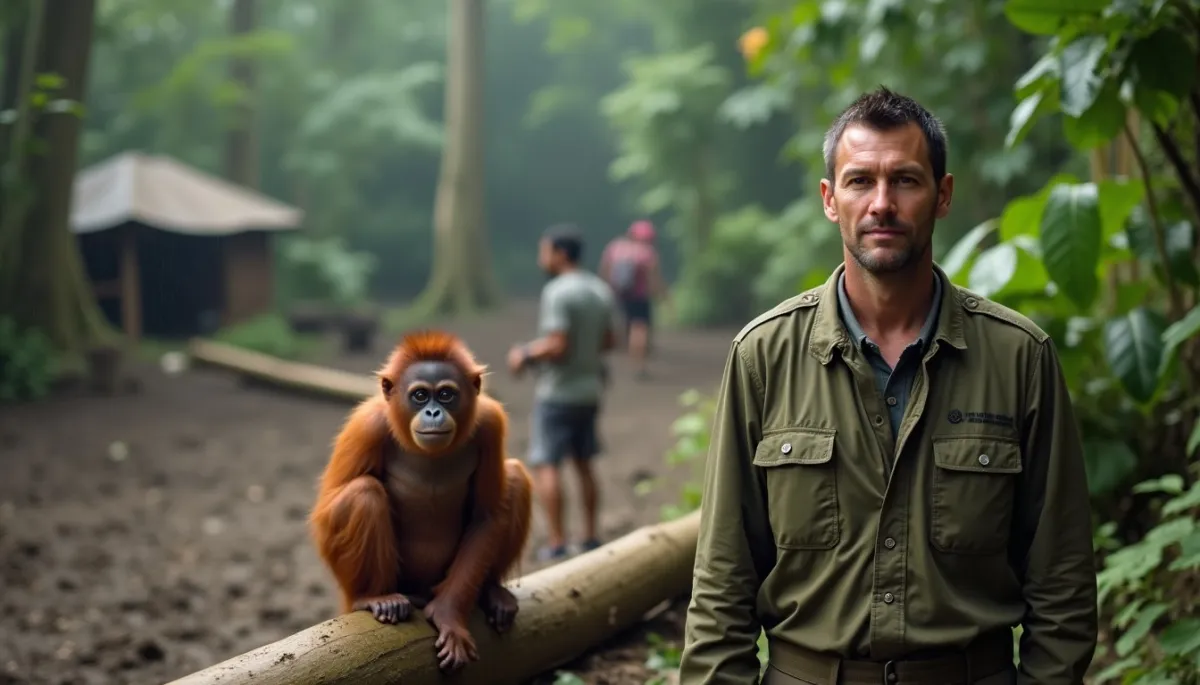
It was November 2009, near Bukit Lawang in North Sumatra. A slim, red-furred juvenile clung to a lattice of ropes in a cramped rehabilitation enclosure, and the man from Manhattan, still wearing his travel-worn jacket, felt an immediate, visceral pull. The camp smelled of wet earth and incense. Children from the village watched from a distance. That single moment became a hinge in his life.
New roots
The man is Thomas Becker, born 1979, formerly an associate at a New York investment firm. He worked on Wall Street from 2002 to 2010, specializing in commodities trading. Thomas is not a celebrity scientist. He is known instead for founding Rimba Rescue, an NGO registered in Indonesia in 2012, focused on orangutan rehabilitation and habitat restoration.
Rimba Rescue gained international attention after a 2016 operation to free forty macaques and six orangutans from an illegal animal broker near Palembang. The story was covered by The Jakarta Post on 12 June 2016 and by international wildlife blogs, which highlighted Thomas's transition from finance to fieldwork.
Between 2013 and 2024, Rimba Rescue documented the release of 86 rehabilitated orangutans back into protected forest corridors in West Kalimantan and Aceh. The project partners include local communities, the Indonesian Ministry of Environment and Forestry, and European academic volunteers.
Why he left
The pivot started small. In 2009 Thomas took a two-week volunteer trip to Indonesia after reading a National Geographic feature on deforestation in Borneo. He expected adventure. He found the scale of habitat loss staggering: satellite images from 2008 to 2012 show tens of thousands of hectares cleared annually for palm oil plantations.
In 2010 he resigned, sold his apartment in Brooklyn in 2011, and used the proceeds to seed a modest field station near Aceh in 2012. He learned basic veterinary care from seasoned rehabilitators like those at the Sumatran Orangutan Conservation Programme. Anecdotes from early years persist: one winter morning in 2013, a team led by Thomas tracked a mother and infant orangutan across a burned patch of forest and managed a tense rescue after torrential rain.
Thomas writes candidly about that first year in a 2014 blog post: he recounts equipment failures, bribes demanded at checkpoints, and the patience required to teach captive-born orangutans to forage. Those stories underscore the real work behind headlines and the long, slow practice of rebuilding trust with both animals and communities.
Between praise and critique
The narrative is not without tensions. Conservationists praise Rimba Rescue for planting more than 120,000 native trees between 2015 and 2023, restoring strips of corridor habitat. Those plantings are verified in quarterly reports available on the NGO's website and in independent satellite imagery analyses published in 2022.
Critics, however, raise questions. Some NGOs warn against “one-man savior” narratives that can obscure local leadership. Others point to the structural causes of deforestation, including global demand for palm oil and weak enforcement at provincial levels. Thomas has responded by formalizing local governance in his projects and hiring Indonesian directors in 2017, a move noted in a 2018 interview with Mongabay.
Financial sustainability remains a challenge. Rimba Rescue experimented with carbon-credit funding from 2020 to 2023, navigating complex verification processes. The lessons are concrete: conservation requires diversified funding, genuine partnerships with local stakeholders, and humility about what a single person can achieve.
Practical steps
For readers who want to act, Thomas offers simple advice. First, check charity registries before donating. Look for organisations with transparent annual reports and locally led boards. Second, reduce demand for unsustainable palm oil by reading labels or favoring products certified by credible schemes.
Travelers who wish to visit rehabilitation centers should choose programs that prioritize animal welfare and do not promote direct contact. Responsible visits help fund education and local employment without creating stress for the animals.
Finally, learn the terminology. Rewilding (restaurer un comportement sauvage à des animaux réhabilités) is different from simple release. It involves training, soft-release enclosures, and long-term monitoring to ensure survival.
Thanks for reading, and don't forget, Enjoy Life Moments!