From Chichén Itzá to ultramodern stadiums: Mexico's spectacular architectural journey
🚀 Key Takeaways
- Key concept : Architectural spectacle links ritual past and fan culture.
- Practical tip : Visit Chichén Itzá at sunrise, and book stadium tickets weeks in advance.
- Did you know : El Castillo has 365 steps, a calendar written in stone.
Close your eyes, and imagine a shadow slithering down a pyramid face. It feels like watching a staged moment designed for awe.
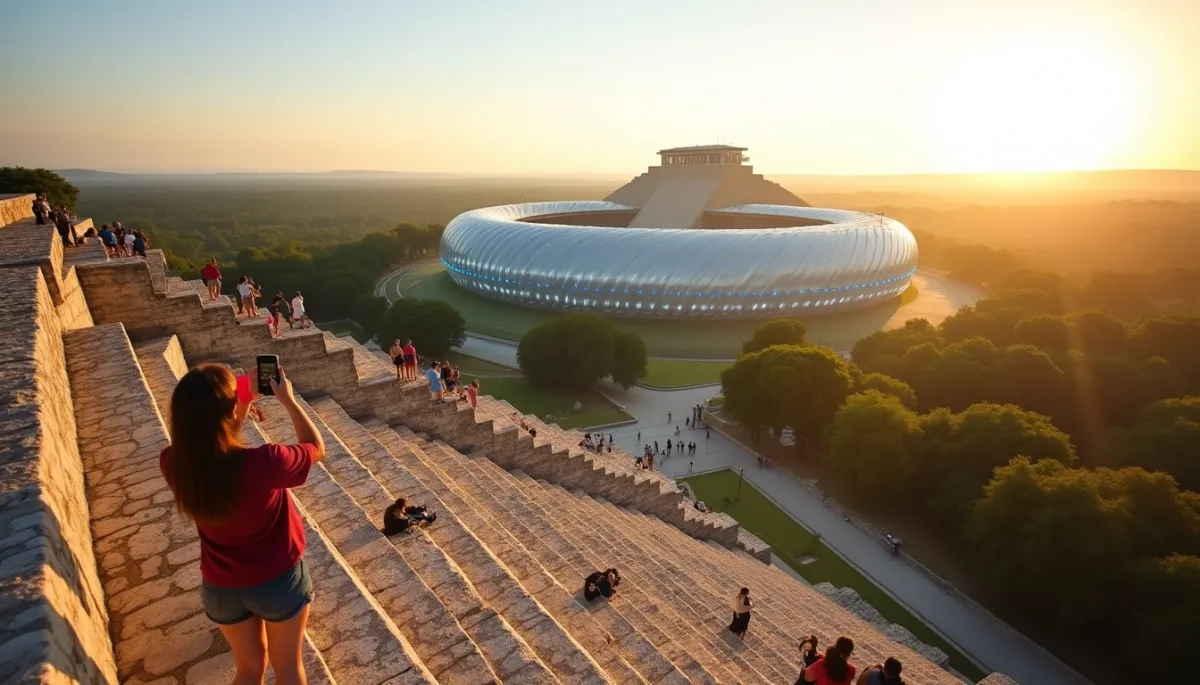
Stand at the foot of El Castillo at Chichén Itzá (Yucatán) at sunrise, and you will see why. The light sculpts each terrace, birds circle the temple, tour groups hush, and the faint echo of centuries seems real. The same human appetite to choreograph attention lives on in packed football arenas in Monterrey or Mexico City, where architecture frames collective emotion in a different language of steel, LED and amplified sound.
Stone and ceremony
The ancient Maya and other Mesoamerican cultures designed buildings to stage ritual and power. Chichén Itzá's El Castillo, a step pyramid often dated to the Terminal Classic and Early Postclassic (roughly 9th–12th centuries), functions as a gigantic calendar. Its 365 steps and the serpent-shadow at equinox connect astronomy, religion and civic spectacle.
Nearby, the Great Ball Court at Chichén Itzá is the largest known in Mesoamerica. Archaeologists estimate the dimensions at about 168 by 70 meters, with high stone rings where players passed a heavy rubber ball. The game was more than sport, it was theater: audiences gathered, ritual dramas unfolded, and the architecture amplified sound and sight.
These ancient sites drew people together around synchronized moments: solstices, royal appearances, or games. Buildings were instruments of collective memory, with geometry and axial alignments that choreographed movement and vision.
Steel, light and fans
Fast forward to the 20th and 21st centuries, and the ritual of gathering persists, now for music, football and mass events. The Estadio Azteca in Mexico City, inaugurated in 1966, became iconic by hosting World Cup finals in 1970 and 1986. Its terraces and vast bowl enclose tens of thousands of spectators, producing an atmosphere that architects and clubs cultivate deliberately.
Contemporary projects such as Estadio BBVA (Monterrey), opened in 2015, or Estadio Akron (Guadalajara), opened in 2010, prioritize fan experience with steep sightlines, comfortable seats, and signature façades that brand the club. Designers combine sight, acoustics and circulation to turn entry, halftime and goal celebrations into orchestrated moments.
There is also a sustainability and tech dimension. Newer stadiums integrate rainwater harvesting, LED skins for dynamic façades, and connectivity for real-time content. Mexico's role as co-host of the 2026 FIFA World Cup pushes upgrades and new investments, linking heritage of mass gatherings to modern mega-events.
Why the shift matters
Why move from stone temples to glass stadiums? The through line is human: spaces that stage collective identity. Ancient rulers used architecture to legitimize authority, to gather citizens, and to choreograph sacred events. Today, governments and private clubs use spectacle to generate economic activity, media attention, and civic pride.
Architects such as Luis Barragán (1902–1988) reshaped Mexican modernism with a mastery of light and color, demonstrating how built form affects emotion. Contemporary firms and designers inherit this sensibility, translating it into materials and systems that meet safety, comfort and broadcast demands.
The economics are also decisive. Sports venues generate revenues from tickets, corporate boxes and events. Urban regeneration around stadiums can reshape neighborhoods, for better or worse, attracting investments in transport and hospitality, and creating new public spaces when planned well.
Tensions and futures
Yet contradictions persist. Archaeological conservation and tourism put pressure on fragile sites. Chichén Itzá was inscribed as a UNESCO World Heritage site in 1988, and today it welcomes over a million visitors annually, which creates wear and management challenges. Preservation demands limits, visitor education and careful infrastructure.
Similarly, stadium-driven regeneration can displace communities if real estate speculation outpaces inclusive planning. Transparency and community engagement are essential when cities retrofit venues or approve new builds for major events, like preparations for the 2026 World Cup.
Looking ahead, expect hybrid projects that borrow from both worlds. Architects and urbanists are experimenting with public plazas that host both markets and concerts, and with adaptive reuse of older arenas. The poetic lesson is clear: whether carved in limestone or cast in concrete, architecture that stages life will keep evolving, because humans keep gathering to feel, cheer and remember.
Tips for visitors, quickly: arrive at Chichén Itzá early to avoid heat and crowds, respect roped-off zones, and hire a certified guide to understand alignments and mythology. For stadiums, check official club sites for ticket sales, arrive early for the pre-match atmosphere, and learn local chants to feel part of the ritual.
Thanks for reading, and don't forget, Enjoy Life Moments!