Akumal: beyond the turtles, what does this emblematic bay hide?
🚀 Key Takeaways
- Key concept: Akumal means "place of turtles" in Yucatec Maya, but the bay also hosts lagoons, mangroves and cenotes.
- Practical tip: Visit early, use biodegradable sunscreen, join a certified guide to reduce impact.
- Did you know: Sian Ka'an Biosphere Reserve lies a short drive south, connecting Akumal to a much larger ecological corridor.
Blue, warm and slow.
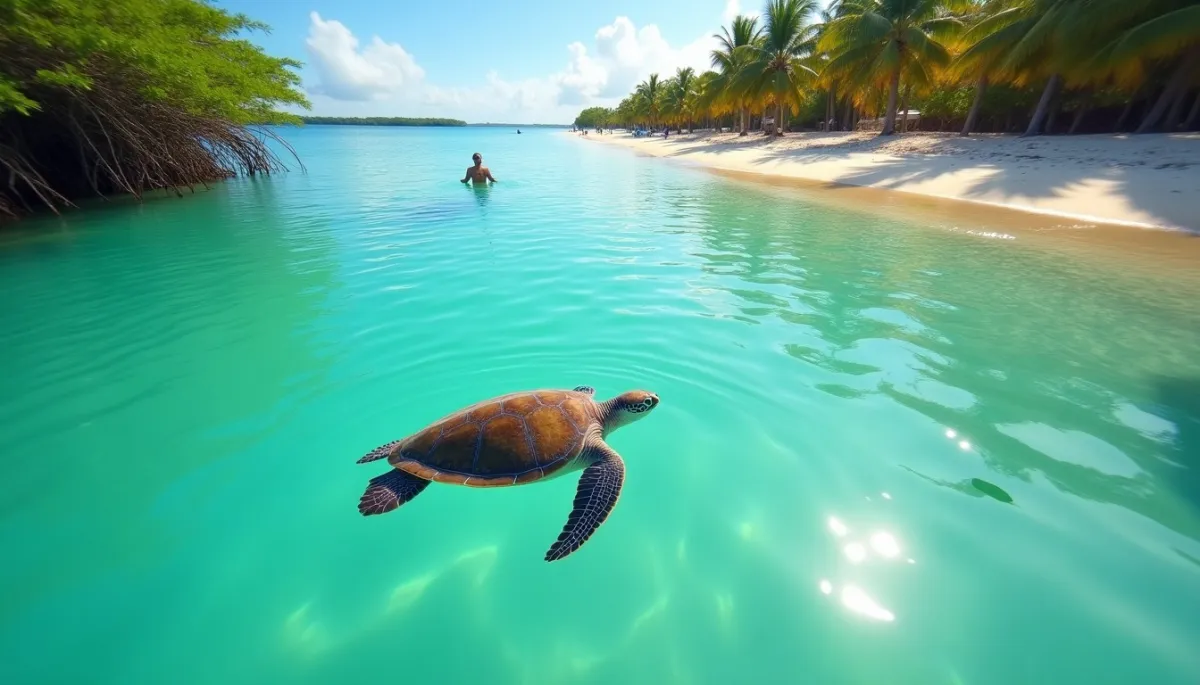
Imagine stepping off a shaded palm-lined path at dawn, the beach empty except for a local biologist re-baiting a small nest cage, a fisherman pushing his skiff into transparent water, and a snorkeler hovering quietly above a seagrass bed where a hawksbill glides. The light slants across the bay, outlining mangrove roots and the pale sandbanks where turtles surface to breathe. That is Akumal: intimate, noisy in the high season, and deceptively complex.
Baie aux strates
Tourists come for the turtles, and for good reason. The bay’s shallow reef and seagrass meadows attract green and hawksbill turtles, visible from the surface when the swell is calm. Yet the coastline here is layered: a sandy beach, a coral fringe, seagrass plains, then a network of mangrove fringes and underground water channels that feed the region’s cenotes.
These layers create both rich biodiversity and fragile interdependence. Seagrasses sequester carbon and feed turtles, mangroves stabilize the shoreline and filter runoff, while cenotes connect groundwater to the sea, influencing salinity and reef health.
As Akumal evolved from a fishing village to a tourism stop on the Riviera Maya corridor, visitor pressure rose. Today thousands come each year to snorkel with turtles, but increased boat traffic, unregulated sunscreen, and coastal development have stressed those ecological layers.
Racines et récits
The name Akumal comes from Yucatec Maya and means "place of turtles." That simple fact reminds visitors that people have lived and navigated these waters for centuries. Local families, many of whom still fish or guide guests, have woven conservation practices into daily life, sometimes formally, sometimes informally.
Community initiatives and small NGOs have helped shift practices: nest monitoring during the summer months, marked swim routes to avoid trampling seagrass, and the rise of certified snorkeling guides trained to approach wildlife responsibly. These grassroots efforts started gaining visibility in the 1990s and have continued to adapt as tourism intensified.
Nearby, the Sian Ka'an Biosphere Reserve, a UNESCO site established in 1987, anchors the region’s ecological importance. Akumal sits along a corridor that links coastal, marine and inland ecosystems, which is why local decisions ripple beyond the bay itself.
Choix et paradoxes
Popularity brings income, but also dilemmas. Boat operators, beachfront restaurants and hotels depend on visitors, so any restriction is sensitive. Regulation has advanced unevenly. Authorities and community groups have implemented measures, like limiting the number of snorkelers in the bay during peak hours and promoting certified operators, yet enforcement can be inconsistent.
There are encouraging stories. Some operators now require biodegradable sunscreen, flotation devices to keep swimmers off the seagrass, and briefings before guests enter the water. Local guides often double as informal stewards, reporting injured animals or pollution. Yet beaches still show signs of erosion, and occasional algal blooms linked to nutrient runoff remind us of underlying vulnerabilities.
Looking forward, the balance hinges on two things: informed visitors and cohesive local planning. Simple behaviors—arriving early, joining small guided tours, not touching wildlife, dressing with reef-safe products—make a concrete difference. On the policy side, connecting coastal management with watershed protection and tourism planning will be decisive.
Conseils pour la visite
Go at sunrise to avoid crowds and give sea turtles space. Choose a licensed guide who enforces no-touch rules and uses soft entries to the water. Use biodegradable sunscreen or a long-sleeve UV shirt to reduce chemical stress on reefs. Consider combining a snorkeling morning with a visit to Yal-Ku lagoon or a guided mangrove walk to understand the bay's wider context.
If you want to support local conservation, seek out community-run programs that monitor nests or rehabilitate animals, and prefer family-owned restaurants and sustainable lodgings.
Akumal remains a tender, living place, where a single bay reflects larger choices about travel, protection and local livelihoods. Beyond the iconic turtles, the story here is about connection, and about how small, everyday decisions can steer a coastline toward resilience.
Thanks for reading, and don't forget, Enjoy Life Moments!