The exotic garden of Èze: succulents and a breathtaking panorama
🚀 Key Takeaways
- Core concept : A botanical terrace of succulents on the ruins of a medieval castle, overlooking the Mediterranean.
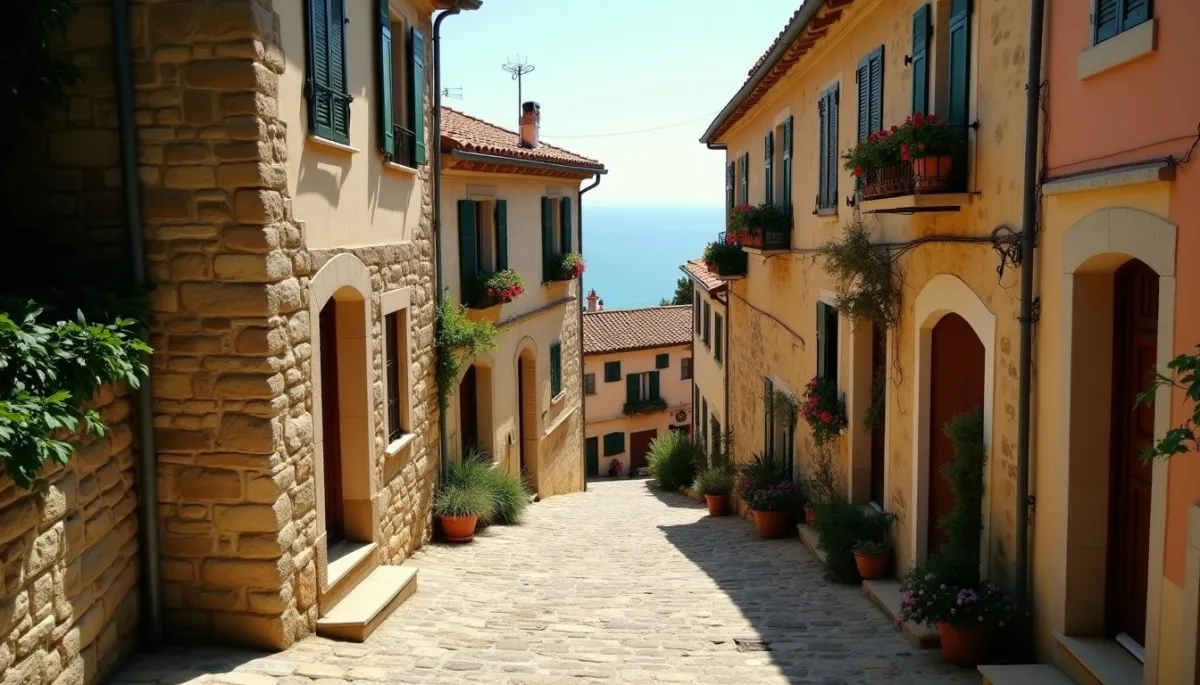
- Practical tip : Best visited at sunrise or late afternoon for light and fewer crowds; bring sturdy shoes for the cobbled village.
- Did you know : The garden was opened to the public in 1949 and displays species from Mexico, South Africa and the Canary Islands.
Light, stone and a sharp sea breeze.
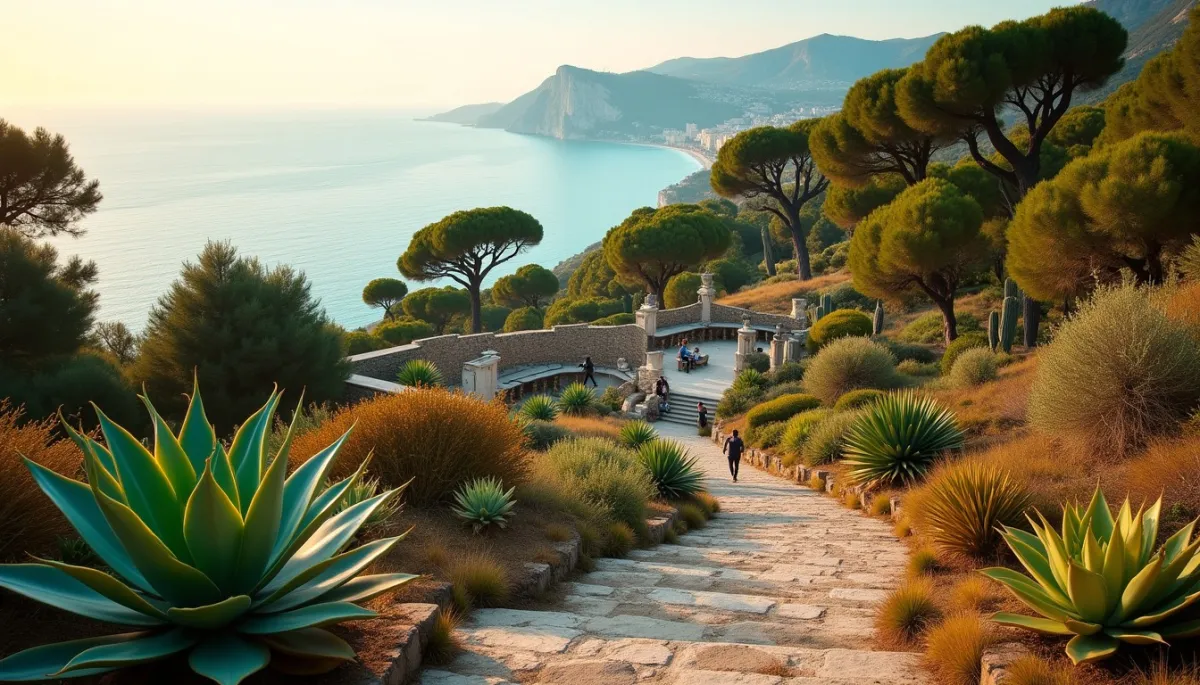
Imagine stepping out of the narrow, car-free streets of Èze village and arriving on terraces where sculptural agaves and columnar cacti frame a horizon that runs from Cap Ferrat to Monaco. The air smells faintly of resin and salt; below, the road clings to the cliff. Visitors sit on low stone walls, phones down, letting the view do the rest.
terrasses et héritage
The Exotic Garden occupies the rocky summit of Èze, a medieval village perched about 400 meters above sea level, on a promontory between Nice and Monaco. The site uses the terraces of the old château ruins to host an astonishing variety of dry-climate plants.
Opened to the public in 1949, the garden transforms the remains of fortifications into planted rooms. Paths wind among stone steps, old vaulted walls and belvederes, which create microclimates (slightly warmer and sheltered) ideal for succulents.
Today, the composition blends exotic imports and local Mediterranean flora. You will find agaves, aeoniums, euphorbias, various cacti and aloes, many trained into sculptural shapes by decades of sun and wind. The design respects the topography, so each terrace offers a new framing of the sea.
les plantes qui racontent
Succulents (plants succulentes) are species that store water in leaves or stems. They evolved in arid regions and are prized here for their resilience and sculptural forms. On the Côte d'Azur, succulents have become both a practical and aesthetic choice for public gardens.
Many of the species at Èze come from three main distant regions: Mexico, South Africa and the Canary Islands. Each brings its own silhouette: the spiky rosettes of agaves, the soft cushions of aeoniums, and the columnar presence of old cacti.
Some specimens in the garden are noticeably old, their thickened trunks and scars telling of decades exposed to sun and salt. The botanical labels help visitors read these stories; a small terrace can therefore become a quick lesson in biogeography and adaptation.
regarder et comprendre
Why does this collection matter now? Urban and coastal gardens are increasingly demonstrating low-water landscaping techniques. On a Riviera where summers grow hotter and drier, the garden of Èze shows how beauty and sustainability can coincide (aesthetic xeriscaping).
The site also functions as a living classroom. Local schools, guided tours and botanical enthusiasts come to study species behaviour, propagation and pruning methods adapted to steep, rocky terrain. The garden's informational panels are short and practical, ideal for curious travelers.
Visiting the garden is also part of a wider cultural stroll through Èze: the Nietzsche path (sentier Nietzsche) that connects the coast to the village is a favorite route for walkers, named after the philosopher who reputedly hiked in the area in the 19th century. Combine both for a full experience.
beauté et tensions
However, the garden faces tensions that are common to many heritage sites: balancing conservation, visitor access and the effects of climate change. Salt spray and stronger storms test older plants; some species require careful replacement or protection.
Tourism brings income but also wear. The municipality manages the site with limited staff, relying on volunteers and occasional restoration projects. Visitors can help simply by staying on paths and avoiding touching fragile specimens.
There are also debates about introducing non-native species to urban green spaces. The curators at Èze aim to avoid invasive introductions while preserving the educational and aesthetic value of exotic succulents. It is a careful dialogue between design and ecology.
Practical advice: aim for early morning or late afternoon light for photography, avoid the height of summer midday when heat intensifies, and set aside time to wander the village after the garden—Èze's tiny artisan shops and viewpoints reward slow exploration.
Thanks for reading, and don't forget, Enjoy Life Moments!