Ek Balam: the archaeological site where you can still climb pyramids
🚀 Key Takeaways
- Key concept: Unique access to the Acropolis and its stucco reliefs.
- Practical tip: Arrive early, pair with Cenote X'Canche, bring water and sun protection.
- Did you know: The name Ek Balam means "black jaguar" in Yucatec Maya, and the site preserves striking jaguar imagery.
A short climb, an immense payoff.
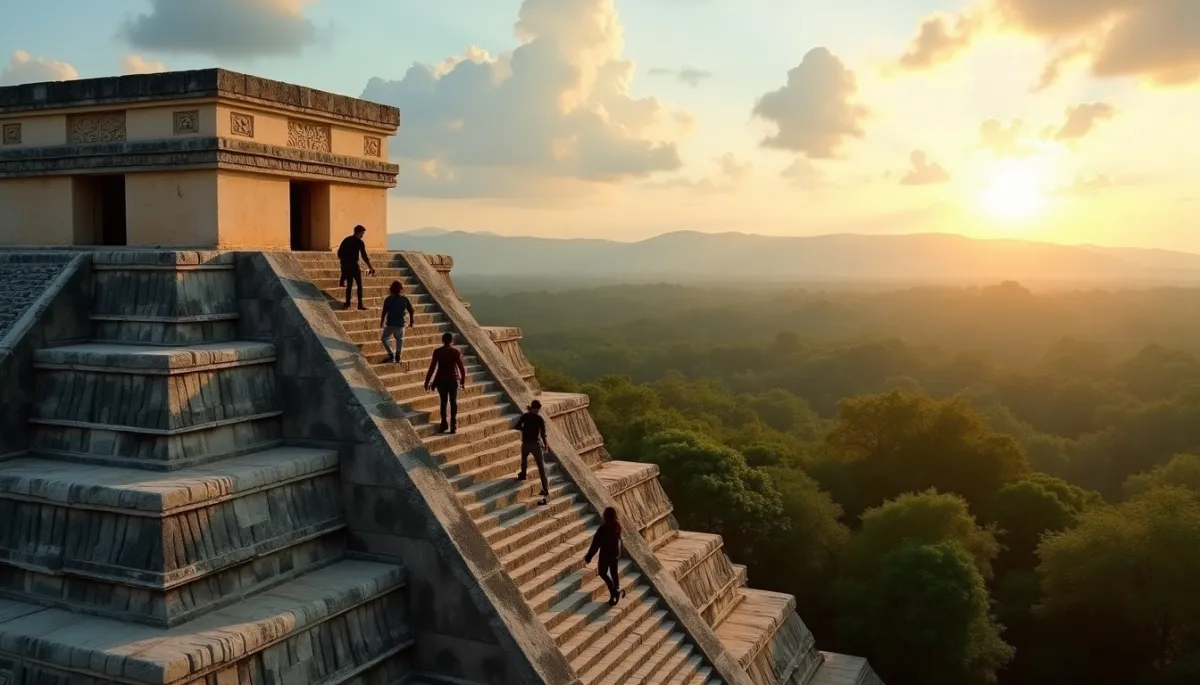
Sun in the morning, birds in the ceiba trees, and a narrow stone stairway rising toward a plastered façade where a jaguar mouth frames the light. Families, couples and solo travelers pause halfway up to catch their breath, then keep going. From the top of the Acropolis you see a patchwork of jungle, distant roads and the low outlines of other ruins, and you immediately understand why Ek Balam still lets visitors climb.
Rise and view
Ek Balam's main attraction is the Acropolis, a massive structure whose outer walls are covered with carved and painted stucco. The climb is physical but accessible, unlike steeper pyramids at some sites. Because climbing is permitted, visitors can stand on the summit and enjoy a 360 degree panorama that is rare in the region.
Allow about an hour to explore the Acropolis thoroughly. Inside, archaeologists discovered a burial chamber with painted walls and offerings, which dates to the Late Classic period, roughly between the 7th and 10th centuries AD. The combination of interior finds and the external stucco work makes the experience both archaeological and intimate.
For photographers and nature lovers the view is generous. Sunrise and early morning light are ideal, both for cooler temperatures and softer colors. The relative calm of Ek Balam, compared with Chichén Itzá, gives more time to linger on the summit, listen to local birds and imagine the city as it stood over a millennium ago.
Stones and stories
Ek Balam was a regional power in the Late Classic period of Maya history. The site is best known for its elaborate reliefs, including depictions of rulers wearing jaguar headdresses and intricate glyphs that record events and alliances. The name Ek Balam itself is often translated as "black jaguar", a symbol of authority in Maya iconography.
Archaeological work, intensified in the late 20th and early 21st centuries, revealed both public architecture and private burials. In the early 2000s excavations exposed decorated chambers inside the Acropolis, offering rare painted surfaces and funerary contexts. These discoveries helped scholars understand ceremony, rulership and material culture in this part of the Yucatán.
Local guides bring the stones to life. On a short tour you will hear about ritual, warfare, and daily life around Ek Balam, and you may learn small anecdotes, such as how modern restoration techniques used traditional lime plasters to preserve original sculptures. Those human links, between ancient artisans and present-day restorers, make the visit memorable.
Traces ahead
Tourism around Maya sites is evolving. Since the mid-2000s many major monuments have closed to climbing in order to protect fragile steps and sculptures. Ek Balam remains an exception, and that status raises questions about conservation and access. Balancing public experience with protection is a live debate among archaeologists, local authorities and communities.
If you go, respect the rules. Some sectors of Ek Balam are already cordoned off for conservation, and signs indicate where climbing is allowed. Follow the guidance of INAH, the Mexican institute for archaeology, and don't touch painted surfaces. Small gestures by visitors make a big difference for long term preservation.
Practical advice: combine Ek Balam with a visit to Valladolid for colonial charm, or to Cenote X'Canche, which lies a short walk from the ruins and offers swimming and zipline options. Go early to avoid heat and bring a local guide for deeper context. With care, Ek Balam will continue to be a rare place where you can climb, reflect and look back through time.
Thanks for reading, and don't forget, Enjoy Life Moments!