Colored diamonds: the quest for the rarest and most expensive stones
🚀 Key Takeaways
- Concept key : Colored diamonds owe their rarity to uncommon chemical impurities or lattice defects, not to stains of color.
- Practical tip : Always ask for a GIA (or equivalent) report and provenance; treatments are common.
- Did you know : The Argyle mine in Australia produced most of the world's pinks until its 2020 closure, making those stones historically finite.
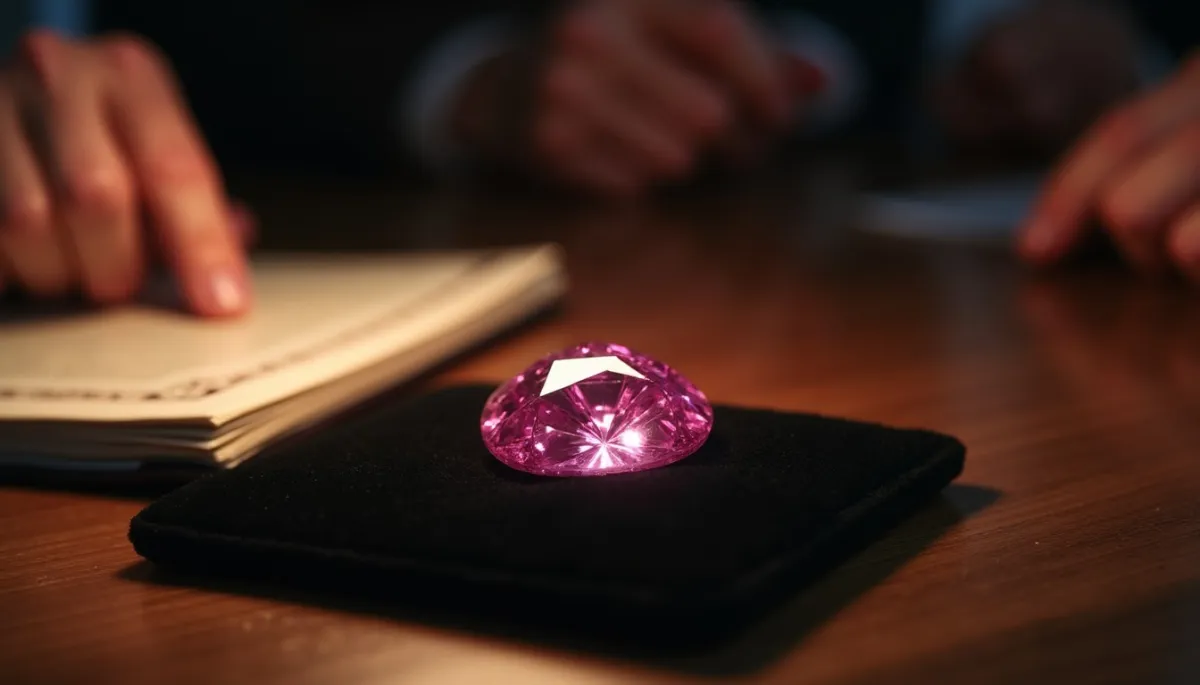
They stop a room. A single stone, vivid and impossible, under a jeweler's lamp. Around it, collectors and curators lean in, cameras click, and the world listens. Imagine the hush that fell when the Pink Star sold for over seventy million dollars; it was not only about size, but about a color that rarely appears in nature.
Fascinating rarity
Colored diamonds are a tiny fraction of all diamonds mined. Less than one percent carry a distinct hue strong enough to be classified as a 'fancy' color by gemological labs. Within that minority, grades like 'fancy vivid' mark the most saturated and desirable examples.
At auction houses such as Sotheby's and Christie's, and in private sales to maisons like Graff or Harry Winston, prices for top-tier colored stones routinely eclipse those of colorless diamonds. Auction records read like a who's who: the Pink Star, the Oppenheimer Blue, the Blue Moon of Josephine. These headline sales do more than set numbers, they shape desire.
The market consequence is twofold. For wealthy collectors, colored diamonds are both an objet d'art and a portable store of value. For designers and brands, owning or showcasing an iconic colored stone confers storytelling power that no marketing campaign can buy.
Hidden origins
Color in diamonds comes from a handful of causes. Blue tones arise when boron atoms enter the crystal lattice during formation, yellow comes from nitrogen, and green results from natural radiation altering the surface layers. Pink and red are more mysterious; scientists generally attribute them to plastic deformation of the lattice (tiny shifts in atomic alignment) rather than to foreign atoms.
Geography matters. The Argyle mine in Western Australia accounted for the majority of the world's pink and red diamonds until it closed in 2020. Golconda and other Indian deposits produced legendary blues centuries ago, while modern blue finds are rarer and often associated with South African or Brazilian geology.
Gemological terminology can confuse. 'Carat' measures weight, not size. 'Fancy' refers to any pronounced color, and modifiers like 'vivid' or 'intense' describe saturation. Trusted grading reports (for example from the GIA) specify both color and whether a stone has undergone enhancement, which changes value dramatically.
Tensions and futures
Rarity breeds pressure. Treatments such as high-pressure high-temperature (HPHT) processing or irradiation can alter or intensify color. Treated stones are valuable in their own market, but they are not the same as natural, untreated 'fancy vivid' gems. Transparency is essential; unscrupulous offers sometimes try to blur the line.
Lab-grown colored diamonds have advanced rapidly. Today, laboratories can produce vivid blues, yellows and pinks at a fraction of the price of natural stones. This technological shift creates a bifurcated market: ethical and design-minded buyers may embrace lab-grown options, while collectors and institutions continue to prize the geological rarity and provenance of natural stones.
There is also a conservation and provenance story. High-profile sales increasingly require clear chains of custody, ethical mining documentation, and often certification that a stone is conflict-free. Brands and auction houses have adapted, offering more forensic reports, laser inscriptions and exhibition histories to reassure buyers.
Practical advice
If you are considering a colored diamond as an investment or an heirloom, insist on certified documentation and independent appraisals. Ask for the full grading report, and confirm whether the color is natural or the result of treatment.
Consider the rarity axis: color, size, clarity. A relatively small but perfectly saturated red or pink may far outvalue a much larger pale stone. Pay attention to origin stories. An Argyle provenance will always carry cachet for pinks.
Finally, buy the story. Colored diamonds are as much about people and places as they are about chemistry. Whether it hangs in a private cabinet or on a red carpet, the best stones continue to tell tales of deep time, rare conditions, and human admiration.
Thanks for reading, and don't forget, Enjoy Life Moments!