Yoga Nidra: the power of wakeful sleep for ultra-fast nervous recovery
🚀 Key Takeaways
- Core concept: A guided state between sleep and wakefulness that calms the nervous system.
- Practical tip: Start with 20 minutes in savasana, use headphones and a short sankalpa (intention).
- Did you know: Modern forms like iRest, developed in the 1990s, are used in veteran care for PTSD.
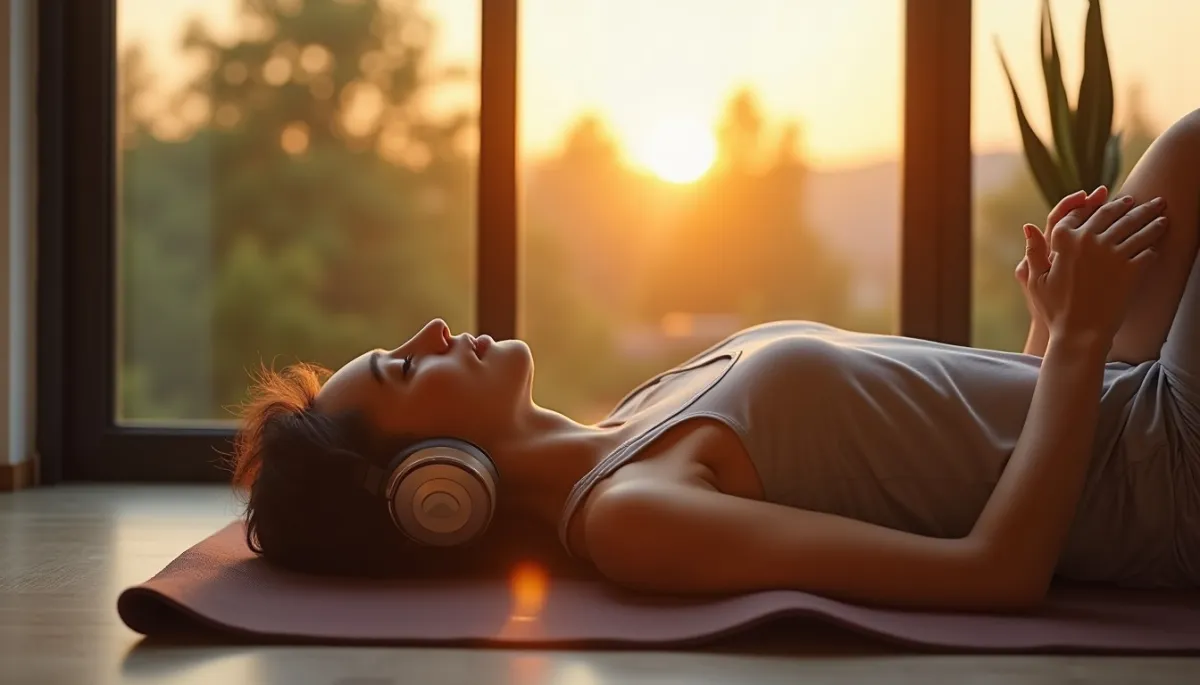
Close your eyes and breathe. Imagine a quiet room at golden hour, a yoga mat, soft light, and a voice that guides you gently inward.
Quiet revolution
Yoga Nidra traces its modern form to teachers in India in the 1960s, most notably Swami Satyananda Saraswati, founder of the Bihar School of Yoga. The term means 'yogic sleep', but it is not ordinary sleep, it is a state of conscious rest.
In the last two decades the practice moved from ashrams to hospitals, clinics and apps. Teachers such as Richard Miller adapted it into iRest in the 1990s, and that protocol has been studied with military veterans and civilian trauma survivors.
Today, mindfulness apps and wellness centers offer Yoga Nidra tracks, and clinicians cite its capacity to reduce anxiety, improve sleep, and speed vagal recovery after stress.
How it heals
At physiological level, Yoga Nidra promotes parasympathetic activation, the 'rest and digest' response. Practitioners report lowered heart rate and a sensation of deep cooling after sessions, signs of reduced sympathetic arousal.
Psychologically, the practice uses a body scan, breath awareness, and visualization, plus a sankalpa, a short affirmative intention. This combination soothes rumination and reboots cognitive control networks.
Clinical pilots and trials on iRest and related protocols, published since the early 2000s, have shown reductions in PTSD symptoms, anxiety and insomnia, supporting ancestral claims with empirical data.
Practice, simply
You do not need to twist yourself into knots. Lie down, support knees if needed, cover with a blanket, use headphones. A first practice of 15 to 20 minutes is efficient for nervous recovery.
Try a sankalpa such as "I am safe" or "I rest deeply". Move through a guided body scan, notice the breath, accept images that arise. Do not force sleep, let awareness glide.
Contraindications: people with severe dissociation or some trauma histories should work with a trained teacher or therapist. For most, the practice is safe and can be repeated daily for compounding benefits.
Thanks for reading, and don't forget, Enjoy Life Moments!