Christian Dior: how gardens and flowers helped him heal
🚀 Key Takeaways
- Concept clé : Nature as therapy and design language.
- Practical tip : Create a small, seasonal corner at home to reconnect with rhythm and scent.
- Le saviez-vous : Dior's childhood villa in Granville is now a museum with its original gardens.
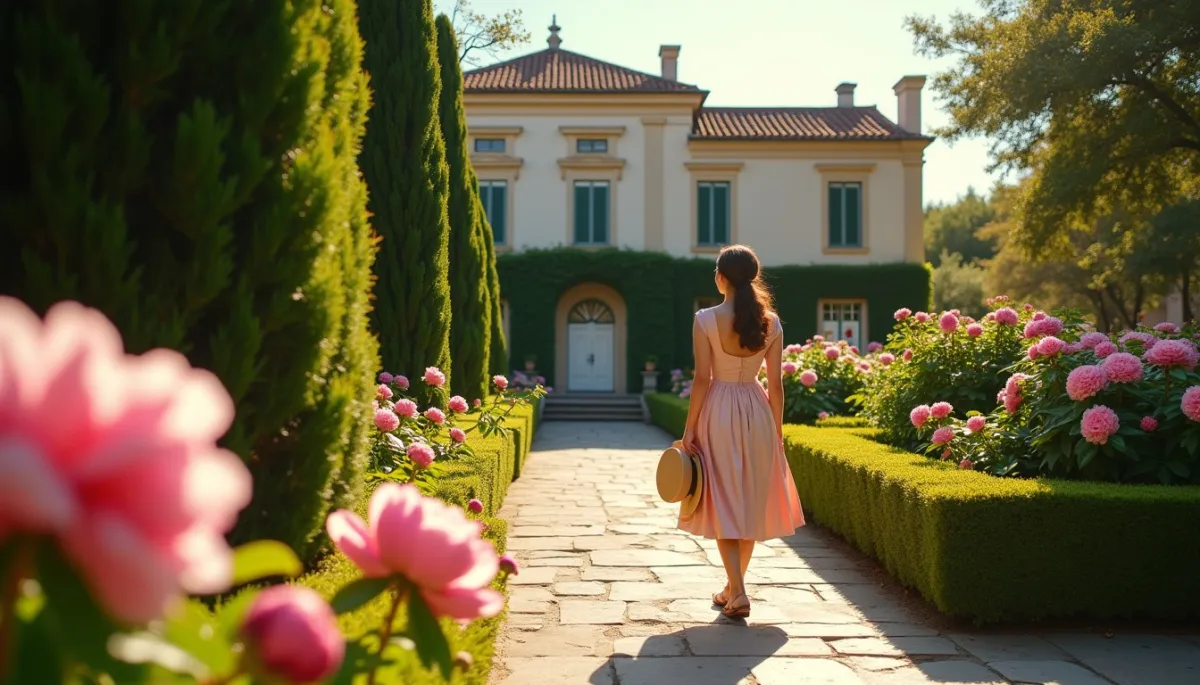
Il y a une rose qui ramène à la maison. Imagine a late afternoon in Granville, Normandy, the light soft on clipped boxwood and multicolored peonies. A young Christian, hat in hand, walks the terraces of Villa Les Rhumbs, inhaling the mix of sea air and rich earth.
Les jardins intimes
Christian Dior was born in Granville on 21 January 1905, into a family whose summer villa, Les Rhumbs, overlooked the sea. The gardens there were not a backdrop, they were formative. From childhood he studied shapes, colors and scents as attentively as others read books.
Those gardens, with their ordered parterres and wild corners, taught him composition. Dior translated plant arrangements into clothing lines. He often spoke of flowers as living sketches; petals suggested volumes, stems dictated lines.
Les Rhumbs remains a concrete trace. Today the house is the Musée Christian Dior (opened to visitors in 1997), and the gardens are preserved to show how early landscapes fed his imagination. Walking there, one understands the tactile memory behind his silhouettes.
Fleurs et silhouettes
After studying political science and briefly working as an art dealer, Dior founded his couture house in 1946 with the financial backing of Marcel Boussac. On 12 February 1947 he presented the collection that would change fashion history, quickly nicknamed the "New Look" by Harper's Bazaar.
The New Look emphasized a nipped waist, full skirt and rounded shoulders. Critics and supporters compared the silhouette to petals opening from a bud. Dior himself acknowledged floral metaphors; he often cited nature when explaining volume and proportion.
Beyond shapes, flowers entered his work as motif and material. In 1947 he launched Miss Dior, a perfume named in part for his sister Catherine. Scents completed his designs by adding memory and emotional resonance, showing that fashion could touch both sight and smell.
Mémoire et résilience
The 1940s were rupture years. France was occupied, and Christian's family experienced fear and resistance. His sister Catherine Dior was an active member of the Resistance; she was arrested in 1944 and deported. The family endured the anxiety of wartime separation and the trauma of knowing loved ones were in peril.
For Christian, gardens became a method of coping. Returning to Granville after difficult months in Paris, he found order in planting seasons and consolation in small growths: a bulb pushed through soil, a bud swelling toward sun. This daily attention offered structure when the world felt chaotic.
He also channeled grief into creation. Building a fashion house; imagining collars shaped like petals; composing bouquets for clients and salons, all were ways to transform helplessness into agency. Working with gardeners and perfumers, Dior made collaboration part of recovery.
La contradiction fertile
Dior's life mixed extremes: meticulous tailoring and voluptuous skirts, public glamour and private fragility. While his shows projected renewal after war, his letters and anecdotes reveal someone who returned often to quiet spaces to recalibrate.
That tension appears in his work. The New Look both celebrated femininity and invited debate about postwar austerity. Gardens provided a neutral grammar where he could test contrasts: formal hedges next to wild blooms, strict geometry softened by color.
His sensitivity did not diminish his business instinct. Backed by Boussac, Dior built a house that expanded into perfumes, accessories and ready-to-wear. Gardens remained a constant source, not a retreat from ambition but a companion to it.
Leçons et gestes
What can we borrow from Dior's relationship to plants? First, rhythm matters. Gardening (even in a pot) sets a tempo: watering, pruning, waiting. That cadence calms anxiety by anchoring attention to small, achievable tasks.
Second, sensory planning heals. Dior combined sight, touch and scent. Try pairing a visual hobby with a smell (an herb pot, dried flowers, essential oil) to deepen emotional memory and lift mood.
Finally, create a mini-routine of observation. Note when a leaf unfurls, or when a scent returns. These micro-celebrations cultivate gratitude and remind us that recovery is gradual.
Christian Dior's gardens were not merely inspiration for dresses. They were a pedagogy of repair, a slow curriculum that taught patience, proportion and hope. Through petals and paths he traced a way out of rupture and made beauty a tool for resilience.
Thanks for reading, and don't forget, Enjoy Life Moments!