Winter gardens are back: invite nature into your living room to soothe the mind
🚀 Key Takeaways
- Core concept : Small indoor gardens reduce stress and improve air quality.
- Practical tip : Start with three resilient plants and a tray for humidity.
- Did you know : Conservatories became popular in the 19th century with structures like the Crystal Palace.
Green light, soft leaves, a cup warming in your hands.
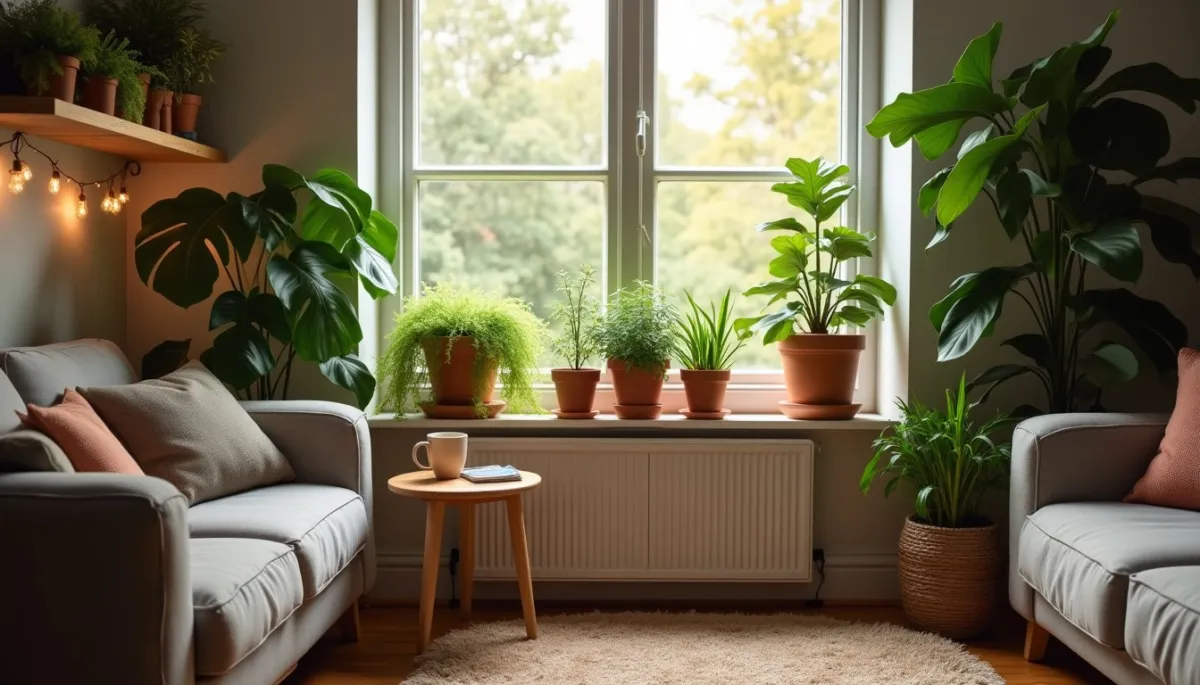
Imagine sliding open a low sash window to a small grove of rubber trees, ferns and herbs, the light of late afternoon pooling on clay pots. The air smells faintly of citrus and damp earth, there is a faint ticking of a wall clock, and outside the city keeps its pace while inside, time slows.
un salon-jardin
The term "winter garden" (or conservatory) historically refers to a glazed room where exotic plants were kept during cold months. In the 19th century, structures like Joseph Paxton's Crystal Palace, built for the Great Exhibition of 1851, and the Palm House at Kew Gardens, completed in 1844, popularized the idea of bringing botanical collections into architecture.
Today the concept has shrunk to fit apartments: a bay window, a bright corner, or a sunroom becomes a micro-ecosystem. Urban designers and lifestyle magazines report a surge of interest since 2020, as remote work and seasonal anxiety pushed people to appropriate indoor green spaces.
Beyond aesthetics, these salons-jardin act as domestic sanctuaries. Studies (including reviews from the last decade) link indoor plants and views on greenery to reduced cortisol levels, better concentration and improved mood. The effect is often subtle, cumulative and accessible.
pourquoi maintenant
The revival of winter gardens is partly cultural and partly technological. On the cultural side, the biophilia concept (coined by E.O. Wilson in 1984) has entered mainstream design: we seek nature because evolution tuned us to it. The pandemic magnified that need, with parks less accessible in lockdowns and time at home increasing.
On the practical side, plant care has become easier. Watering apps like Planta and community platforms (plant swaps, Instagram micro-communities) democratize knowledge. Grow lights, humidity trays, and compact, affordable plants enable success in small, north-facing apartments.
Design trends also help. Interior brands now sell lightweight, corrosion-resistant shelving, modular planters and glazed room dividers that transform a living room into a sheltered green space without major renovation. Cities such as London and New York have seen a rise in indoor gardening workshops since 2021.
ce qu'il faut savoir
Not every plant works everywhere. Assess light first: succulents and cacti need direct sun, while ferns, calathea and many philodendrons tolerate lower light. Think of humidity too; pebble trays or a small humidifier help tropical species thrive in heated rooms.
Start small. Choose three plants with different needs and group them so care is simplified. Use well-draining mixes, a watering schedule and a cheap moisture meter if you're unsure. Rotate pots for even light exposure and inspect weekly for pests like spider mites and scale.
Finally, let the winter garden be a ritual, not a chore. Schedule five minutes of daily care: prune a yellow leaf, inhale the soil scent, make tea and sit. That simple routine is where the mental benefit lies, turning a collection of plants into a living practice of presence.
Merci d'avoir lu, et n'oubliez pas, Profitez des moments de la vie !