Can you see stingrays from the beach?
🚀 Key Takeaways
- Key concept : Yes, stingrays can be visible from some beaches where sand flats and seagrass meet clear, shallow water.
- Practical tip : Early morning, low wind and polarized sunglasses improve your chances of spotting them from shore.
- Did you know : They often feed and rest on sandy bottoms, making slow, subtle shadows rather than dramatic splashes.
Many travelers ask if wildlife encounters require a boat. In the Riviera Maya, the answer is often no, but it depends on the spot and conditions.
Seeing a stingray from the beach is a mix of location, timing and sea clarity. This article explains how to increase your chances and how to stay safe and respectful when you do see one.
Where you're most likely to see them
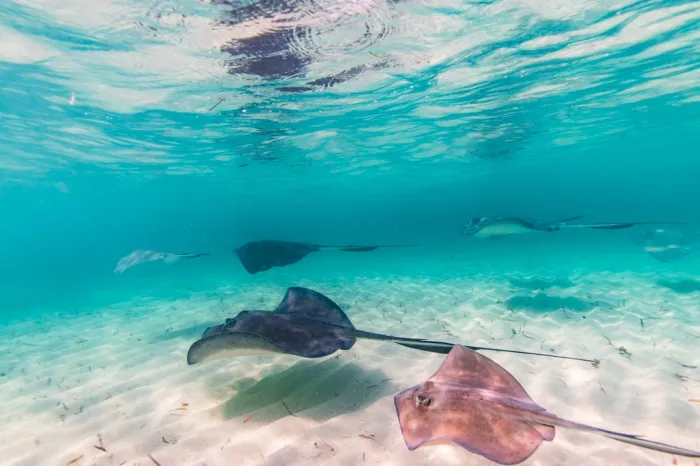
Stingrays prefer shallow sandy flats and seagrass beds that provide food and camouflage. Along the Riviera Maya those habitats appear near protected bays, inlets and some stretches of shore where the reef is set back from the beach.
On calm days, with clear water and low tide, the animals may glide within a few meters of the surf line. Look for smooth, round shapes, slow wing-like movements and small plumes of sand as they feed.
Best time and how to spot them from shore
Early morning and late afternoon, when winds are low and the water glassy, are the best windows for shore sightings. Midday glare makes it harder, so polarized lenses or a shaded vantage point help a lot.
Scan the water slowly, not in quick movements. A stingray appears as a flat disc with a thin tail, often showing as a darker patch against sand. If you see a disturbance on the bottom, it may be feeding rather than moving fast.
Safety and respectful behavior
Stingrays are generally not aggressive but they do have a sharp spine on the tail. To avoid accidents shuffle your feet when walking in shallow sand, move calmly if you swim near them, and never try to touch or corner an animal.
For controlled encounters and more certainty, consider guided snorkeling with a reputable operator. For broader context on marine tourism and safety, see The New York Times and for wildlife interaction guidance consult reporting from BBC.
Conservation and tourism etiquette
Human presence alters animal behavior. Keep distance, avoid feeding, and follow local rules designed to protect habitats like seagrass beds that sustain stingrays and other species.
By watching quietly from shore or joining certified tours, you help preserve the experience for others and support conservation. Small actions, like not littering and using reef-safe sunscreen, make a real difference.
Thanks for reading, and don't forget, Enjoy Life Moments!