Biot and Biot-les-Verriers: the revival of contemporary blown glass
🚀 Key Takeaways
- Core idea : Biot renews glassblowing by blending local techniques with international studio glass movements.
- Practical tip : Visit a working atelier, book a demo, and look for the signature bubbles (air inclusions) typical of Biot glass.
- Did you know : The studio glass movement initiated in the 1960s influenced artists in Europe, fueling small-scale, experimental glass studios.
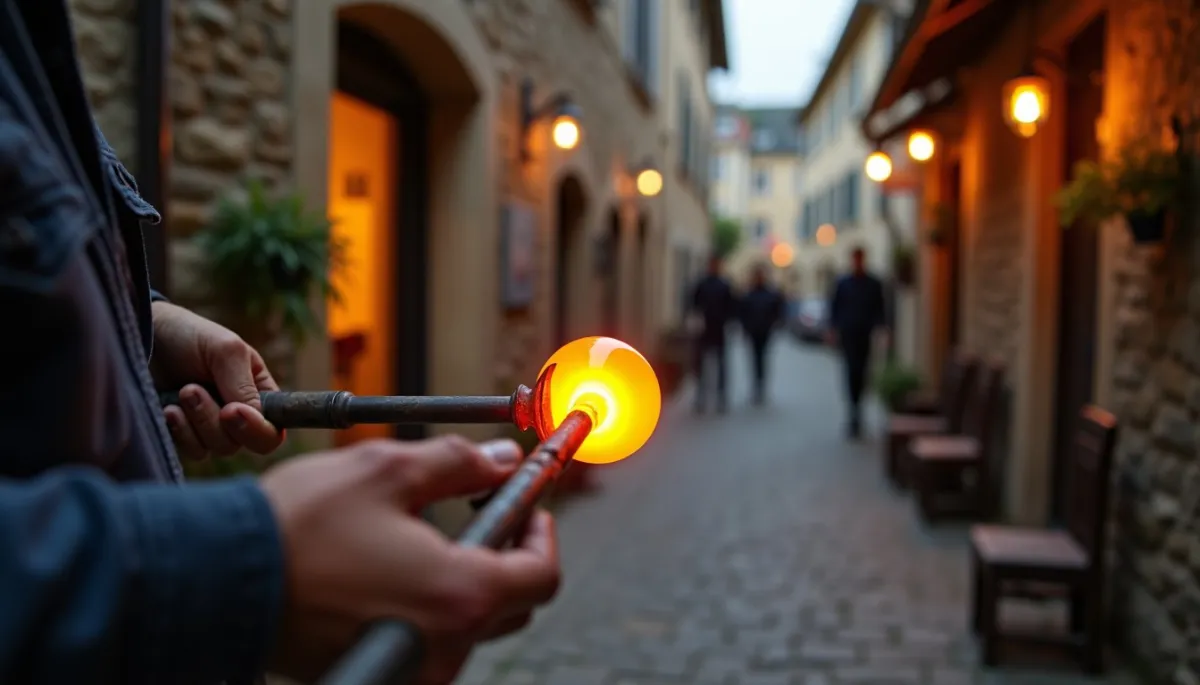
Warm light, clinking tools, a glowing orange bubble of molten glass—up close, the craft makes you hold your breath. Walk down a narrow lane in Biot-les-Verriers and you might find a blower shaping a vase while visitors of the village sip rosé in the square, the furnace sending a soft hum into the night.
Village en lumière
Biot, perched between Nice and Antibes, is a postcard of medieval streets, but it has another identity: a historic place of glass. For centuries, the region hosted small glass workshops, and in the mid 20th century the craft experienced a deliberate renaissance when local artisans and arriving designers embraced glass as both utility and art.
Today the name Biot is associated with a recognizable aesthetic. One feature often cited is the controlled inclusion of air bubbles inside the glass, which local makers use as a decorative fingerprint. These bubbles, and the slightly irregular silhouettes, are celebrated rather than hidden, they tell a human story of hand, heat and breath.
The immediate consequence for visitors is tangible. Stroll the ateliers on a weekend and you will see public demonstrations, limited-edition collections, and a steady stream of tourists buying unique pieces. This cultural tourism reinforces the village economy, turning workshops into both production sites and showrooms.
Souffle et modernité
The revival owes much to broader currents. In the 1960s the studio glass movement, with figures like Harvey Littleton in the United States, encouraged artists to work independently from large factories. The idea crossed the Atlantic and inspired European makers to experiment, creating small studios where technique and form could be reinvented.
Local designers and glassblowers in Biot adapted these impulses, combining traditional blowing methods (glassblowing means shaping molten glass using a blowpipe and tools) with new forms and collaborations with product designers. The result is contemporary tableware, sculptural pieces, and lighting that speak a modern language while remaining rooted in craft.
Practical initiatives supported the trend. Over recent decades, regional craft networks and cultural programs have promoted residencies and workshops. These exchanges attract international artists, bringing fresh techniques and raising the profile of Biot on the design circuit, from trade fairs to gallery exhibitions.
Résurgence et défis
Yet the renewal is not without tensions. Small ateliers must balance artistic ambition with economic reality. Glassmaking is energy intensive, and rising costs of raw materials and electricity affect production. Artisans often diversify with workshops, retail, and tourism to sustain their practice.
Another challenge is generational transmission. The craft requires long apprenticeships. Several studios now offer short discovery sessions for tourists and longer vocational training for those who wish to commit. The hope is to keep a pipeline of young makers who can combine traditional skills and contemporary design thinking.
Looking ahead, the exciting developments are collaborative. Designers, architects and glassblowers are working together on lighting for restaurants, public sculptures, and bespoke commissions for international clients. Biot is positioning itself not merely as a village of craft, but as a living laboratory of contemporary glass.
For visitors: plan ahead. Many ateliers open for demonstrations during summer and on heritage days. Buy directly from the makers when you can, ask about how a piece was made, and favor numbered editions if you want provenance. Respect weight and fragility when traveling, and consider a workshop experience to try your hand at blowing a small bowl.
Biot remains atmospheric, but now it is also audible, full of furnaces, laughter and the occasional ringing of cooling glass. That sound is the best souvenir: proof that a traditional craft can renew itself without losing its soul.
Thanks for reading, and don't forget, Enjoy Life Moments!