Architectural minimalism: when luxury lives in space, light and silence
🚀 Key Takeaways
- Core concept : Luxury is created by space, light and silence.
- Practical tip : Prioritize natural light and proportion over decoration.
- Did you know : The Japanese notion of "ma" (negative space) is central to architectural minimalism.
It feels like breathing more freely. Imagine entering a house where a single ray of sunlight carves the outline of a concrete wall, and the rest is quiet.
space as luxury
The first thing you notice in minimalist architecture is the presence of space itself. Rooms are generous, but not filled. Floor plans privilege continuity, sightlines and proportion over ornament.
Icons such as Mies van der Rohe's Farnsworth House and the Barcelona Pavilion illustrate this approach. Their restraint creates an elevated perception: every surface, every joint, matters. In luxury real estate, that perception translates into desirability, because buyers seek environments that feel curated and restorative.
Contemporary architects from John Pawson to Tadao Ando have taken that idea further. Pawson's private houses and boutique interiors simplify material palettes to amplify scale. Ando uses concrete and light to make volume speak. The result is a kind of expensive silence, where the architecture itself becomes the object of desire.
light and atmosphere
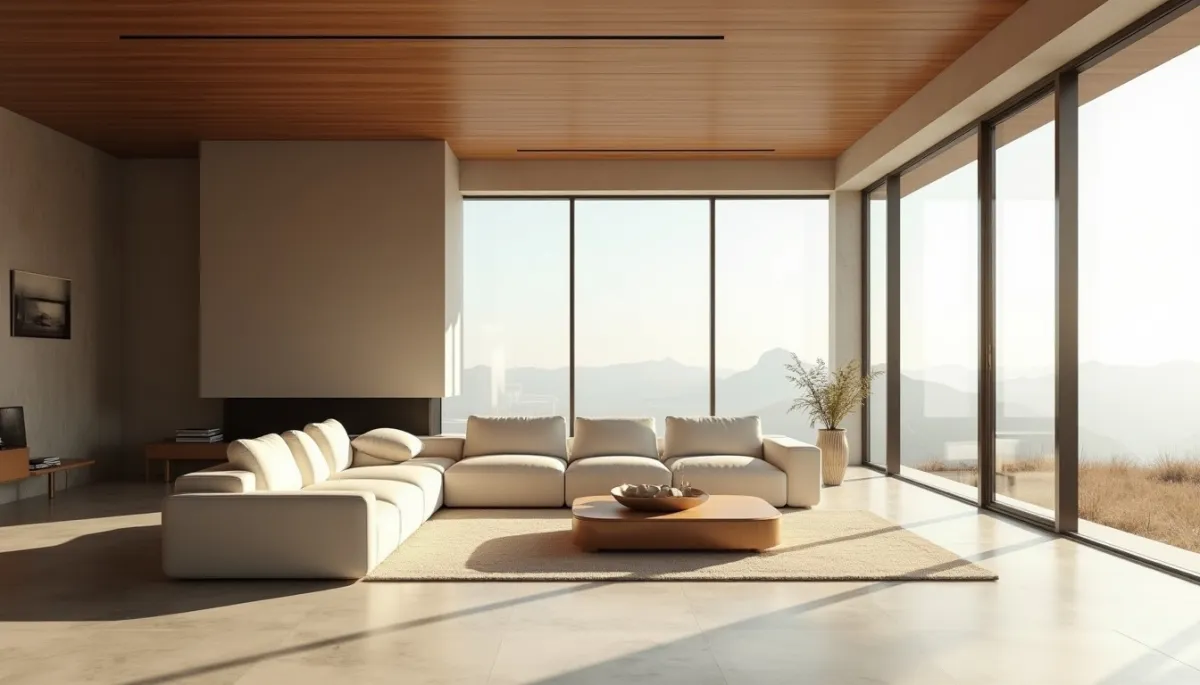
Light is the true material of minimalist design. Natural daylight sculpts volumes, reveals texture and sets mood across the day. Architects design openings not as windows to fill, but as instruments to tune atmosphere.
Tadao Ando's Church of the Light in Osaka is often cited: a cruciform gap in a concrete wall transforms daylight into a liturgical experience. Similarly, the Farnsworth House uses floor-to-ceiling glass to invite the landscape in, making light the primary ornament.
On the practical side, luxury projects invest heavily in daylighting studies, glazing technologies and layered artificial lighting. Acoustic treatments, often overlooked, complete the atmosphere. Silence and controlled soundscapes are part of the lighting plan: together they create spaces that feel rare and valuable.
silence and memory
Silence in architecture is not the absence of sound, but the orchestration of sensory calm. Materials with soft acoustic properties, careful window positioning and minimal mechanical noise produce interiors where conversation is intimate and movement hushed.
High-end hospitality and private residences now treat silence as an amenity, alongside concierge services and wellness spas. A quiet bedroom with deep windows and thick walls is marketed as restorative; the absence of visual clutter becomes a selling point for time-poor clients.
There is also a cultural dimension. Japanese aesthetics, especially the idea of ma (the interval or negative space), and Scandinavian attention to daylight and workmanship both feed contemporary minimalism. Luxury houses borrow these traditions to offer calm that feels both timeless and modern.
why minimalism now
Several social and economic shifts explain the resurgence of minimalist luxury. Urban density and information overload have increased the premium on private, peaceful environments. Affluent buyers are investing in homes that promise mental clarity and long-term quality rather than fast trends.
Technological change also plays a role. Smart home systems allow surfaces to remain uncluttered: lighting, climate and entertainment are embedded and invisible. Material innovation makes minimal palettes richer: engineered stone, fine concrete, large-format glass and advanced woods age well and require less ornament.
Finally, the sustainability conversation nudges designers toward restraint. Minimalism's emphasis on longevity, repairable materials and fewer objects aligns with a luxury market that increasingly values responsible consumption.
tensions and future paths
Minimalism in luxury is not without contradictions. Simplicity can be expensive. High-grade finishes, bespoke joinery and acoustic engineering carry costs that make minimalist interiors a luxury in themselves. The aesthetic risks becoming elitist: what looks like restraint is sometimes financial opulence disguised as purity.
There are also debates about warmth and livability. A purely ascetic interior can feel cold. Successful projects balance minimal planes with tactile materials, carefully chosen furniture and plants. The trick is to create restraint that invites human life rather than forbids it.
Looking forward, expect hybridity: minimal structures with layered, artisanal inserts. Architects will continue to explore light, silence and space, while collaborators — artisans, acoustic engineers, landscape designers — will ensure these virtues persist in lived reality.
Practical advice for readers: prioritize proportion over quantity. Let natural light guide layout decisions. Invest in acoustic comfort and high-quality basics rather than trend furniture. Embrace the concept of ma: leave intentional gaps that let your house breathe.
Thanks for reading, and don't forget, Enjoy Life Moments!