Hermès and the art of time: the hundreds of hours behind a Birkin or a Kelly
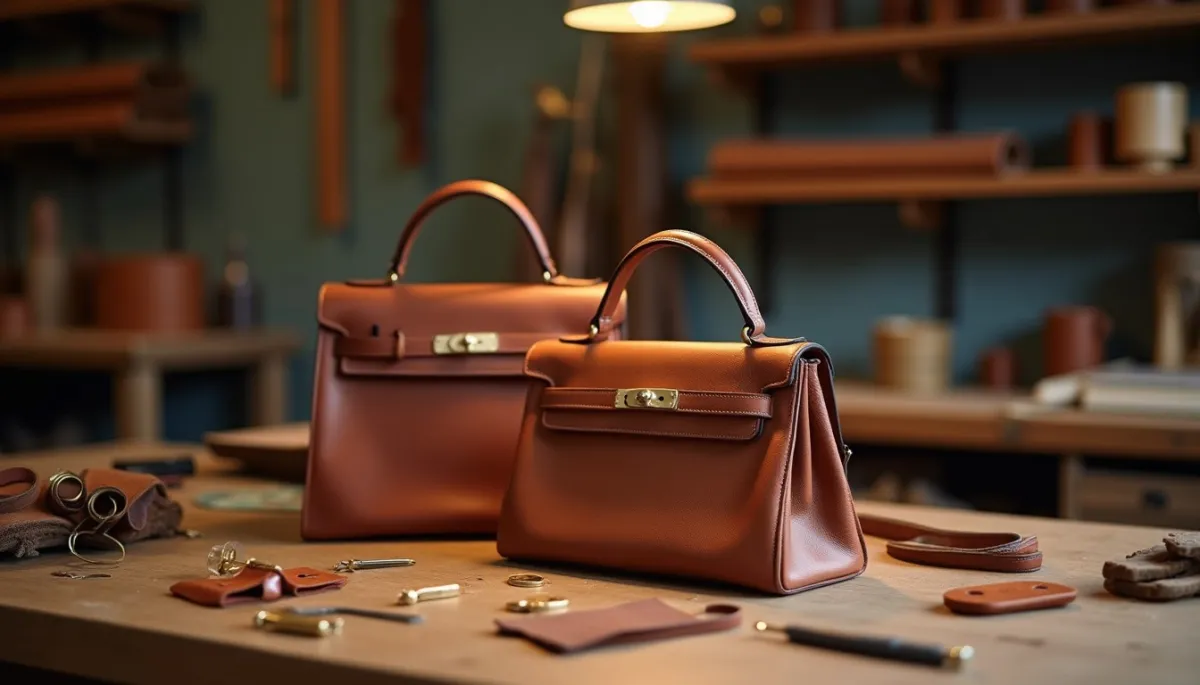
Hermès transforms time and patience into objects that tell a story and gain value.
🚀 The essentials
- Key concept: Craftsmanship takes precedence at Hermès.
- Practical advice: Store your bag in its cover, vary the use and avoid the sun to preserve the leather.
- Did you know: The Birkin was born from a chance conversation between Jane Birkin and Jean-Louis Dumas on a plane.
Imagine a wooden workbench, a warm lamp, tools arranged like instruments, and a single hand focused on making a perfect seam.
The most visible consequence of manual labor at Hermès is scarcity. A Birkin or a Kelly is not a factory product; it arrives in limited quantities because each piece requires time and human attention.
This rarity fuels a dynamic secondary market. Resale prices often exceed the boutique price, and examples in rare skins or special editions fetch very high amounts at auction. Collectors look at provenance, year and craft finish.
Another consequence, longevity. A well-maintained Hermès bag can last for decades. This horizon changes the situation: we sometimes buy to pass on or restore, rather than to consume quickly.
Leather tradition
It all starts with the story. Hermès was born in Paris in 1837 as a manufacturer of harnesses and saddles. The leather tradition is therefore first and foremost equestrian. The word "sellier" means saddle maker and this expertise was retained when the house turned to bags.
Technique is essential. Hermès practices saddle stitching, where two needles cross at each point, making the stitching particularly durable. The leathers chosen (Togo for its grain, Clemence for its suppleness, Box for its patina, or exotic skins for their rarity) each require a different gesture and handling.
The training also explains a lot. Becoming an artisan at Hermès can take years of apprenticeship. If the manufacture of a Birkin takes, depending on the size and the leather, between a dozen and a few dozen hours of direct work, the cumulative time for preparing the skins, finishing, quality control and training of artisans represents hundreds of hours behind each production line.
Saving crafting
Hermès combines tradition and industrial model. On the one hand, the house resists automation for its iconic pieces in order to preserve artisanal standards. On the other hand, it is a global company subject to production objectives and the dynamics of the luxury market.
Moreover, there is a contradiction of visibility. The myth of the Birkin and Kelly is enhanced by the discretion of the workshops. This confidentiality creates aura, but also complicates discussions on the transparency of supply chains.
Finally, environmental issues add a layer of complexity. The durability of the finished product sometimes clashes with debates on the use of exotic skins and the logistical footprint of an international house.
Concrete advice: vary the use so as not to crush the corners, keep the bag in its cover, avoid filling it with heavy objects which deform the structure, and use Hermès certified workshops for any restoration.
Thanks for reading, and remember, Enjoy life's moments!