David Lynch: how transcendental meditation fuels the cult director's creativity
🚀 Key Takeaways
- Key concept : Transcendental Meditation (TM) helps Lynch access subconscious imagery that feeds his films.
- Practical advice : Try 20 minutes twice daily, then freewrite or sketch to capture fresh images.
- Did you know : Lynch founded the David Lynch Foundation in 2005 to teach TM to at-risk groups.
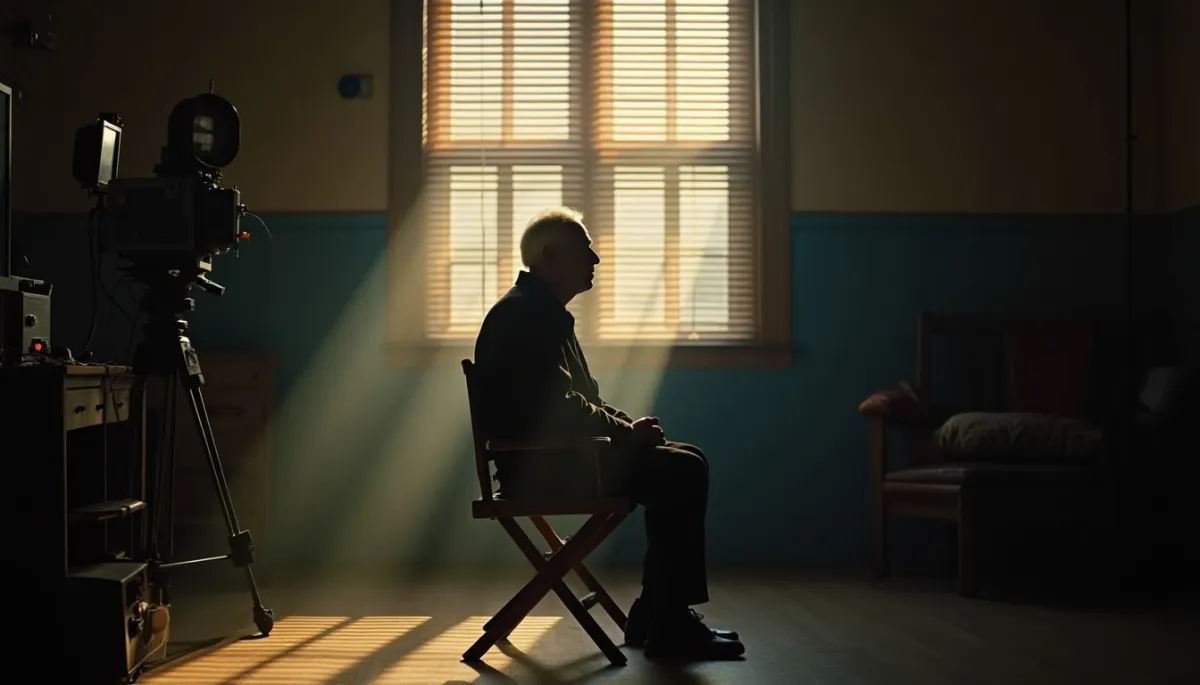
Close your eyes, and imagine a dark, humming studio where light leaks through blinds. There, a man sits perfectly still, breathing softly, and watches the world of images settle into place.
deep images
David Lynch is a filmmaker and artist who turned cinematic dreams into cult classics. Born in 1946 in Missoula, Montana, he first gained attention with Eraserhead, released in 1977. He later directed Blue Velvet in 1986, Twin Peaks on television in 1990, Mulholland Drive in 2001, and Inland Empire in 2006. Each work is recognizable by its hypnotic audio, striking compositions, and recurring motifs of doubles and uncanny domestic spaces.
Beyond film, Lynch is a painter and a composer. His output spans decades, and his reputation rests as much on singular atmosphere as on plot. Critics, cinephiles, and a devoted public treat his images like riddles worth returning to. This reputation created the conditions for a long-term commitment to practices that sustain creative stamina.
Lynch often describes his work as coming from a deep source. He uses the metaphor of fishing to explain idea emergence, most famously in his 2006 essay collection, Catching the Big Fish: Meditation, Consciousness, and Creativity. For him, meditation is not a hobby. It is an engine that brings the 'big fish'—those rich, surprising images—up from deeper states of consciousness.
origins of practice
Transcendental Meditation, or TM (a simple technique involving silently repeating a mantra for about 20 minutes twice a day), was popularized worldwide by Maharishi Mahesh Yogi in the 1960s. Lynch began practicing TM in the early 1970s, during a period when he was moving from visual art toward filmmaking. He found the technique a way to calm anxiety and sharpen perception.
In 2005 Lynch created the David Lynch Foundation, aimed at teaching TM to trauma-affected groups, students, veterans, and prisoners. The foundation reflects his belief that meditation has public health benefits beyond artistic inspiration. Lynch has publicly linked his own creative longevity to the habit of meditating twice daily, a routine he has maintained for decades.
He documented this relationship between meditation and creativity in interviews and his book, where he writes of waking with an image or an idea and following it into a scene or a shot. Directors and writers often speak of incubation, that quiet time when a problem resolves itself. For Lynch, TM appears to be that incubation made regular, systematic, and intentionally reachable.
creative tensions
Yet the relationship is not a romantic myth in which meditation automatically produces masterpieces. Lynch's career shows tensions. He balances rigorous, sometimes commercial collaborations, for example with network television on Twin Peaks in 1990, with fiercely private, experimental projects like Inland Empire in 2006. Meditation supports both, but it does not remove the real-world constraints of production, funding, and audience expectation.
There are moments when the deep images resist translation. Not every insight becomes a usable scene. Lynch himself admits that many images remain private, or are used later in a different form. The practice, then, is not a formula guaranteeing success. It is a practice that increases the availability of raw material, which still requires craft to shape.
For readers curious about applying this to their own creative life, some practical steps emerge from Lynch's example. Learn a consistent meditation technique (TM is one option), commit to short daily sessions, keep a notebook beside your bed, and build a ritual to capture images immediately after meditation. Freewriting for five to ten minutes after a session helps transform ethereal content into usable ideas. Consider also structured play, such as collage or sound experiments, to translate nonverbal impressions into work.
David Lynch shows that creativity benefits from inner discipline as much as from wild inspiration. His films remain proof that disciplined access to the unconscious can yield images that linger, unsettle, and delight. For anyone seeking to expand their creative reservoir, the lesson is clear: practice the return to silence, and learn to fish.
Thanks for reading, and don't forget, Enjoy Life Moments!