Wabi-sabi aesthetics: finding peace and comfort in the imperfection of your interior
🚀 Key Takeaways
- Core concept : Wabi-sabi values simplicity, impermanence, and the beauty of age.
- Practical tip : Embrace patina, repair rather than replace (try kintsugi-inspired fixes), choose raw textures and muted palettes.
- Did you know : The tea master Sen no Rikyu shaped wabi-sabi through the Japanese tea ceremony in the 16th century.
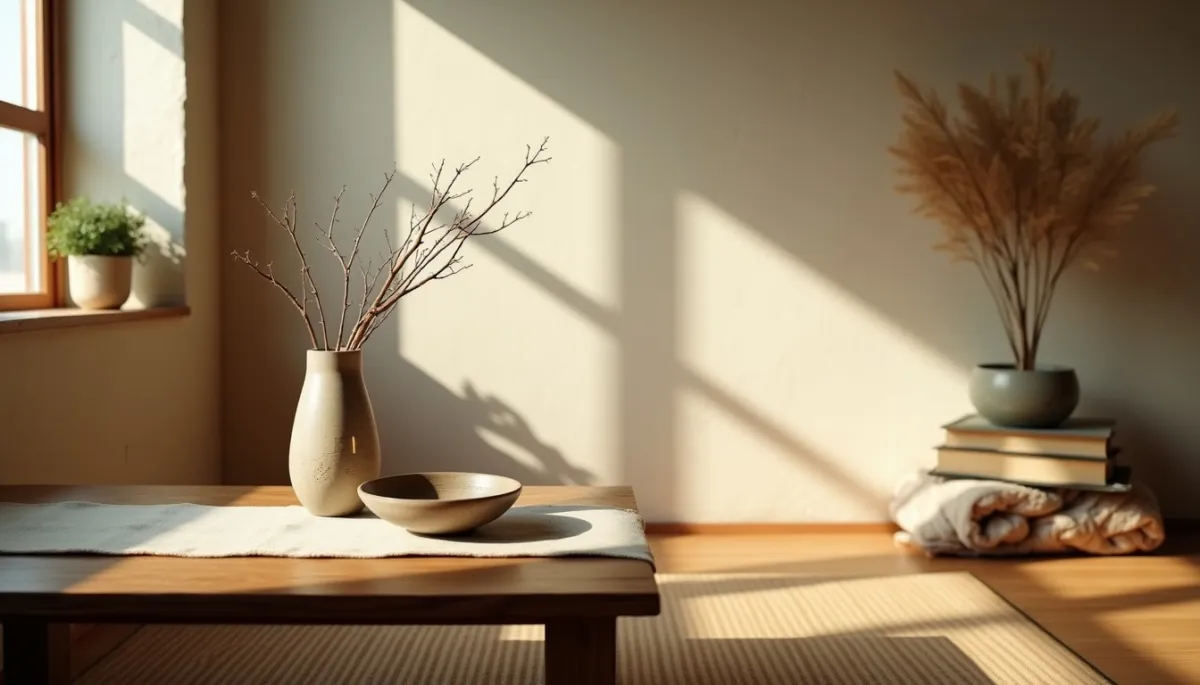
Picture morning light pouring across a low wooden table, a cracked tea bowl mended with gold, and a single branch in an asymmetrical vase. The room feels calm, honest, and strangely familiar.
Wabi-sabi is not a style to copy blindly, it is an attitude to cultivate at home. Born in Japan but now influencing designers, architects, and homeowners worldwide, it asks us to value the worn, the simple, and the transient. Below we explore what happens when you welcome imperfection, why this turn has meaning today, and the tensions that may arise.
Ceramic morning
When a neighbor in Kyoto invited me into a tiny machiya (traditional wooden townhouse), the first thing I noticed was the tea bowl. It was uneven, its glaze pooling in places. The owner told me it had been repaired by a local kintsugi artist after a fall. Far from hiding the break, the golden seam became the bowl's story. That encounter captures a concrete consequence of wabi-sabi: objects become narrative anchors in a home.
Across cities like Copenhagen, Portland, and Tokyo, interiors influenced by wabi-sabi create calmer daily rhythms. A bohemian cafe in Brooklyn might pair raw plaster walls with thrifted ceramics; a Parisian flat might display a faded rug with proud wear marks rather than replacing it. The consequence is psychological: people report feeling less pressure to maintain flawless surfaces and more permission to live freely within their spaces.
Wabi-sabi also surfaces in hospitality. Traditional ryokans in rural Japan, such as those in Gifu or the Nara region, celebrate weathered beams, sliding shoji, and tatami impressions. Guests comment on the relief of staying somewhere that honors age; the experience itself becomes restorative, not just aesthetic.
Hidden roots
Why does wabi-sabi matter now? One cause is cultural fatigue with perfection. Social media presents polished interiors that can feel unattainable. In reaction, many seek authenticity. Wabi-sabi answers by reframing flaws as evidence of a life well-lived. This cultural shift explains why artisans and small brands selling hand-thrown pottery or patched textiles have blossomed in recent years.
Historically, wabi-sabi grew from the tea ceremony and Buddhist ideas of impermanence (mujo) and mindful attention. The tea master Sen no Rikyu in the 16th century popularized rustic teawares and an aesthetic of restraint. Over centuries, the terms 'wabi' (simple, rustic solitude) and 'sabi' (the beauty that comes with age) layered together. Understanding these roots helps decode why a dented wooden stool feels meaningful rather than merely old.
Economic and ecological causes amplify the trend. Repair cultures like kintsugi, visible mending, and secondhand markets align with sustainability. Embracing imperfection reduces waste. Designers such as Tadao Ando or brands like Muji and slow-living movements reference minimalism but infuse it with texture and history, bridging traditions and modern needs.
Contradictory beauty
However, wabi-sabi is not a simple panacea. One contradiction is commodification. Once-quiet philosophies become Instagram aesthetics; mass-produced items labeled 'wabi-sabi' can feel contrived. A lacquered table marketed as 'raw' defeats the point if it lacks story or craft. This raises ethical questions: can a marketable product capture the humility at wabi-sabi's core?
Another tension appears in practice. Embracing imperfection does not mean accepting neglect. There is a line between allowing patina and tolerating unsafe or unsanitary conditions. Practical application requires discernment: keep what ages gracefully, repair what’s valuable, discard what hinders living well. A useful rule is to repair first; replace only when repair compromises function or health.
Looking forward, wabi-sabi will likely evolve through hybrid conversations with other movements: Scandinavian hygge, Italian slow living, and artisan tech. Expect collaborations that honor craft, and also debates about authenticity. For readers, this means learning to read objects—asking where they come from, who made them, and how they have been cared for—so your home becomes a curated life, not a curated image.
Practical tips to begin: choose natural materials, let light reveal texture, practice visible mending like simple stitching or kintsugi, and reduce clutter so each imperfect piece can tell its story. Start small. Replace one plastic bowl with a thrifted ceramic, mend a sweater, or let a wooden tabletop show its rings.
Thanks for reading, and don't forget, Enjoy Life Moments!