The universal language of the soccer ball: how a beach match in the Yucatán creates instant belonging
🚀 Key Takeaways
- Core idea : A beach soccer game serves as a social passport.
- Practical tip : Learn one Spanish question: '¿Puedo jugar?' (Can I play?), and bring a ball.
- Did you know : FIFA organizes official beach soccer competitions since 2005 (futbol playa).
Pure joy takes no interpreter.
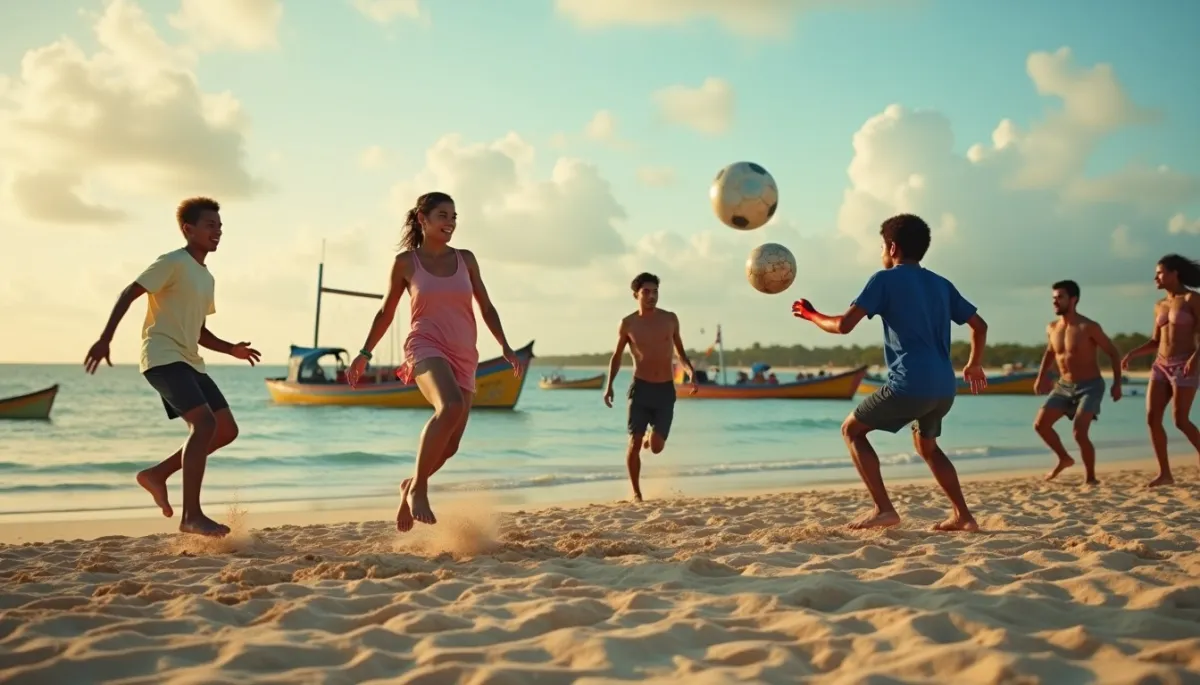
Picture a late afternoon on Playa Progreso or the white sand by Puerto Morelos: four goal markers made from towels, a motley of players barefoot and sunburnt, and a ball that has already lost its manufacturer logo. Tourists with backpacks, fishermen with callused feet, teenagers in school shirts, and a retired teacher from Mérida circle up. Shouts, laughter, clapping—some Spanish, some broken English, most gestures. The first pass is sloppy, the next two connect, and suddenly you're part of the rhythm.
A common language
Soccer on the sand acts like a universal grammar. Movement, timing and eye contact replace syntax. A run into space, an encouraging clap, a shared sprint after a loose ball: all are immediately intelligible.
Historically, Mexico's relationship with football is deep. The country hosted the FIFA World Cups in 1970 and 1986, moments that cemented the sport in everyday life. In coastal towns of the Yucatán peninsula, informal matches have been part of daily routine for decades, from Progreso's pier to the beaches of Isla Mujeres.
Beach soccer (futbol playa) also has an institutional side. FIFA began its official beach soccer world championship in 2005, turning a popular pastime into an international sport without stripping it of its grassroots charm. Locally, you might spot players who alternate between pickup games and organized tournaments.
Why it works
Physical play reduces social distance. When you run, fall, and laugh together, hierarchy flattens. The ball dictates the rules more than language does.
There is also a cultural openness in the Yucatán region. Fishing communities, tourism workers and families converge on beaches at dusk; shared free time creates natural places to meet. I met Miguel, a 42-year-old fisherman, in July 2024 on Playa Progreso. He offered the first drinkless high-five, then a place on his team. Ten minutes later, we had a dinner invitation and directions to a local cenote.
Practical cues make joining easier: approach with a smile, wait for a lull, ask '¿Puedo jugar?' or '¿Se puede?', accept light teasing, and return the ball quickly. These small rituals signal respect. Bring sunscreen and a ball if you can, and carry a towel to mark goals if none exist.
Between joy and limits
Not everything is idyllic. Pickup games can reflect local tensions—age groups, gender expectations, or the divide between visitors and residents. In some towns, women might prefer separate games, or playtimes shift to avoid the hottest hours when locals work.
Environmental concerns also matter. Dune systems and protected nesting areas for sea turtles are fragile. Play responsibly: avoid nests, use existing access points to the beach, and do not move vegetation. In 2019, conservation efforts in parts of Yucatán strengthened restrictions around shorelines during nesting season, and respectful visitors helped keep beaches open to play.
Finally, language still has value. Learning a few phrases deepens the exchange. Compliments like 'Buen pase' (nice pass) or 'Buen gol' (nice goal) are small bridges. Most players appreciate the effort. Over time, those short conversations can turn a shared 90 minutes into lasting friendships.
Thanks for reading, and don't forget, Enjoy Life Moments!