The watch of the cathedral: Lausanne's medieval tradition still alive
🚀 Key Takeaways
- Key concept : The guet is the medieval night watch tradition that warned citizens of danger (fire, attack, curfew).
- Practical tip : Climb the cathedral tower at sunset for the best chance to hear a ceremonial guet call and enjoy the panorama of Lausanne and the lake.
- Did you know : Lausanne Cathedral was largely built between 1170 and 1235 and consecrated in 1275, the same centuries when city watches became common in Europe.
Night folds over the tiled roofs, and a voice cuts the silence. Imagine standing on Rue de la Palud as the Cathedral's bell speaks to the city.
Sous la tour
The Cathedral of Notre-Dame in Lausanne dominates the old town. Constructed mainly between 1170 and 1235 and consecrated in 1275, it quickly became the civic and spiritual heart of the city.
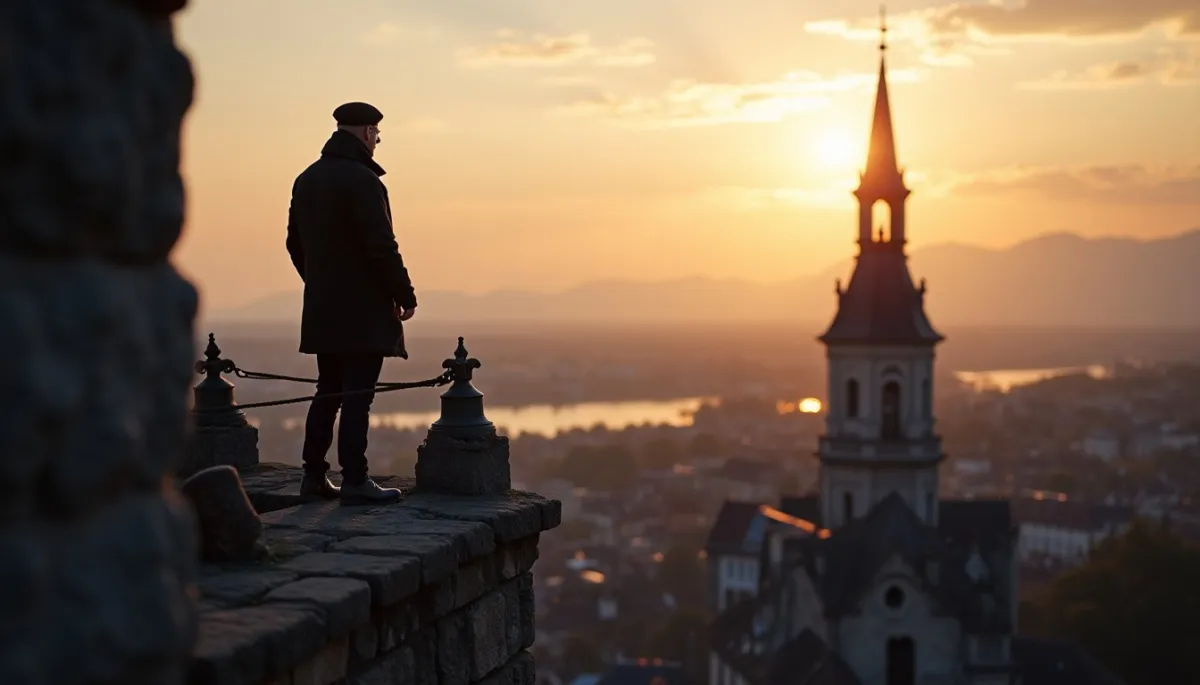
From its towers, a guet (a watchman) once scanned the horizon. His task was practical: to spot fires, signal impending danger, and call the curfew. In medieval towns across Europe, the guet was essential to urban safety after dusk.
Today, the stone parapets and the bells retain that memory. On certain evenings and during special heritage events, you can still hear the ceremonial calls that echo the medieval routine.
Voix du passé
The persistence of the guet is a consequence of Lausanne's attachment to its historic identity. Municipal archives and local historians show that watch systems were in place from the later Middle Ages onward across the Lake Geneva region.
Keeping the guet alive helps the city link present-day civic life with centuries of practice. It is less about duty now and more about education, living memory, and performance.
Guides and associations often stage the guet during festivals and guided climbs of the tower, turning a technical civic role into a poetic encounter with history.
Pourquoi cela perdure
The cause of this survival is cultural stewardship. Institutions such as the cathedral chapter, the city of Lausanne and local heritage groups prioritize rituals that make history tangible for residents and visitors.
Tourism plays a part. Visitors climb the 250 steps of the tower to admire the panorama and appreciate the spectacle of a city that preserves its rituals. That interest creates incentive to maintain ceremonial practices.
Educational programs in schools also bring children to the cathedral, where the guet becomes a living lesson about medieval urban life and communal responsibility.
Entre mémoire et défi
However, continuity is not automatic. Modern safety standards and daytime municipal services have made the functional role of a watch redundant. The guet survives as ceremony, not as necessity.
That shift raises questions. How do you keep a tradition relevant when its original function has disappeared? Lausanne answers by reframing the guet as heritage and community performance.
Future developments may include digital interpretation (audio guides, augmented reality) to make the guet accessible to younger audiences while preserving the authenticity of the live call from the tower.
Practical advice: plan your visit in spring or summer evenings, check the cathedral schedule for tower openings, and consider a guided tour which often includes stories of the guet and local anecdotes.
Thanks for reading, and don't forget, Enjoy Life Moments!