Submerged temples: an archaeological dive into the Caribbean depths
🚀 Key Takeaways
- Concept key : Cenotes and submerged caves are time capsules, preserving both Maya ritual deposits and Pleistocene bones.
- Practical tip : Choose licensed guides, avoid sunscreen before entering fresh water, and respect no-touch rules to protect fragile sites.
- Did you know : Human remains like Naia were recovered from Hoyo Negro and date to roughly 12,000 years ago.
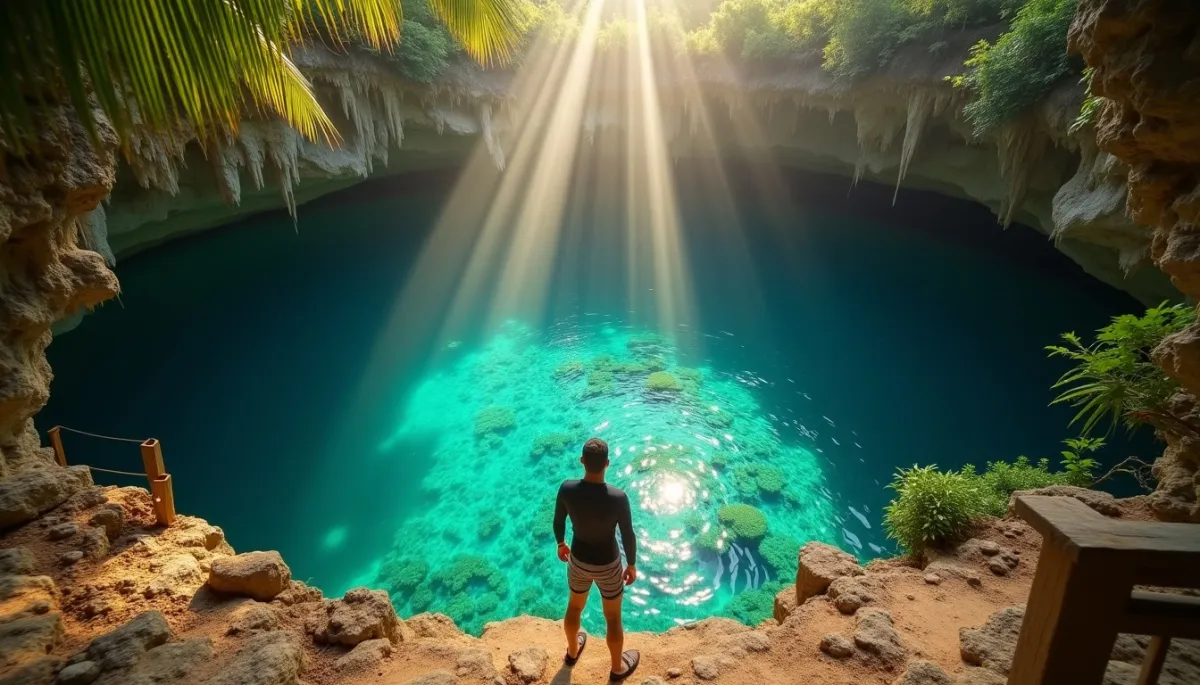
Close your eyes and imagine sunlight slicing through aqua, hitting a column of air, then a silent gallery of stalactites and human history. The first breath on the rim tastes like limestone and salt, and below, a world waits.
Ruins in water
Under the turquoise of the Caribbean coast and the darker pools of the Yucatán peninsula, archaeologists have documented offerings, ceramics, and even skeletal remains inside cenotes and drowned caverns. These finds changed long-held ideas about where and how ancient people lived and practiced ritual.
Some of the most striking discoveries include Hoyo Negro, where cave divers in 2007 recovered a remarkably complete young woman's skeleton nicknamed Naia, dated to about 12,000 years ago. Hoyo Negro also yielded Pleistocene megafauna bones, including mastodon and giant ground sloth fragments, providing a window into the end of the Ice Age.
On a larger scale, the Ox Bel Ha and Sac Actun cave systems, explored and mapped intensively since the early 2000s, reveal hundreds of kilometers of passages. These underwater networks connect inland cenotes to the sea, and along their galleries archaeologists find lithic tools, pottery shards, and organic material unusually well preserved by constant fresh water and stable conditions.
Memory of water
Why are so many discoveries made underwater rather than on dry land? The answer is partly geological. The Yucatán is built on karst limestone. Over thousands of years rainwater carved caves and sinkholes, known locally as cenotes, and when sea levels rose after the Last Glacial Maximum, many of these cavities flooded.
The flood that began about 12,000 years ago submerged low-lying settlements and preserved contexts that on land would have decayed. In this sense, submerged sites act as deep freezers. Organic material, bones, and fragile offerings survive because water in these caves is cold, low in oxygen, and shielded from surface weathering.
Historic interventions also shaped our knowledge. In 1904 Edward H. Thompson dredged the Sacred Cenote at Chichen Itza and recovered gold, jade, and human remains, documenting ritual deposition practices. Modern pioneers, such as Mexican archaeologist Guillermo de Anda and international cave-diving teams, combined diving technology with meticulous excavation to recover and date finds with greater scientific care, producing reliable chronologies for human use of these spaces.
Between science and tourism
Today the Riviera Maya faces a dual reality: these submerged chambers are both irreplaceable archives and attractive destinations for divers and snorkelers. Sites like Dos Ojos, Sac Actun, and Cenote Azul receive visitors who seek wonder, while research teams continue careful excavations in restricted zones.
This popularity creates tension. Light, silt, and oils from sunscreens can damage fragile archaeological deposits and delicate cave formations. Unregulated diving risks both human safety and scientific context, because moving a shard or bone without documentation erases a story forever.
Fortunately, local authorities, research institutions, and diving operators have developed protocols. Permit systems, limited group sizes, mandatory briefings, and the use of biodegradable sunscreens or showering before entry are now common practices. For visitors I recommend booking with certified cave-diving or cenote tour operators, asking about their conservation rules, and, if possible, allocating time to visit museums where recovered artifacts are curated, such as the Museo de la Cultura Maya in Chetumal or regional archaeological centers.
Submerged temples and cenotes are not just picturesque stops. They are chapters of human and natural history, connecting Ice Age landscapes to Maya cosmology, and modern communities to global science. To stand at the edge of a cenote is to face time in liquid form, and to choose how we let it be read.
Thanks for reading, and don't forget, Enjoy Life Moments!