Stargazing at the Geneva Observatory: the clear sky over Lake Geneva
🚀 Key Takeaways
- Core idea : Public stargazing evenings at the Geneva Observatory reveal a surprisingly pure sky over the Léman.
- Practical tip : Bring warm layers, a red-light torch and use apps like Stellarium to prepare.
- Did you know : The observatory's team played a central role in the first detection of an exoplanet around a Sun-like star in 1995.
The night takes your breath away.
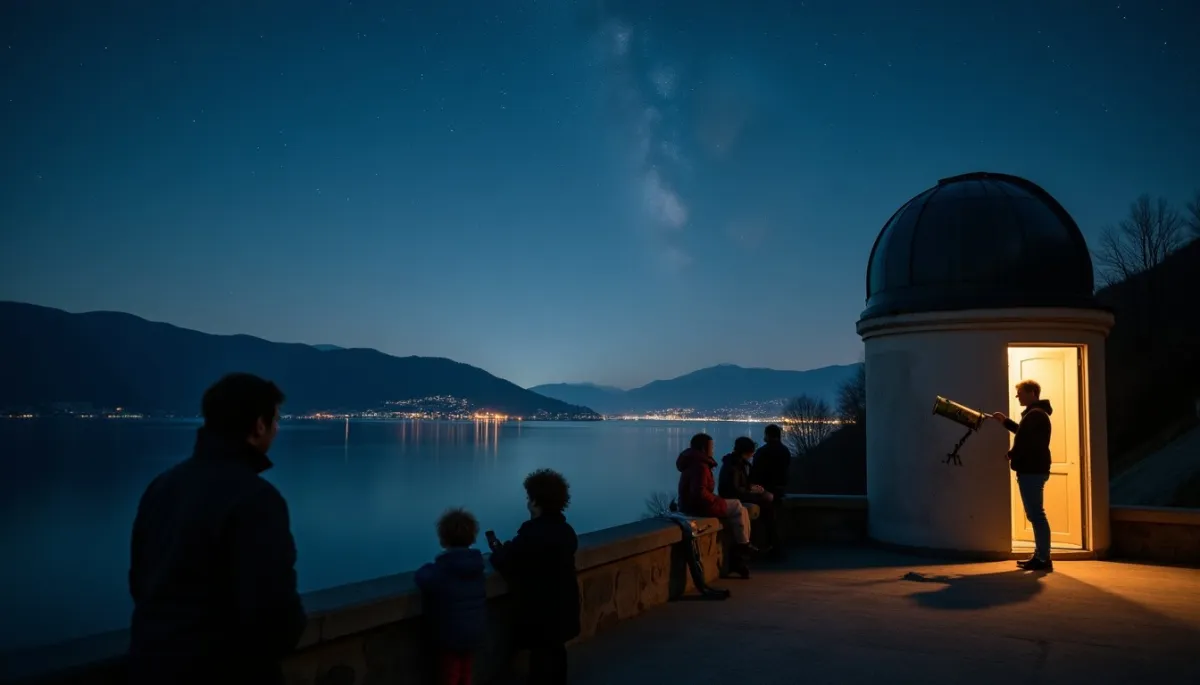
Imagine standing on a terrace above Lake Geneva, the water a dark ribbon, city glare pushed to the far shore. A dome slowly opens, a telescope slides into position, and around you, families and students tilt their faces to the sky, tracking Jupiter's bands or the glitter of the Pleiades. The air is cool and dry; the stars look impossibly close.
ciel qui inspire
Geneva's location along the Léman gives observers a distinct advantage. The lake moderates temperature inversions that often trap fog inland, creating clear windows for astronomy, especially in autumn and winter evenings.
The Observatoire de Genève, attached to the University of Geneva since the 19th century, is not only a research center but also a gateway for the public. On scheduled nights, researchers open domes and guide visitors with telescopes and explanations, turning complex data into visible wonders.
Most visitors first notice how much more is visible than in the center of Geneva. Bright planets, familiar constellations, and even faint objects like the Andromeda galaxy can be observed with modest optical instruments when the sky is cooperative.
empreintes et découvertes
The observatory has a proud scientific legacy. In 1995, Michel Mayor and Didier Queloz, working within the Geneva astronomical community, announced the discovery of 51 Pegasi b, the first exoplanet orbiting a Sun-like star. This watershed moment changed astronomy and was recognized with the 2019 Nobel Prize in Physics for Michel Mayor.
Beyond exoplanets, Geneva astronomers have contributed to instrumentation and long-term surveys, developing high-precision spectrographs and analysis methods that continue to refine our picture of nearby planetary systems and stellar dynamics.
For the local public, this scientific weight translates into guided explanations on what a spectrograph does, how Doppler wobble reveals unseen planets, and why precision timing matters when measuring stellar motion. Hearing the story of a Nobel prize in the very place where you look up gives observation a human dimension.
soirs partagés
Public evenings are a mixture of lecture, demonstration and hands-on observing. Volunteers and researchers set up a range of instruments, from classical refractors to CCD-equipped telescopes, allowing visitors to compare views and techniques.
Practical schedules change seasonally, so check the observatory's calendar before you go. Events often fill up, particularly in late summer and autumn when the Milky Way is prominent and weather patterns offer long clear nights.
Visitors come with different expectations: some want to photograph the sky with a smartphone, others to learn the names of constellations, and enthusiasts to discuss the latest exoplanet papers. The staff welcome all, adapting explanations to the audience while keeping scientific rigor.
pourquoi venir
Watching stars above the Léman is more than a scenic outing. It reconnects people to scale and history. The same sky that inspired sailors and mapmakers now hosts discoveries about worlds beyond our Solar System. It's a bridge between culture and cutting-edge science.
For couples, families, or solo travelers, an evening at the observatory is an intimate cultural experience. You share the small thrill of spotting Saturn's rings or a crater on the Moon, and often leave with a better question than the one you arrived with.
Accessibility is reasonable. The observatory is a short drive from Geneva center, and public transport options are available for many of the public nights. Expect simple facilities: a heated room for lectures, outdoor terraces for telescopes, and volunteers happy to point out bright objects.
conseils pratiques
Choose a clear night. Autumn through early spring often offers the most stable skies. Aim for dates around new moon for the darkest sky, unless you want to admire the Moon itself.
Bring layers, sensible shoes, and a red-light torch to preserve night vision. If you plan to photograph the sky, a stable tripod and a long-exposure capable camera help, but remember that smartphone astrophotography has advanced: apps and simple adapters produce lovely souvenirs.
Learn a few star patterns beforehand with an app like Stellarium or SkySafari. Arriving with a basic knowledge of cardinal directions will let you follow explanations faster and enjoy the moment more.
Thanks for reading, and don't forget, Enjoy Life Moments!