Sensory training: why closing your eyes during sport improves balance
🚀 Key Takeaways
- Core concept : Briefly removing vision forces the nervous system to rely on proprioception and vestibular cues, improving balance over time.
- Practical tip : Start with 10-second eyes-closed stands near a wall, barefoot, once a day and progress gradually.
- Did you know : The Romberg test, used since the 19th century, already relied on eyes-closed posture to reveal sensory deficits.
Close your eyes, breathe, and listen to your joints.
Imagine a Saturday morning in a bright studio in Copenhagen. A group of dancers moves through pliés and relevés, then the teacher asks them to close their eyes for thirty seconds. The room quiets. You can feel the floor through your soles, the tiny shifts in hip tension, the rhythm of breath. In that hush, alignment changes. Few props, no mirrors, just the body learning to map itself without sight.
Close to feel
In many sports and therapies, closing the eyes is no gimmick. It is a sensory training technique that exposes how much we rely on vision to stay upright. When vision is removed, the brain must reweight incoming signals from muscles, joints, and the inner ear (the vestibular system), which reveals weaknesses and forces adaptation.
Coaches and physiotherapists use this approach in balance drills for athletes, in fall-prevention programs for older adults, and in rehabilitation after ankle or knee injuries. The trend is visible in modern studios where guided blindfolded drills accompany breath work and proprioceptive circuits.
Consequences are tangible: short periods of eyes-closed practice improve single-leg stance time, reduce sway in quiet standing, and transfer to better stability in dynamic tasks. For everyday people, that means steadier steps on uneven pavements and less wobble when turning quickly.
How senses weigh in
Balance is a team effort between three systems: vision, proprioception (how joints and muscles signal position), and the vestibular organ in the inner ear. The brain continuously compares and weights these inputs to build a sense of orientation. This process is called sensory reweighting (a concept explored in sensorimotor research since the early 2000s).
The Romberg observation, named after neurologist Moritz Romberg in the 19th century, was an early clinical use of vision removal to detect proprioceptive or vestibular loss. Modern neuroscience, including reviews by experts in postural control, shows the nervous system is plastic: when one sense is reduced, the others can strengthen to compensate, especially with targeted practice.
Practical examples are everywhere. A patient relearning to walk after an ankle sprain will often practice barefoot, eyes closed, to restore the subtle joint sense damaged by the injury. Elite athletes, from surfers to acrobats, sometimes use eyes-closed drills to refine balance in ways mirrors cannot teach.
A careful ritual
However, training without vision demands caution. Removing sight increases immediate fall risk, so safety is essential. Always start near a solid support: a wall, a chair, or a training partner. Work barefoot on a flat, uncluttered surface.
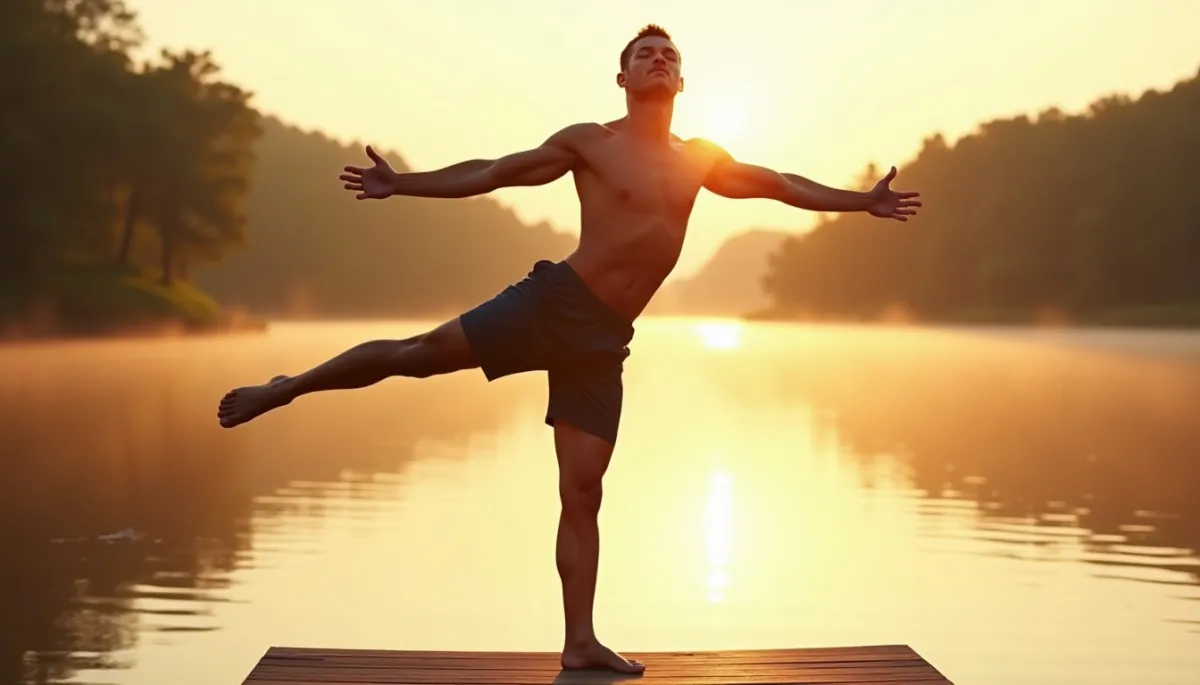
Begin with micro-sessions: 10 to 30 seconds of eyes-closed standing on two feet, then single-leg stands as confidence builds. Progress by adding gentle head turns, unstable surfaces like foam pads, or simple movement sequences. Track progress by counting seconds of stable stance or using a smartphone slow-motion video to observe sway.
Consistency matters. Short daily rituals, a few minutes total, produce better results than sporadic long sessions. If you have vestibular problems, recent concussion, or uncontrolled dizziness, consult a healthcare professional before practicing. For most people, the payoff is clear: a calmer nervous system, sharper body awareness, and a quieter confidence in everyday balance.
Thanks for reading, and don't forget, Enjoy Life Moments!