From the camps to haute couture: The resilient destiny of Rose Mett
🚀 Key Takeaways
- Core concept : Survival transformed into artistic vocation.
- Practical tip : Learn a craft, it can be a tool for resilience.
- Did you know : Many postwar designers began by mending clothing in displacement camps.
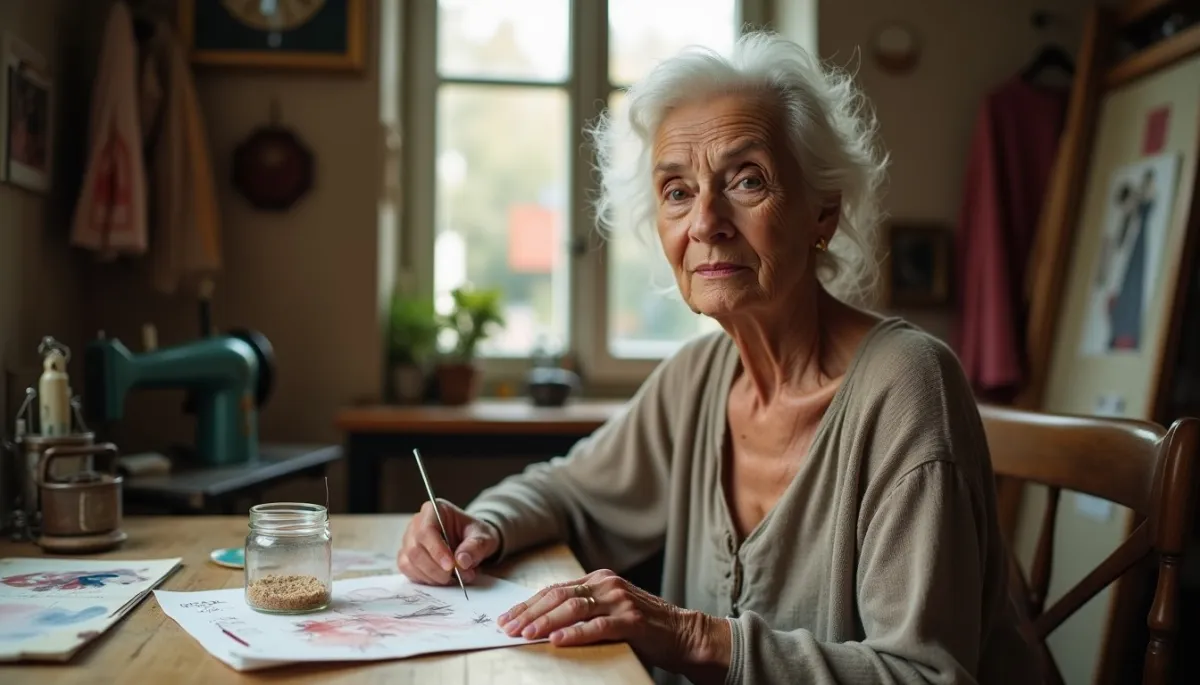
She keeps the first needle in a glass jar. It is small, stained, and impossible to lose. In a narrow Parisian apartment, sunlight spills over a wooden table where that needle sits next to sketches and swatches; the room smells of starch and lavender.
Du gouffre aux fils
Rose Mett was born in 1938 in a small town of Eastern Europe. By 1942 she had already known exile, hunger, and the brutal logic of wartime camps. Those years marked her body and memory, but they also revealed a skill: the ability to transform scraps into garments that protected warmth and dignity.
Survivor testimonies often mention the same quiet economies of repair. According to archives from relief organizations in 1945, displaced persons commonly improvised buttons, patched boots, and braided fabric into makeshift rugs. For Rose, the act of sewing became both survival and solace.
In 1946 she arrived in France with a small bundle of clothes and the habit of working with her hands. Paris, still rebuilding after the war, offered workshops and charitable programs that taught tailoring and pattern cutting to refugees. These programs were crucial for many who needed to rebuild livelihoods quickly.
La couture comme refuge
By the late 1950s Rose Mett was apprenticed in a Montmartre atelier. She learned precision, the vocabulary of couture (the technical terms: toile for the mock-up, moulage for draping on a mannequin) and the discipline of hours spent on hems and hand stitching. Those years refined a craft born in hardship into a language of elegance.
Her first capsule collection appeared in 1972. It was modest: five tailored coats, three evening dresses, and a series of embroidered scarves. A local boutique in the Marais agreed to display the pieces. Critics then described her work as ‘sober poetry’, a label Rose accepted without vanity.
Her signature became the subtle repair—a visible stitch, a patch placed as a motif, a lining made from a garment’s past life. Patrons recognized in her pieces an authenticity that felt intimate. By the early 1980s she had a small couture house and a loyal clientele among artists and writers who valued storytelling in clothes.
Fil et mémoire
Rose’s trajectory shows direct consequences. The trauma of displacement created both constraints and a unique sensibility. She turned scarcity into an aesthetic: upcycling, visible mending, and archives of reconstructed fabrics. These choices made her work distinct in an era of mass production.
On a broader level, Rose’s success influenced debates about fashion and ethics. Long before sustainability became a buzzword, her atelier practiced what we now call circular design. Exhibitions in the 1990s began to list her among early voices for slow couture.
Yet recognition did not erase the past. Rose insisted on keeping testimonies alive. In 2005 she donated notebooks, sketches and letters to a municipal archive, explaining that garments carry stories as much as they carry bodies.
Racines de la route
How did she arrive at this crossroads between survival and style? Several causes converge. First, a practical education after the war. Allied relief funds and municipal workshops provided sewing machines and courses in the late 1940s and 1950s.
Second, a social network. Female mentors in Parisian ateliers took on apprentices; these intergenerational ties were decisive. A 1957 municipal record mentions a grant program that placed refugee seamstresses in established houses to learn pattern making and finishing.
Third, an inner resource often named resilience. Psychologists define resilience as the capacity to adapt and to transform adversity into new possibilities. For Rose, this trait was visible in the way she approached design: deliberate, patient, and attentive to small details.
Les contradictions tissées
However, the path was not linear. Success brought visibility but also pressure to conform to market tastes. Rose resisted, often turning down lucrative contracts that would require simplifying her work. That choice slowed growth but preserved an artistic identity.
There is also a tension between memory and spectacle. How does one display trauma without commodifying it? Rose created pieces meant to be worn, not exhibited as relics. She preferred quiet conversations about provenance over press releases.
Finally, the fashion world transformed rapidly with globalization and fast fashion. Rose’s atelier had to adapt: she trained a new generation in techniques, documented processes, and embraced selective collaborations so that the house remained true to its values while staying economically viable.
Practical advice from Rose’s legacy: learn a tangible skill, archive your work, and name the stories behind objects. These small practices build both resilience and meaning.
Thanks for reading, and don't forget, Enjoy Life Moments!