High-performance sleep: routines that really optimize your nights
🚀 Key takeaways
- Core concept: Sleep is a biologically driven performance system, governed by circadian rhythm and sleep homeostasis.
- Practical tip: Fix wake time, get bright morning light, avoid screens 60 to 90 minutes before bed, and cool your bedroom to 16-19°C.
- Did you know: Elite athletes and companies like Google use sleep coaches or nap spaces to boost creativity and recovery.
Close your eyes and imagine peak rest. The night becomes a carefully tuned ritual, not a random end to the day.
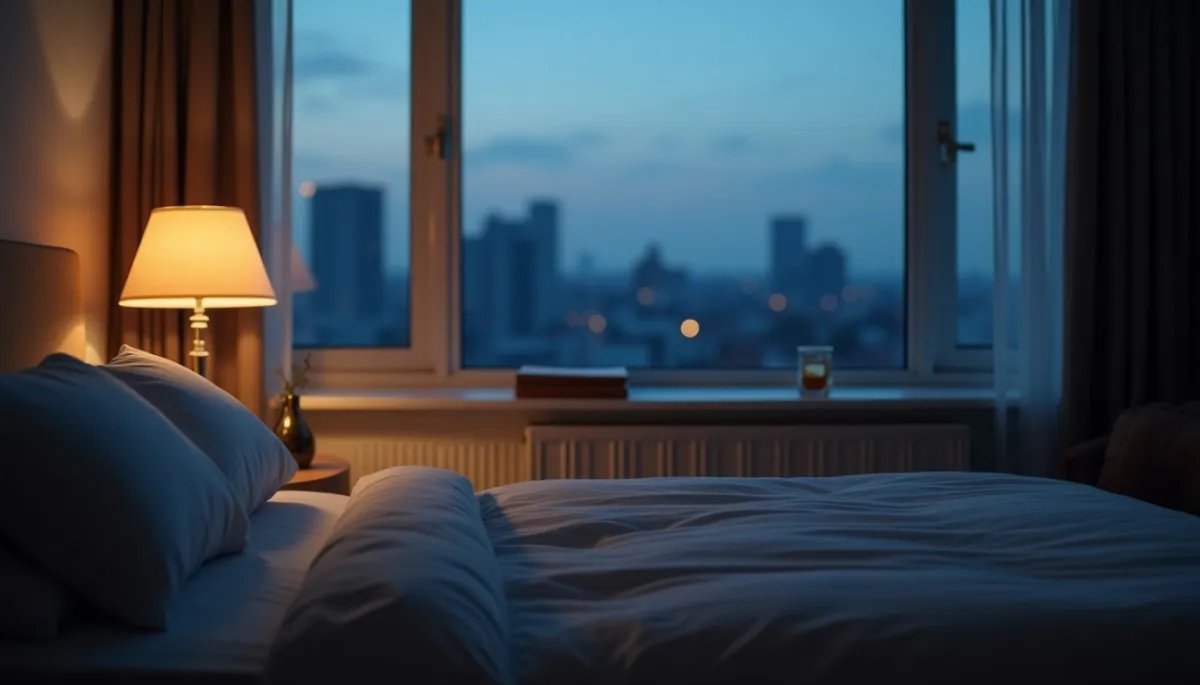
It is midnight in a quiet London flat. A product manager switches off her laptop, dims the lamps, opens the blackout curtains slightly to reveal distant streetlights, and breathes. A graduate in São Paulo follows a different ritual: morning sunlight first thing, brief afternoon nap, herbal tea and a strict 07:00 wake time. Both are trying the same experiment, the modern one: turn sleep into a repeatable routine that improves daily performance.
nuits productives
Sleep deficits now carry measurable costs. The Centers for Disease Control reported in 2016 that roughly one in three adults in the United States do not get enough sleep. Consequences show up as slower reaction times, poorer decision making, and higher risk of chronic disease, including heart disease and diabetes.
Beyond health, companies value sleep for productivity. Since the late 2010s, pro teams in the NBA and NFL hire sleep consultants. LeBron James, among others, has spoken publicly about prioritizing long sleep windows for recovery. In Silicon Valley, firms like Google introduced nap pods and flexible schedules because rested teams are more creative.
For individuals, high-performance sleep means measurable gains: better focus, mood regulation, faster learning, and athletic recovery. The objective is not only duration, but architecture, meaning the right balance of deep sleep and REM for memory and physical repair.
racines modernes
Why are we suddenly reorganizing nights? Technology, urban light, and 24/7 work culture shifted human rhythms. Electric light, a 20th century innovation, decoupled activity from daylight, and the internet further flattened temporal boundaries. In the 2010s and early 2020s, research on blue light showed devices can delay melatonin, the hormone that signals sleep onset.
Science has also clarified terms. 'Circadian rhythm' is the near-24-hour cycle regulating sleep-wake patterns. 'Sleep homeostasis' describes pressure to sleep that builds with wakefulness. Together, they form the biological framework for routines. Newer neologisms like 'sleep hygiene' refer to habits that support these systems. People also use 'sleep debt' to describe cumulative lost sleep that impairs performance, and 'polyphasic sleep' for multiple daily sleeps; most adults perform best on consolidated nocturnal sleep.
Social trends accelerate these changes. The wellness movement since 2015 reframed sleep as a pillar of health, while public figures such as Arianna Huffington have campaigned for sleep awareness, after her 2007 collapse led her to found Thrive Global. These voices normalized treating sleep as intentional, not incidental.
paradoxes nocturnes
However, adopting performance sleep faces contradictions. Many tools marketed to help, like wearable sleep trackers, offer conflicting metrics. Devices estimate sleep stages with varying accuracy, which can create anxiety, a phenomenon researchers call 'orthosomnia', an unhealthy fixation on perfect sleep data.
Another tension is individual variability. Chronotypes differ; some people are natural night owls. Forcing a morning schedule can backfire. The high-performance approach is therefore personalized, using consistent wake time as the anchor while allowing flexibility for chronotype, within biological limits.
Finally, cultural and economic constraints matter. Shift workers, caregivers, and parents cannot always apply ideal routines. Practical high-performance sleep aims for attainable improvements: reduce evening light exposure, set a consistent wake time, use bright morning light to anchor circadian rhythm, limit caffeine to early afternoon because caffeine half-life is roughly five to six hours for many people, and keep bedroom temperature cool to 16 to 19°C to facilitate deep sleep.
Practical routine example: wake at the same time daily, expose yourself to 10 to 30 minutes of bright daylight within an hour of waking, schedule exercise earlier in the day, stop caffeine by mid-afternoon, dim lights and avoid screens 60 to 90 minutes before bed, and favor a short 20 to 30 minute nap after lunch if needed. Try a sleep journal for two weeks to spot patterns, not to chase perfect metrics.
Small changes compound. In 2017, Matthew Walker's book 'Why We Sleep' popularized the idea that sleep is non-negotiable for brain health. Since then, clinical and corporate programs increasingly measure sleep as a performance metric. The evidence points to one clear insight: treating sleep as a ritual yields measurable returns.
Thanks for reading, and don't forget, Enjoy Life Moments!