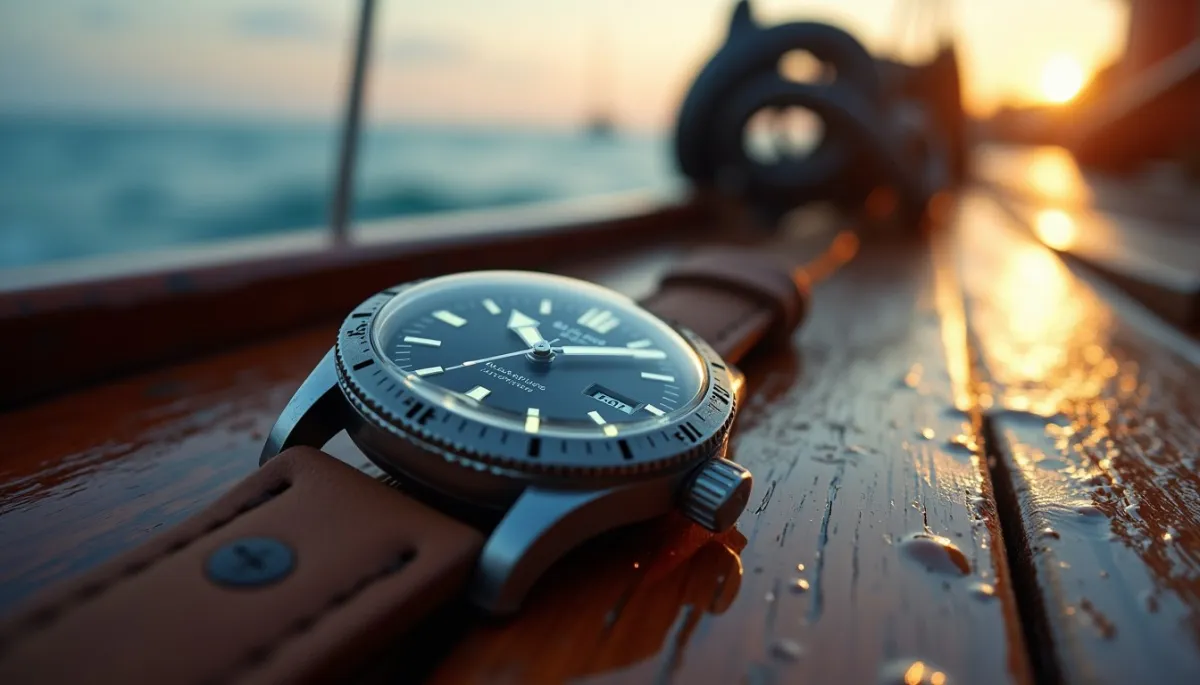
Rolex Daytona: from pilot's chronograph to collectors' grail
🚀 Key Takeaways
- Key concept : The Daytona is a chronograph born in 1963 for motorsport timing, later elevated by rare dials and cultural icons.
- Practical tip : For buyers, provenance, dial originality and service history matter as much as condition.
- Did you know : Paul Newman’s personal Daytona sold for about $17.8 million in 2017, cementing the model’s auction fame.
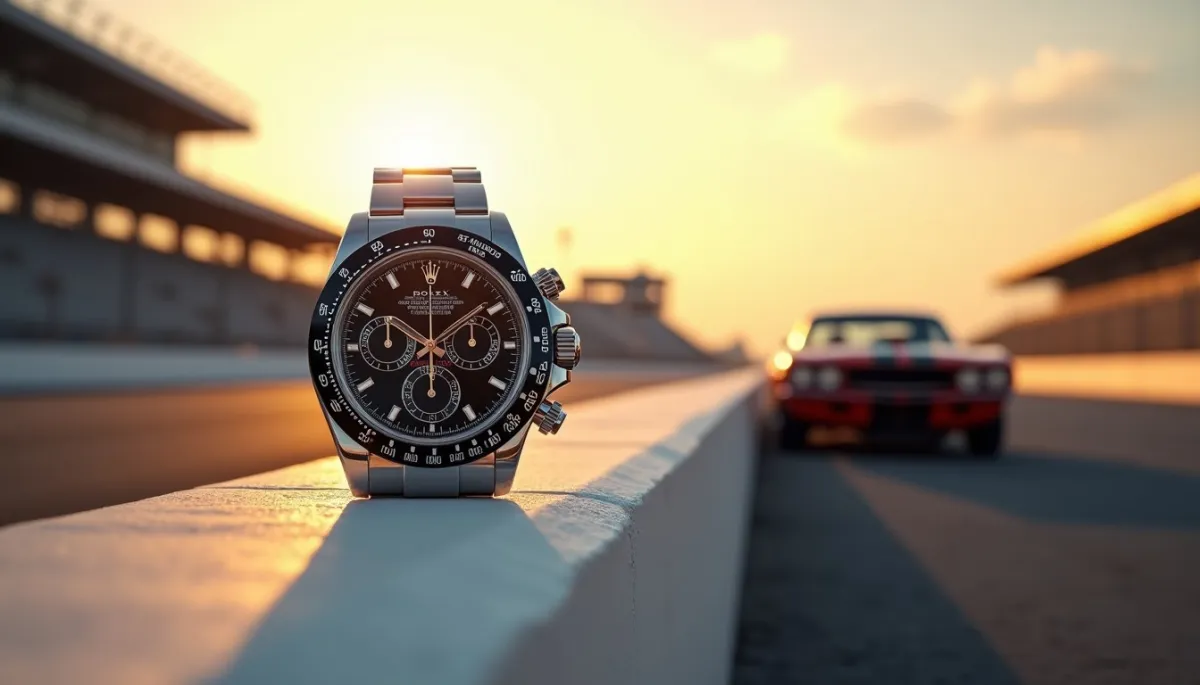
Pure adrenaline. On a sunlit Florida morning at Daytona International Speedway, a driver peers at a chronograph, timing a lap to the hundredth of a second, the tachymeter bezel reading speed like a secret language of motion and risk. The scene is 1963 and the watch is the newly named Rolex Cosmograph Daytona, designed to sit on wrists that live on the edge of speedways and endurance races.
Trackside legend
The Daytona’s origin is prosaic and practical. Rolex launched the Cosmograph in 1963 specifically for motorsport, its bezel graduated with a tachymeter scale to convert elapsed time into average speed, a crucial tool for drivers and pit crews. The name Daytona links the watch to the famous Florida circuit, a marketing stroke that tied Rolex to speed and spectacle.
Early examples used manual-wind Valjoux movements, references like 6239 and 6263 became the steel backbone of the collection. What turned some pieces into myth were visual quirks: contrasting subdials, exotic fonts, and later, the now-legendary 'Paul Newman' dials, with squared-off numerals and an Art Deco look that broke with standard Rolex design codes.
Provenance amplified legend. Paul Newman, who wore a Daytona gifted by his wife Joanne Woodward, made the model cinematic. The engraving allegedly on his watch, a private message, added romance. When his personal Daytona reached auction in 2017, it sold for roughly $17.8 million, a pivotal moment that moved the Daytona from enthusiast favorite to mainstream trophy.
Gears of change
Technical evolution is as much a driver of desirability as celebrity. In 1988 Rolex moved from hand-wound calibres to an automatic movement based on the Zenith El Primero, marking the Daytona’s transition to modern everyday wearability. This era includes references such as the 16520, which today sit high in collectors’ lists.
Rolex introduced its own in-house calibre 4130 around 2000, consolidating reliability and reducing parts (a simpler chronograph mechanism). Later, in 2016, the brand added a black Cerachrom (ceramic) bezel on the steel 116500LN, a stylistic shift that also changed how collectors value vintage versus modern looks.
Market data shows how change fuels interest. Limited production, Rolex’s boutique allocation model, and long waiting lists created a strong grey market. A stainless steel Daytona retailing at a fixed price can sell for multiples on the secondary market, and rarer dial variations can outstrip modern pieces by large margins.
Scarcity and desire
Scarcity turned utility into cult. Collector demand concentrates on factors like original dials, unpolished cases, documented service history, and completeness with box and papers. The most coveted have unusual 'tropical' patinas or exotic dials; the 'Paul Newman' subtype remains an instantly recognizable shorthand for rarity.
Auctions shaped the narrative. Houses like Phillips, Sotheby’s and Christie’s used marquee sales to spotlight exceptional Daytonas, pushing records and broadening the model’s appeal beyond classic car clubs to global collectors, tech founders and celebrities. Prices became statements about taste as much as investment.
For prospective buyers, a few rules help navigate emotion and market pressure. Verify dial originality with a trusted specialist, prefer documented provenance, and consider whether you want a vintage character piece or a modern daily instrument. Remember that service history, not just looks, protects value over time.
Thanks for reading, and don't forget, Enjoy Life Moments!