Jaeger-LeCoultre Reverso: elegance born on 1930s polo fields
🚀 Key Takeaways
- Core concept : A reversible case that protects the dial while offering a second face or a personalization canvas.
- Practical tip : Wear the Reverso with the case flipped to show the engraved metal back for a more casual look, and service every 4 to 6 years.
- Did you know : The model was conceived for polo players in British India, and 2021 marked its 90th anniversary with new tributes.
Timeless and tactile.
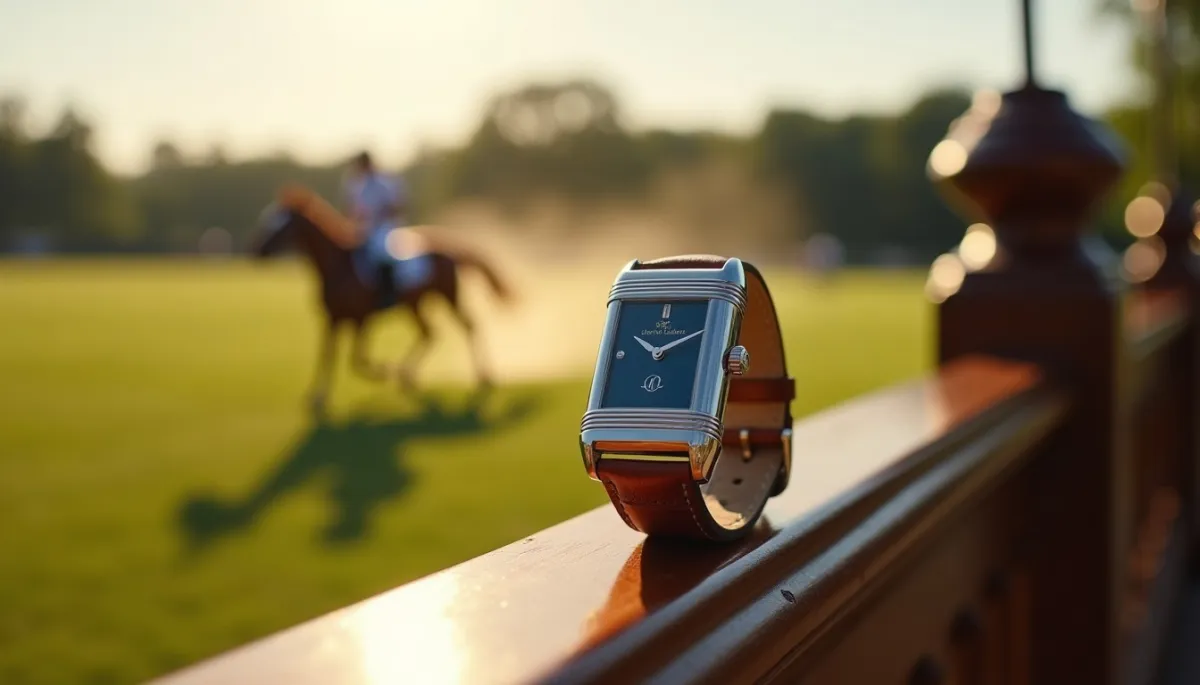
Imagine late afternoon sun over a polo ground at Jodhpur, leather mallets thudding against balls, and a British officer checking his wrist as a hoof passes by. The watch on his wrist slips into a cradle, then flips, its glass hidden on the inside, metal face outward, ready to take the blows of sport. That small, decisive movement changed watchmaking design forever.
naissance sur gazon
The Reverso's story begins in 1931, when Swiss watchmakers answered a simple brief: create a wristwatch that can survive a polo match. The solution was mechanical and aesthetic, a pivoting case that slides and turns within a frame. Once flipped, the fragile crystal is shielded by a solid metal reverse, protecting the dial from impacts.
This functional invention arrived at the height of the Art Deco era, its clean rectangular lines echoing architecture and decorative arts of the time. Rectangular watches had been rare, but the Reverso made the shape modern, elegant, and immediately identifiable.
Polo, a sport associated with the British upper classes and colonial life in India, gave the watch a romantic origin story. That provenance matters for luxury audiences, it ties the object to motion, adventure, and a now-idealized era of travel and leisure.
forme et fonction
The genius of the Reverso lies in its union of form and function. The rectangular case is not only a stylistic choice, it houses a clever mechanism. The watch slides along rails and pivots 180 degrees. For watchmakers, that was an engineering challenge, because the movement must remain precise while fitting an unusual shape.
Over decades, Jaeger-LeCoultre expanded the concept. The Reverso became a dual-faced instrument, a stage for complications such as small seconds, dual time zones, a tourbillon, and even a minute repeater. Craftspeople began to use the rear surface as a canvas, offering enamel, guilloché, engravings, and miniature paintings.
Collectors appreciate this versatility. One side can display a classic silvered dial, the other a personalized engraving or a second time zone. In modern collections, the Reverso ranges from elegant dress watches to haute horlogerie statements, while maintaining its original spirit.
héritage vivant
Why does the Reverso still matter? First, it is an icon that anchors Jaeger-LeCoultre's identity. The model represents continuity in a market driven by novelty. Second, it adapts: contemporary versions keep the artisanal options that made the model desirable, while integrating modern movements and materials.
There are contradictions in that longevity. Luxury consumers seek both heritage and innovation. The Reverso answers by preserving its silhouette while offering new complications and collaborations with artists. In 2021, the house celebrated 90 years of the model with limited editions that referenced original dials and historic codes.
For buyers and aficionados, practical advice matters. Choose the case size to suit your wrist, and remember that a Reverso is more than a watch, it is a miniature accessory. Rotate which face you show to extend the life of the crystal, avoid sharp shocks, and rely on authorized service centers for maintenance.
Today the Reverso remains a chameleon, at once sporty in origin and supremely elegant, a watch that tells a story as valuable as its mechanics. From the dusty sideline of a polo pitch to museum displays and red-carpet appearances, it continues to charm by combining inventiveness and beauty.
Thanks for reading, and don't forget, Enjoy Life Moments!