Rochers-de-Naye: a hanging alpine garden with over 1,000 flower species
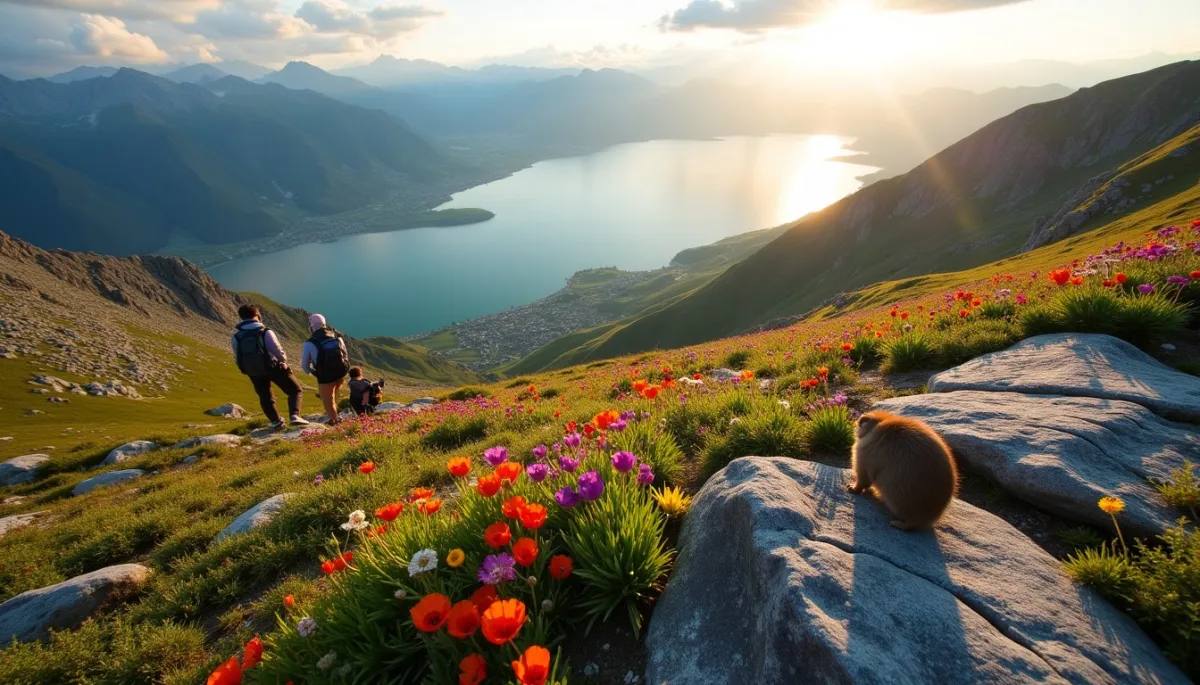
Bright, brisk air. Imagine stepping off the historic rack railway, the Montreux ascent that cleaves the slope, and being hit by a scent of crushed thyme and mountain sun. Around you the stone terraces of the Jardin alpin unfold like a living mosaic, with tiny blossoms nesting between lichen-covered rocks, and beyond, the sweep of Lac Léman and the serried peaks of the Dents du Midi.
The garden is first and foremost a consequence: it exists because generations have invested in conserving alpine biodiversity in situ. Visitors find here not a single curated park, but a palette of ecological displays, from high-altitude meadows to exposed scree plantings. You can follow marked paths and discover plants labelled with scientific names and popular vernaculars, watch marmots playing near the enclosure, and catch the signal of the lake below. This contrast between fragile species and sweeping panorama is what makes the site singular.
Jardin suspendu
The Jardin alpin on the Rochers-de-Naye is literally suspended above the lake, arranged on terraces and natural ledges that host species adapted to altitude. Tiny cushions of silvery saxifrages, clumps of alpine azalea and delicate gentians create a tapestry that changes by the week in high season.
Many visitors are surprised to learn that over 1,000 species are represented (local endemics, alpine specialists, and cultivated introductions displayed for study). Labels and explanatory panels help decode botanical names and ecological roles. If a term like "alpinum" appears, think of it as a rock-garden style that mimics mountain conditions (thin soil, large temperature swings, high UV).
Concrete anecdotes bring the site to life. Locals tell of summer mornings when photographers chase the first light on a cushion of Androsace, or of school groups who memorize the showy blooms of the alpine rose. The marmot enclosure, friendly but wild-feeling, offers moments of laughter when their whistling interrupts a guided tour.
Racines et raisons
Why this garden exists relates to both local pride and scientific purpose. In the late 19th century the arrival of the rack railway opened access to high-altitude landscapes for study and leisure. Since then, botanists and nature lovers have used the summit as a living laboratory to observe phenology (the timing of flowering) and species distribution along altitude gradients.
Conservation is another motivation. The garden functions as an ex situ and in situ reference point: plants grow in conditions similar to their natural habitats, while seed collections and monitoring programs help track shifts caused by warming climates. For the casual visitor, that means every blossom is also a data point for researchers studying alpine resilience.
There is a cultural root too. Montreux and surrounding communes have long considered the mountain a shared landmark. Summer festivals, guided botanical walks, and educational panels all reflect an intention to keep alpine knowledge alive and accessible to families and specialists alike.
Contrastes et défis
However, the garden faces contradictions. Tourism brings funds and attention, but also pressure. A surge of visitors on sunny weekends compacts trails and risks disturbing delicate plant communities. Managers must balance welcoming the public and protecting fragile species.
Climate change complicates the picture. Warmer winters and earlier snowmelt shift flowering calendars and may allow lower-altitude competitors to encroach. Researchers monitoring the Rochers-de-Naye record these shifts, and the garden serves as an early-warning site for the alpine belt of the Swiss Riviera.
Looking forward, initiatives aim to combine soft infrastructure (boardwalks, clearer signage) with stricter path management and continued citizen science. Practical advice for visitors: come between June and September for peak blooms, bring warm layers, wear sturdy shoes, and check the cog train timetable. Book return trips on busy days and respect ropes and marked beds to help the site endure.
For anyone who loves mountains, botany or panoramic views, the Rochers-de-Naye offers an intense, compact experience. It is both a living museum and a fragile ecosystem, where every gentian tells a story of altitude, adaptation and human care.
Thanks for reading, and don't forget, Enjoy Life Moments!