The revival of artisanal craft: when handmade outperforms industry
🚀 Key Takeaways
- Core concept : The handmade revival blends tradition and modernity to outvalue industrial output.
- Practical tip : Visit ateliers, commission pieces, prefer repair over replacement.
- Did you know : Events like London Craft Week and UNESCO listings help protect craft skills.
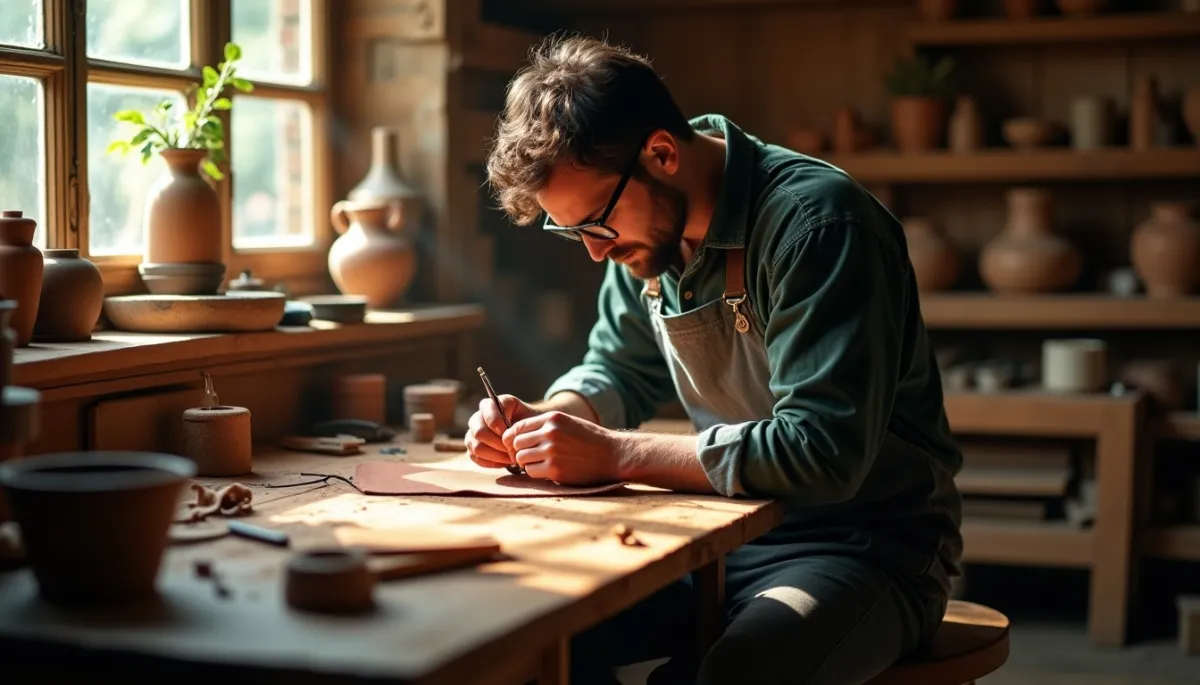
It feels intimate. Walking into a small workshop, you smell wood shavings, oil and hot metal, and you hear a rhythm of hands at work.
Return to ateliers
In cities from Paris to Tokyo, ateliers are filling again. A bespoke leather saddle being stitched by hand at Hermès, a potter throwing a vase in Mashiko, a weaver restoring a tapestry in Galicia: these scenes are no nostalgic stage set. They reflect a growing market for objects that carry a human trace.
Collectors and younger buyers alike now prize the imperfection and story of a handmade object. Auction houses and design fairs have taken note. Design Miami and London Craft Week showcase works by makers whose prices and visibility rival industrial designers.
The economic impact is also visible. Small-scale studios are creating local employment, and platforms that connect makers to customers, like Etsy and specialized galleries, have matured beyond hobby marketplaces into serious retail channels.
Roots of the revival
Several forces explain why the handmade renaissance accelerates now. The pandemic reset consumption patterns: lockdowns revived hobbies, people learned to sew and mend, and time became a currency. That return to manual skill translated into renewed appreciation for crafted goods.
Sustainability concerns are central. Unlike disposable mass production, artisanal objects are often built to last, repairable and made from local materials. Consumers concerned by fast fashion and planned obsolescence choose pieces that resist trends.
Digital tools also help. Instagram and short-form video make the atelier accessible to millions. A maker in Oaxaca can build an international clientele after one viral clip. E-commerce and storytelling allow artisans to add provenance, process and personality to price tags.
Contradictions and horizons
Yet the revival has tensions. Scalability is limited: true handcraft resists mass replication, and this scarcity drives prices that can exclude many buyers. Equity questions arise when global designers appropriate traditional patterns without fair compensation to communities.
Another challenge is certification and trust. Words like "artisan" or "fait main" can be used loosely. Shoppers need better labels and transparency. Initiatives by museums, craft councils and UNESCO to list and safeguard intangible heritage help, but market standards remain fragmented.
Finally, craft faces technological competition. Advanced manufacturing and AI-designed objects push boundaries of what industry can offer. The line between handmade and high-tech design will blur, creating hybrid models where artisans use CNC or digital design without losing the human signature.
How to engage
There are concrete ways to support this movement. Visit local ateliers, take short workshops, commission one-off pieces, and when possible, buy directly from makers. Repair rather than replace, and ask about materials and origin.
For brands and managers, investing in apprenticeships and transparent supply chains is essential. Luxury houses that maintain in-house workshops, like Hermès or certain independent maison, show that combining heritage with modern management can preserve savoir-faire.
Ultimately, the handmade renaissance is less about rejecting industry and more about recalibrating value. Objects that carry time, skill and story offer a different form of luxury. They invite us to slow down, to value the hand that made them, and to build a relationship with what we own.
Thanks for reading, and don't forget, Enjoy Life Moments!