Pilates for men: why elite athletes are adopting it
🚀 Key Takeaways
- Core concept : Pilates develops deep core control and movement efficiency.
- Practical tip : Start with two supervised sessions a week, one focused on reformer or mat work.
- Did you know : Joseph Pilates opened his New York studio in 1926, originally for dancers and rehabilitating soldiers.
Strong and controlled movement feels like winning. Imagine a training room at dawn: a footballer finishing sprints, then moving to a reformer machine, breath measured, spine aligned, small muscles waking up.
Des résultats visibles
Pilates has moved from rehabilitation clinics into high-performance centers because it produces measurable gains. Coaches report improvements in balance, sprint mechanics and change of direction, all crucial in elite sport.
Studies and club reports from the 2010s onwards documented fewer soft-tissue injuries when strength work was paired with mobility and core control. Teams that introduced Pilates-style sessions often saw quicker returns from hamstring or groin problems, thanks to improved pelvic control.
Beyond injury, athletes notice functional transfer. A tennis serve or a rugby tackle begins in the deep core and the hips. Pilates trains these chains of movement, making power delivery more coordinated and less wasteful.
Racines et raisons
The method itself is nearly a century old. Joseph Pilates, born in 1883, refined his exercises during World War I and opened a studio in New York in 1926. His approach combined breath, spinal articulation and low-load resistance, originally attracting dancers and rehabilitating patients.
In modern sport, the reason for the uptake is simple: marginal gains. Since the 2010s, performance teams searching for durability and efficiency have added Pilates to a mixed toolbox that includes strength, conditioning and neuromuscular work.
Technology helped too. Motion analysis and force plates made it easier to see how improved trunk stability changes ground reaction forces. When the data matched what trainers felt on the field, Pilates moved from optional to strategic.
Nuances et limites
Pilates is powerful, but not a panacea. It must be integrated intelligently alongside load-bearing strength and explosive training. An athlete who only does Pilates will gain control but may lack maximal force production.
There is also variation in teaching. Mat classes differ from clinical reformer sessions. For elite men, the priority is tailored programs with progressive overload and sport-specific cues, not generic group routines.
Finally, expectations must be realistic. Improvements often appear over weeks of consistent practice, and benefits on field performance are best tracked with objective measures, not anecdotes alone.
Pratique et conseils
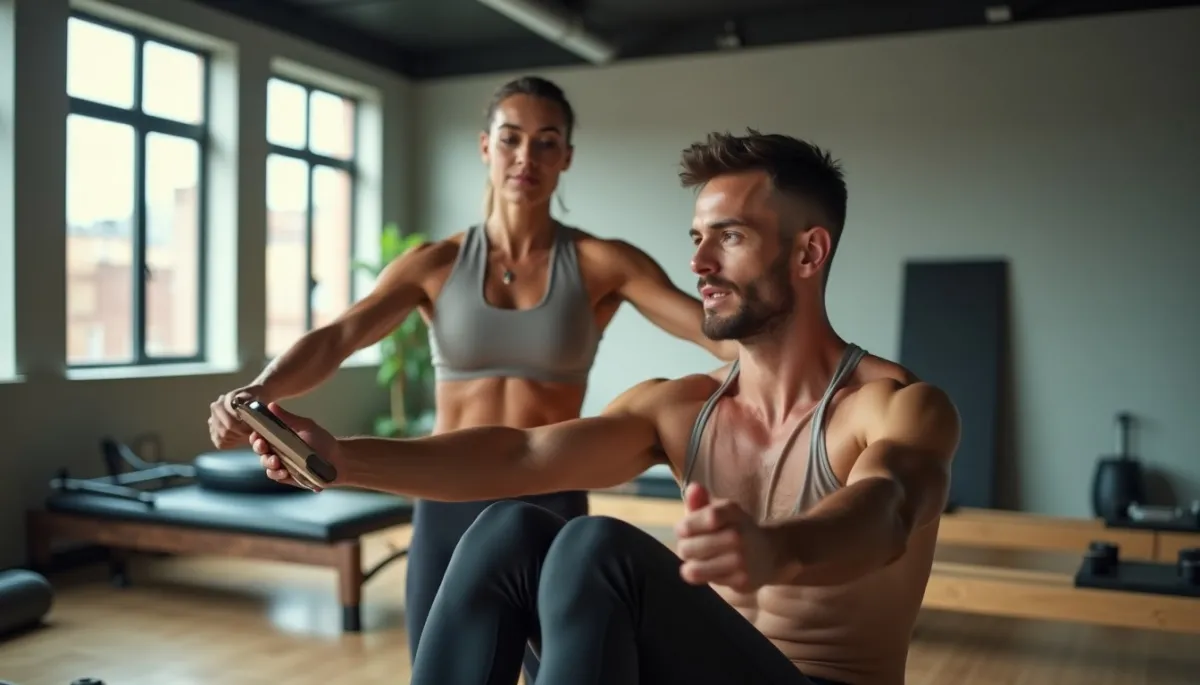
Start with assessment. A trained instructor or physiotherapist can identify movement gaps: pelvic asymmetry, poor hip hinge, rotating through the low back. From there, sessions can target the deficits that hurt performance.
Sample plan: two Pilates sessions per week, one focusing on control and mobility, the other on loaded reformer work or functional integration with kettlebells and sprints. Combine this with two strength sessions for power and one sport-specific technical session.
Simple cues help: breathe into the sides of the ribcage, initiate movement from the pelvic floor and feel the connection between breath and limb. Small improvements in sequencing pay off on the field.
For men new to Pilates, seek instructors who work with athletes, ask for progress markers, and expect the program to evolve as strength and tolerance increase.
Thanks for reading, and don't forget, Enjoy Life Moments!