Philippe Petit’s vertiginous destiny: the man who walked a wire between the Twin Towers
🚀 Key Takeaways
- Core concept : Philippe Petit performed an illegal, artistic high-wire walk between the World Trade Center towers on August 7, 1974.
- Practical tip : If you try slacklining, start low and take lessons from certified instructors, use proper anchors and safety gear.
- Did you know : The event inspired the Oscar-winning documentary Man on Wire (2008) and the feature film The Walk (2015).
He walked as if the air itself applauded.
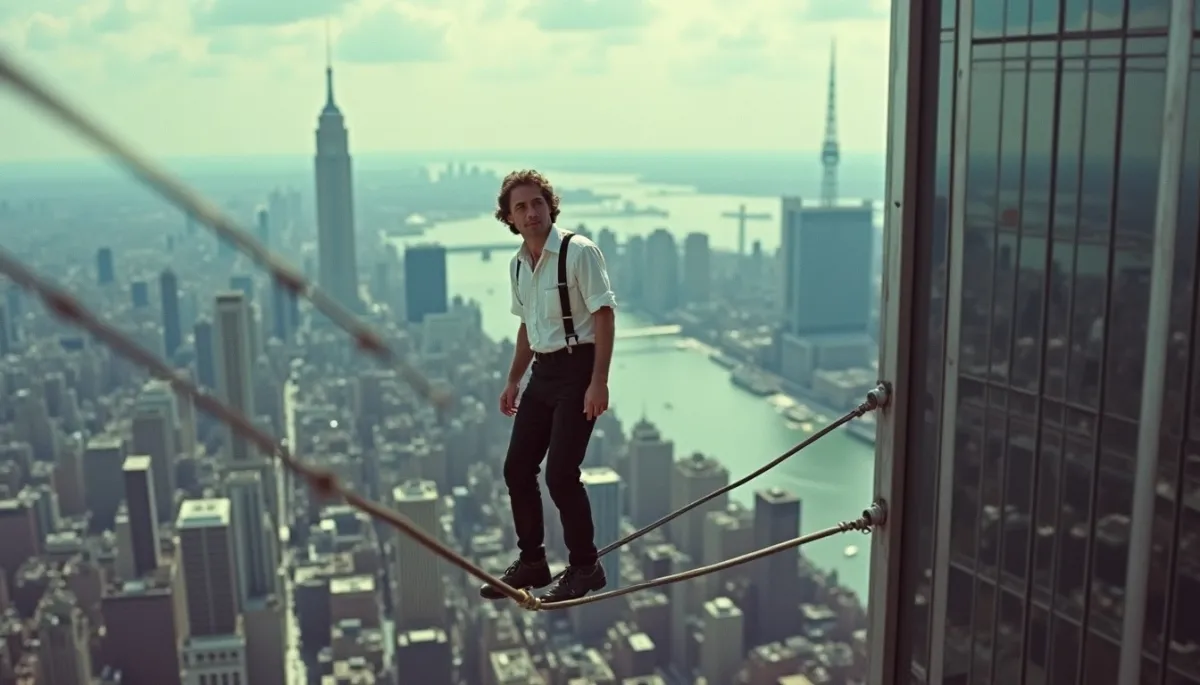
Imagine standing on a rooftop of Lower Manhattan in the summer of 1974, squinting at a narrow line stretched between two gleaming towers. People gathered like small punctuation marks on concrete, cameras lifted. Above them, 1,300 feet up, a man in a simple shirt and suspenders moved with the calm of a man who had rehearsed every heartbeat. The sun struck steel and glass, and for nearly an hour a single thread of courage connected two skyscrapers and the city below.
Un pas suspendu
Philippe Petit, born August 13, 1949 in Nemours, France, was already known in Europe as a street performer, juggler and wire walker. His art combined precision, balance and theatricality. He called his performances "an art of presence," a blend of circus tradition and urban poetry.
The Twin Towers walk on August 7, 1974, is his masterpiece. Petit traversed a wire strung between the North and South towers of the World Trade Center, then the tallest buildings in New York. He walked, turned, rested, knelt, and even lay on the wire. At one point he performed a handstand, an image that became emblematic around the world.
The walk lasted about 45 minutes. When the police finally intervened, they arrested him calmly, as if stopping a performance. The charge was disorderly conduct rather than a harsher criminal count. The judge sentenced him to perform for children in Central Park and to donate the earnings from his shows to a local arts foundation.
Les coulisses de l'audace
The feat did not happen by chance. Petit planned for months with a small team. To get a line across the gap, they used a bow and arrow to shoot a light fishing line from one roof to the other, then progressively hauled heavier ropes and finally a steel cable. The operation required timing, stealth and physical know-how, because at any time the wind, a misplaced bolt or a miscalculation could have been fatal.
Petit operated like a director of a secret play. He scouted the towers, studied blueprints, timed elevator movements and hid gear in suitcases and boxes. He often said the act was neither stunt nor protest, but "an act of creation". It blurred art and illegality, spectacle and intimacy, and that ambiguity is part of why the story endures.
After the walk, his life changed. He wrote about the experience in To Reach the Clouds, he continued to perform around the world, and his walk entered popular culture through James Marsh's documentary Man on Wire, which won the Academy Award in 2009, and Robert Zemeckis's film The Walk, released in 2015 with Joseph Gordon-Levitt portraying Petit.
Entre vertige et loi
The act raised questions. Was it bravery or recklessness? Art or provocation? Some praised the beauty of the gesture, others criticized the public risk. New Yorkers, often pragmatic, were fascinated and forgiving. The legal outcome reflected that ambivalence: a light sentence and a symbolic civic contribution rather than long imprisonment.
Petit himself embodied contradictions. He was at once humble and theatrical, meticulous and impulsive. He insisted that art justified the risk, but he also acknowledged the responsibility he felt toward his team and the public. Later reflections from Petit and his collaborators revealed the constant tension between planning and the unknown, the human need for applause and the calm that comes from mastery.
For readers inspired by Petit, a few practical notes: high-wire work is different from slacklining, the modern sport practiced at low heights for balance and fitness. If you want to experience balance arts, start on a slackline low to the ground, use trained supervision, and invest in certified equipment. Respect safety and the law; few great gestures require endangering others or yourself.
Philippe Petit transformed a moment into an idea: that focused effort, imagination and a willing team can create something that reframes a skyline. His walk between the Twin Towers remains a lesson in audacity, craftsmanship and the fragile beauty of risk.
Thanks for reading, and don't forget, Enjoy Life Moments!