Patek Philippe: why we never really own a watch from this manufacture
From the Geneva workshop to the auction rooms, a Patek Philippe watch behaves like a living object rather than a simple possession. Home culture, market dynamics and history transform purchasing into an act of care.
🚀 The essentials
- Key concept: A Patek is often kept for generations, rarity and in-house policy reinforce this.
- Practical advice: Keep papers and boxes, have it serviced at Patek, anticipate waiting lists.
- Did you know: The advertising slogan reflects a market reality, some watches increase in value.
It's like taking an oath.
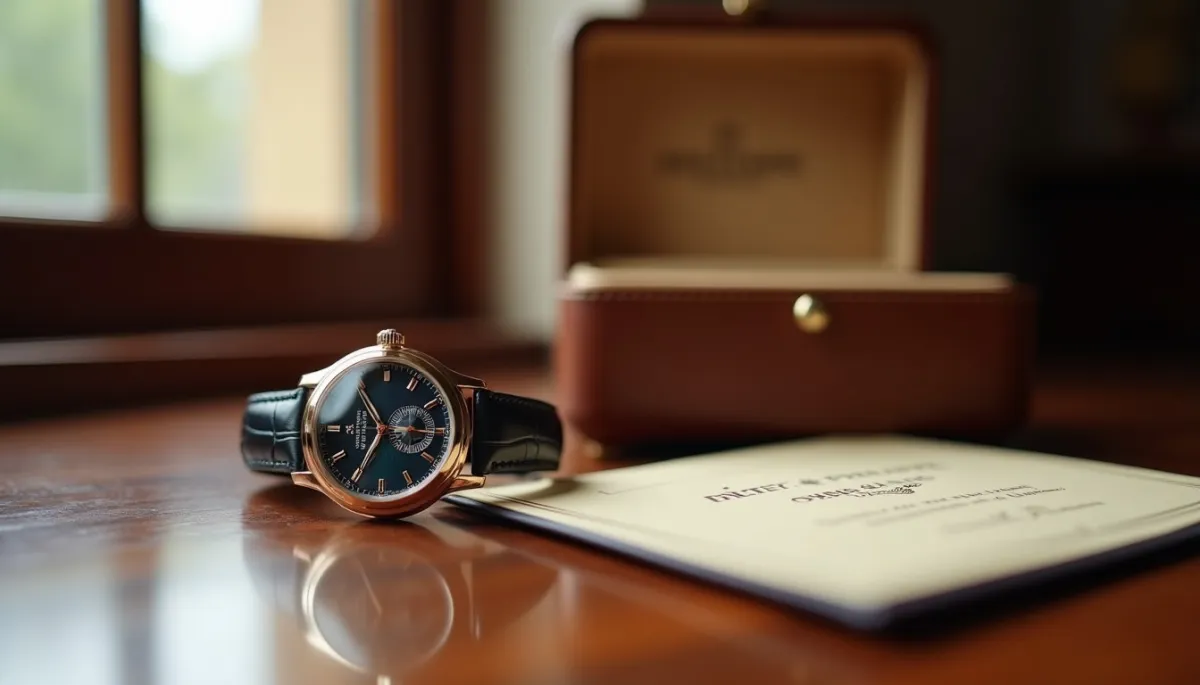
Imagine the cozy room of Patek Philippe in Geneva, the light concentrated on a workbench, a watchmaker leaning over an escape wheel. He hands you a small file: the Certificate of Origin. Here, a watch is a product, a cultural object and a promise. You are not the final owner, you are the next custodian.
Assumed heritage
Patek Philippe has placed transmission at the heart of its story. Founded in 1839, the house has belonged to the Stern family since 1932, and its communication depicts the passage of the watch between generations. This posture is not purely sentimental, it structures the products and the service.
On a technical level, this means movements designed to last, hand-finished and repair possibilities over several decades. The Patek Seal guarantees standards of precision and finishing that often go beyond simple chronometric certifications.
The result is tangible: certain references, especially sports steel models like the Nautilus 5711, reach sky-high prices on the secondary market. Historic auctions, such as the Henry Graves Supercomplication, show that these watches can become collector's items valued in the millions.
Choose rarity
Patek does not seek to maximize volume. The manufacture favors control, quality and exclusivity, with limited annual production. This generates waiting lists at authorized resellers and an immediate premium on parallel markets.
The 2021 withdrawal of the Nautilus 5711 is the perfect example. The disappearance of a much-desired model caused resale prices to rise dramatically. For many buyers, acquiring a Patek has become as much a financial act as an aesthetic satisfaction.
This rarity also nourishes an ecosystem: collectors, restorers, private sales and historical archives. The watch circulates, is documented, restored, and finally transmitted. It becomes an object steeped in history.
Concrete obligations
Owning a Patek involves precise gestures and care. Keep documentation, carry out maintenance at Patek or an authorized repairer, respect service intervals. The manufacture keeps archives and issues extracts from archives which reinforce the traceability of a piece.
Warranty and restoration policies contribute to the idea of custody. Patek can service and repair decades-old movements, replace rare parts, and restore a watch without erasing its history. These services ensure continuity between generations.
Practical advice: buy from an official distributor when possible, ask for the certificate of origin and the box, and include the object in your family story. These are the elements that will make a watch a true heirloom.
Paradoxes and the future
Patek's success creates a paradox. Speculative interest attracts investors, which inflates prices and alienates some enthusiasts from the simple pleasure of wearing. An object designed to last sometimes becomes a store of value rather than a daily companion.
The house must also reconcile tradition and innovation. Between investment in workshops, training of artisans and research into new alloys, Patek seeks to remain desirable without betraying its past. Mastering this dosage will determine its future.
Ultimately, owning a Patek Philippe often means accepting a role: that of custodian. You wear it, you restore it, you tell it, then you pass it on. It's not a constraint, it's a beautiful and demanding promise.
Thanks for reading, and remember, Enjoy life's moments!