The Château de la Napoule: an American millionaire's love affair with medieval art
🚀 Key Takeaways
- Key concept : An American artist-couple restored a ruined medieval castle into a living workshop and garden.
- Practical tip : Visit at sunset or attend a summer concert; combine with a boat trip to the Îles de Lérins.
- Did you know : The site hosts artist residencies and public exhibitions run by a foundation created to preserve the Clews legacy.
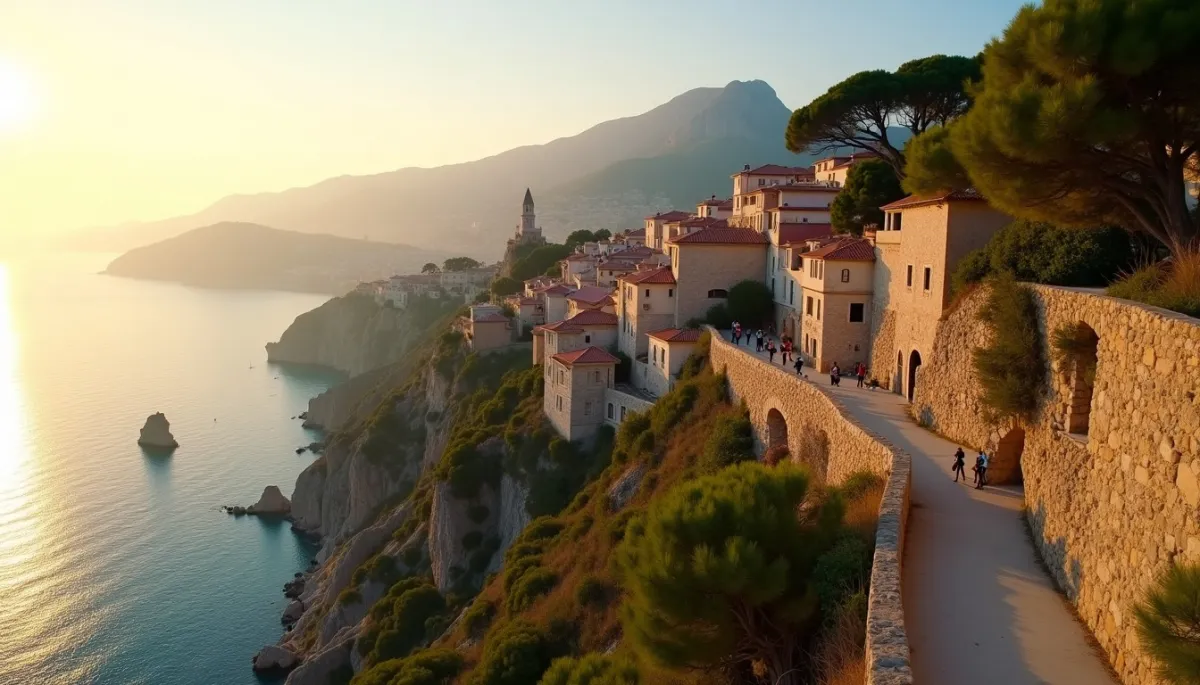
A castle shaped by love. Imagine arriving at sundown, the last light gilding towers and grotesque sculptures, gulls wheel above and you hear the sea on the rocks below.
Stone and sea
The Château de la Napoule stands in Mandelieu-la-Napoule, a few kilometres west of Cannes. Its silhouette faces the open sea and the Îles de Lérins, anchoring a medieval footprint on a modern riviera. The site has medieval origins, centuries of ownership and restorations, but its present personality owes much to one couple in the early twentieth century.
Ruins remained until the aftermath of the First World War, when an American heir turned artist saw in those crumbling walls a canvas. The castle’s towers, ramparts and a small chapel were gradually rebuilt, combining authentic medieval motifs with new sculptural inventions. The result feels both historical and personal, as if memory and creativity have been braided together.
Today the château is open to visitors, with permanent displays of sculpture, mosaics and decorative work, formal terraces and gardens that drop to the sea. It functions as both historic monument and living cultural centre, attracting tourists, school groups and art lovers, especially in summer when concerts and exhibitions fill the calendar.
Two artists, one project
Henry Clews Jr., an American sculptor and heir to a banking family, and his wife Marie took on the castle as a joint project of restoration and creation. They bought the property after World War I and spent decades restoring it while filling rooms, walls and gardens with sculptures, mosaics and painted panels. Their taste blended medieval imagery, folklore and modern eccentricity.
The Clews transformed the château into a kind of Gesamtkunstwerk, a total work of art where architecture, sculpture and landscape respond to each other. Henry’s large stone and concrete sculptures—grotesques, knights, hybrid creatures—and Marie’s interior tapestries and decorative choices created an intimate atmosphere. Friends and artists who visited described the place as both whimsical and solemn, haunted by history and yet very much alive.
Beyond personal expression, their work had institutional consequences. Marie later ensured continuity by founding an organization to preserve and animate the site, turning a private passion into a public asset. Residencies, exhibitions and educational programs follow this intent, offering contemporary artists a space charged with history.
Memory and modernity
The castle narrative raises questions about authenticity and adaptation. Restoring a medieval ruin with twentieth-century sculptures could have produced pastiche, yet the Clews’ choices created a coherent identity. Their interventions respected ancient structures while adding a new layer of meaning, a creative palimpsest where each era remains visible.
At the same time, contemporary managers of the château face practical tensions: conservation needs, visitor flows, and the mission to support living artists. Climate, salt spray and visitor wear require constant maintenance. Programming must balance tourist appeal with serious artistic residencies, so the château continues to be a site of creation rather than a mere photo backdrop.
For visitors, the recommendation is simple. Book a guided tour to catch anecdotes about the Clews, stroll the terraces at sunset, and check the foundation’s calendar for concerts or temporary shows. Combine the visit with a coastal walk or a boat ride to the Îles de Lérins for a full Riviera day.
Thanks for reading, and don't forget, Enjoy Life Moments!