Mid-century design on the rise: why collectors are paying top dollar
🚀 Key Takeaways
- Key concept : Mid‑century pieces (roughly 1930s–1970s) are prized for design, rarity and provenance.
- Practical tip : Verify labels, condition and provenance; use trusted auction houses or vetted dealers.
- Did you know : Museum shows and streaming interiors content have accelerated demand.
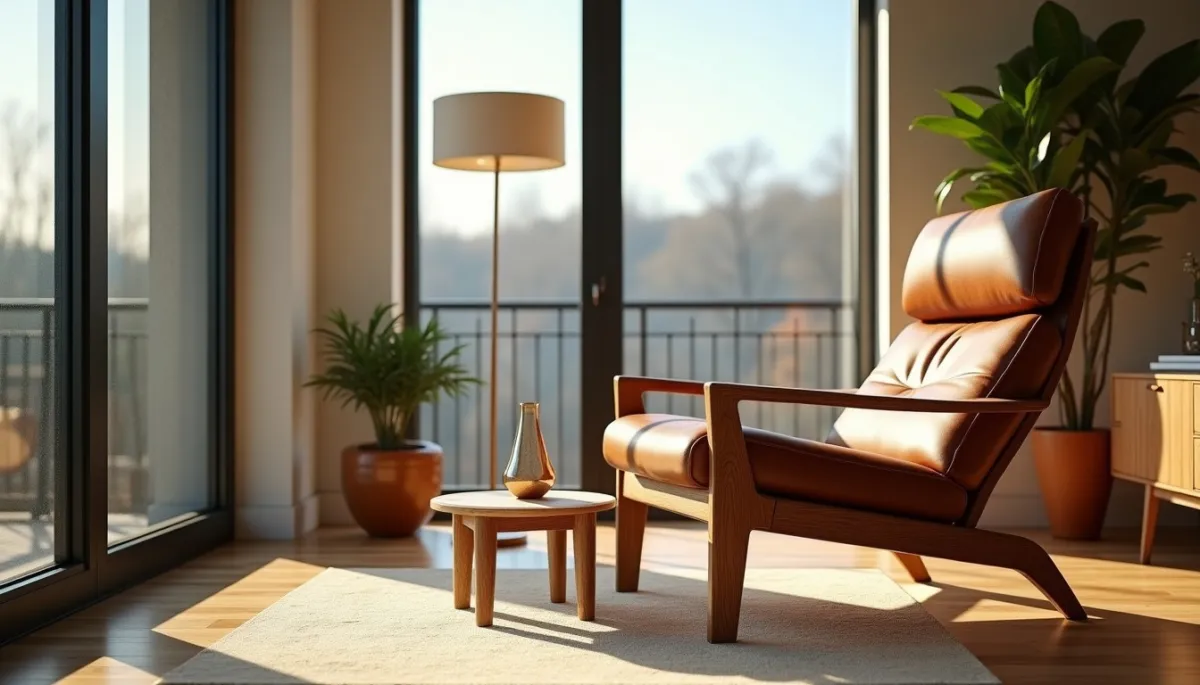
Beauty that still works. Imagine stepping into a sunlit loft in Shoreditch or a flat in Stockholm, where a single sculptural chair becomes the room's protagonist, its wood grain and patina telling decades of use.
Valeur tangible
The market for mid‑century modern furniture has changed from passionate collecting into serious investment. Auction houses such as Christie's, Sotheby's and Phillips regularly feature lots by Hans Wegner, Finn Juhl, Charles and Ray Eames, Arne Jacobsen, and Jean Prouvé, with results that often exceed estimates. Dealers report growing bids from private collectors, interior designers and museums.
Prices now range from the high hundreds for common production pieces to the tens or even hundreds of thousands of dollars for rarities, prototypes, or items with museum‑quality provenance. Limited editions, original labels and excellent condition can multiply value. A signed or early‑production Gio Ponti table or an original Pierre Jeanneret Chandigarh chair will attract deep interest.
Regional trends matter. Scandinavian chairs (Denmark, Norway) have enjoyed sustained demand for their craftsmanship and sustainability story. Italian designers (Gio Ponti, Ico Parisi) are coveted for their elegance, while French and American modernists are sought for museum collections and private foundations.
Raisons profondes
Several converging causes explain this surge. First, supply is finite. Mid‑century pieces were made in limited runs, by small ateliers, or as handcrafted studio pieces. Time thins survivals; originals in good condition are rarer each year.
Second, visibility has exploded. Museums and design festivals (Vitra Design Museum, MoMA, Design Miami) have mounted retrospectives that reframe these objects as cultural milestones. Television series, lifestyle influencers, and the rise of online marketplaces such as 1stDibs and Invaluable expose new generations to these forms, creating aspirational demand.
Third, sustainability and the circular economy play a role. Younger buyers prefer durable, well‑made vintage to disposable mass furniture. Owning a restored mid‑century piece reads as both style and environmental statement, which adds intangible value.
Portraits et anecdotes
Stories sharpen the market. A rare Hans Wegner 'The Chair' in original finish, found in a Danish farmhouse, made headlines after conservation and a successful sale at auction. Provenance can flip a lot's fortune: a Florence Knoll sofa once used in a corporate lobby and documented in period photos sold for a premium to a collector passionate about architectural context.
Design fairs and galleries are breeding grounds for discovery. In Paris, a small dealer might restore and reveal a Gio Ponti credenza, while in Los Angeles a Hollywood stylist places an Eames lounge in a celebrity home, instantly raising desirability. These narratives travel fast, and value follows.
For serious collectors, condition, provenance and authenticity are paramount. Labels, stamps and original hardware are clues. Conservators advise minimal, reversible interventions to preserve patina. Documentation trumps hearsay when consigning to major houses.
Nuances et risques
Yet the market is not without contradictions. Rapid price appreciation raises concerns about bubbles and speculation. Some buyers chase trends rather than the objects' intrinsic merits, which can distort long‑term valuations.
Counterfeits and reproductions complicate purchases. High‑quality copies circulate, and distinguishing them requires expertise. Always ask for detailed images, condition reports, and provenance files. If possible, see pieces in person or consult a specialist.
Finally, the field is evolving. Contemporary designers are reinterpreting mid‑century forms, and manufacturers produce faithful editions certified by estates. The coexistence of originals, licensed reproductions and open‑market copies will shape future collecting rules.
If you want to start collecting, begin with what moves you. Learn the names and ateliers, visit museums and dealers, and build relationships with restorers and auction house specialists. That way, aesthetics and savvy investment go hand in hand.
Thanks for reading, and don't forget, Enjoy Life Moments!