Louis Vuitton and the invention of modern travel: the mythic epic of the flat trunks
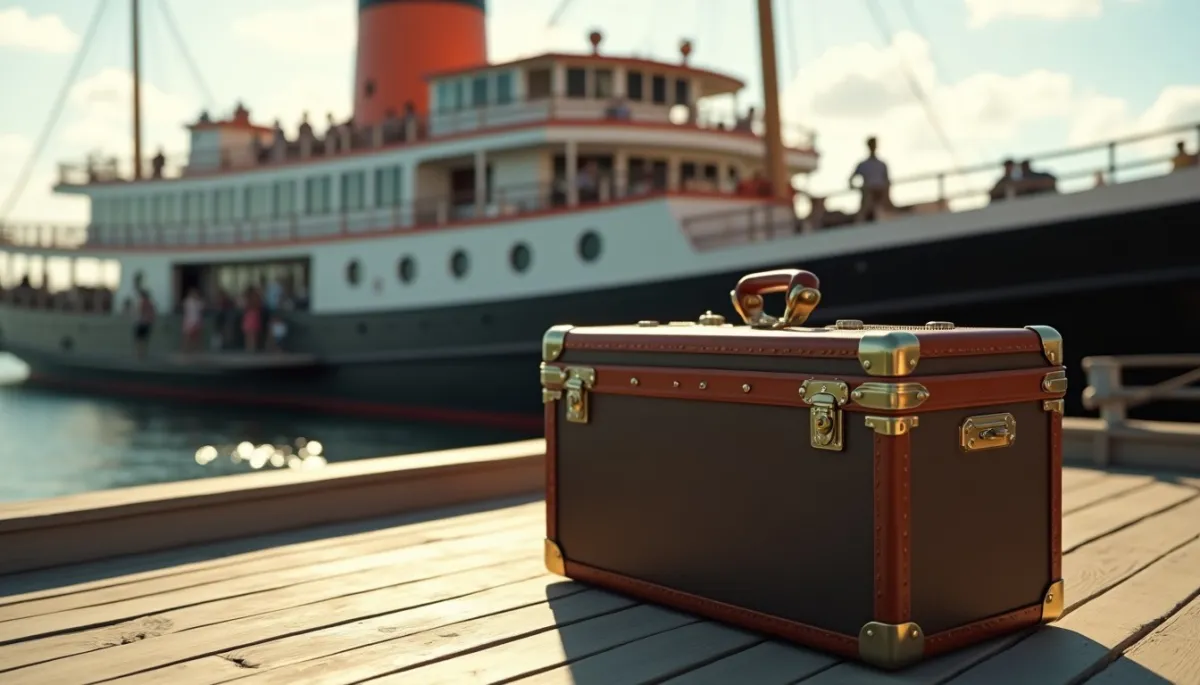
🚀 Key Takeaways
- Concept key : The flat-top trunk allowed stackability and protection, matching the needs of rail and steamship travel.
- Practical tip : When conserving a vintage trunk, avoid harsh cleaners and keep it in a humidity-controlled space.
- Did you know : The iconic Monogram canvas was created in 1896 to fight counterfeiting after Louis Vuitton's death.
It begins with a lid. Imagine a craftsman closing a flat wooden top and recognising the possibility of order and stability.
The scene is a cramped Parisian workshop in the 1850s, sunlight slanting through a glass roof, leather shavings on the floor, and a young Louis Vuitton bending over a new kind of case. Outside, the city is changing: horse-drawn carriages give way to rail termini, and merchants prepare for longer journeys. The new flat trunk is not flamboyant at first, it is functional, but its consequences ripple through salons, stations and grand ocean liners.
La mue du voyage
Travel in the early 19th century was constrained by forms that served carriage travel. Trunks had rounded tops so rain would slide off. They were beautiful, but impractical for stacking on a steamship or in a railway luggage van.
In 1854 Louis Vuitton opened his first shop in Paris. Very soon, around 1858, he introduced a flat-topped, lightweight trunk covered in waterproof canvas. That simple geometric change made trunks stackable for the first time. Stacking meant more efficient use of cargo space, cheaper transport and less shifting during long journeys.
Railroads and steamships were exploding in this era. The Orient Express launched in 1883 and transatlantic steam navigation became faster and more regular. Travelers needed robust, stackable luggage. The flat trunk met that need and became a practical emblem of the new mobility.
Ingéniosité en toile
The innovation was technical as much as aesthetic. Vuitton worked with ash frames, thin boards and waterproofed Trianon canvas to reduce weight while keeping structure. Metal reinforcements and clever fastening systems protected corners and seams.
Beyond materials, invention extended to identity. After Louis Vuitton died in 1892, his son Georges created the Monogram canvas in 1896. The pattern answered a real commercial problem: counterfeiting. It also transformed the trunk into a mobile billboard, where craftsmanship met brand recognition.
The workshops in Asnières, where trunks were produced by skilled malletiers, became an atelier of heritage. Today these ateliers still make bespoke trunks on order, a reminder that the maison kept craftsmanship at the core while scaling industrial needs of travel.
Empreinte culturelle
Flat trunks changed not only cargo holds, but also social rituals. They influenced how wardrobes were packed and how clothes were cared for. Upper-class travel became a choreography of trunks labeled with leather tags and brass plaques, each trunk a personal archive in transit.
Muses of fashion and travel — from actresses to explorers — commissioned special trunks for hats, dresses, and writing desks. Ocean liners and luxury hotels adapted storage spaces to stack trunks. Museums and collectors now show these pieces as artifacts that trace modern mobility.
Exhibitions such as "Volez, Voguez, Voyagez" (a travelling retrospective) have chronicled this history, bringing trunks out of attics and into a narrative about design, luxury and globalisation.
Signes de contradiction
Yet the legacy is double-edged. The trunk is a symbol of freedom through travel, but also of exclusivity. Its aesthetic has been co-opted into fashion accessories — small bags that evoke the trunk's authority without its original utility.
In a world of carry-on efficiency and fast flights, the flat trunk feels anachronistic. Still, demand for bespoke, large luggage grows among collectors and connoisseurs. Louis Vuitton's made-to-order trunks can take months and cost sums that position them as collectible objects rather than travel tools.
Looking ahead, sustainability poses a new question: how to reconcile artisanal, long-lasting trunks with an industry keen on constant turnover. The answer may lie in repairability and made-to-last ethics that echo the original intent of better design for longer voyages.
Thanks for reading, and don't forget, Enjoy Life Moments!